
- Home
- Blog
- Event Host Blog
- Festival stage hosting: how to hold a crowd that can walk away
Festival stage hosting: how to hold a crowd that can walk away
 By Kevin Durham, event host and MC
31 October 2026 · updated 10 November 2026
7 min read

TL;DR
- A festival stage crowd has not bought a seat. People are standing, mobile and one dull minute from the next stage, so attention is earned in the moment rather than assumed.
- The compere’s real work happens in the gaps: changeovers, late acts, safety and lost-child announcements, sponsor mentions, and handing the next act a warm field.
- Fill material is prepared, not improvised. Carry three lengths of it: ninety seconds, five minutes, fifteen minutes.
- Outdoors, the sound system and the weather are both working against you being understood. Shorter sentences, closer mic.
- A seated room forgives a slow start. A field does not.
A festival stage is the least forgiving place I host. In a ballroom the audience is sitting down, the lights are low and the room is committed to you for two hours. In a field, nobody is committed to anything. They have a drink in one hand, a programme in the other, two other stages within walking distance and no particular reason to stay. Most of what makes a good room host does not automatically transfer.
There is more of this work about than people think. The Association of Independent Festivals counted 592 festivals in the UK in 2025, of which 360 are greenfield events built from fields, fencing and stages. Each of those stages needs somebody standing on it between the acts.

What does hosting a festival stage actually involve?
Hosting a festival stage means running everything that happens when an act is not playing, which across eight hours adds up to more airtime than most of the bands get. You introduce each act, keep the running order honest, carry schedule changes to the crowd, make the safety and lost-child announcements, give the sponsors their moment, and hand the next performer an audience that is already warm.
The announcements are not an afterthought. HSE event guidance expects organisers to plan how they will communicate official messages to the public, test the equipment beforehand, and agree pre-agreed wording for public announcements, including for a show stop. If that moment comes, the voice delivering the wording is yours.
Everything else I do on a festival stage hangs off two threads: the programme and the people.
How do you hold a crowd that is standing and free to walk away?
You hold a standing crowd by giving it a reason to stay in the next thirty seconds, not the next thirty minutes. Seated audiences will wait to see where you are going. A field will not, so every unit of what you say needs to land on its own.
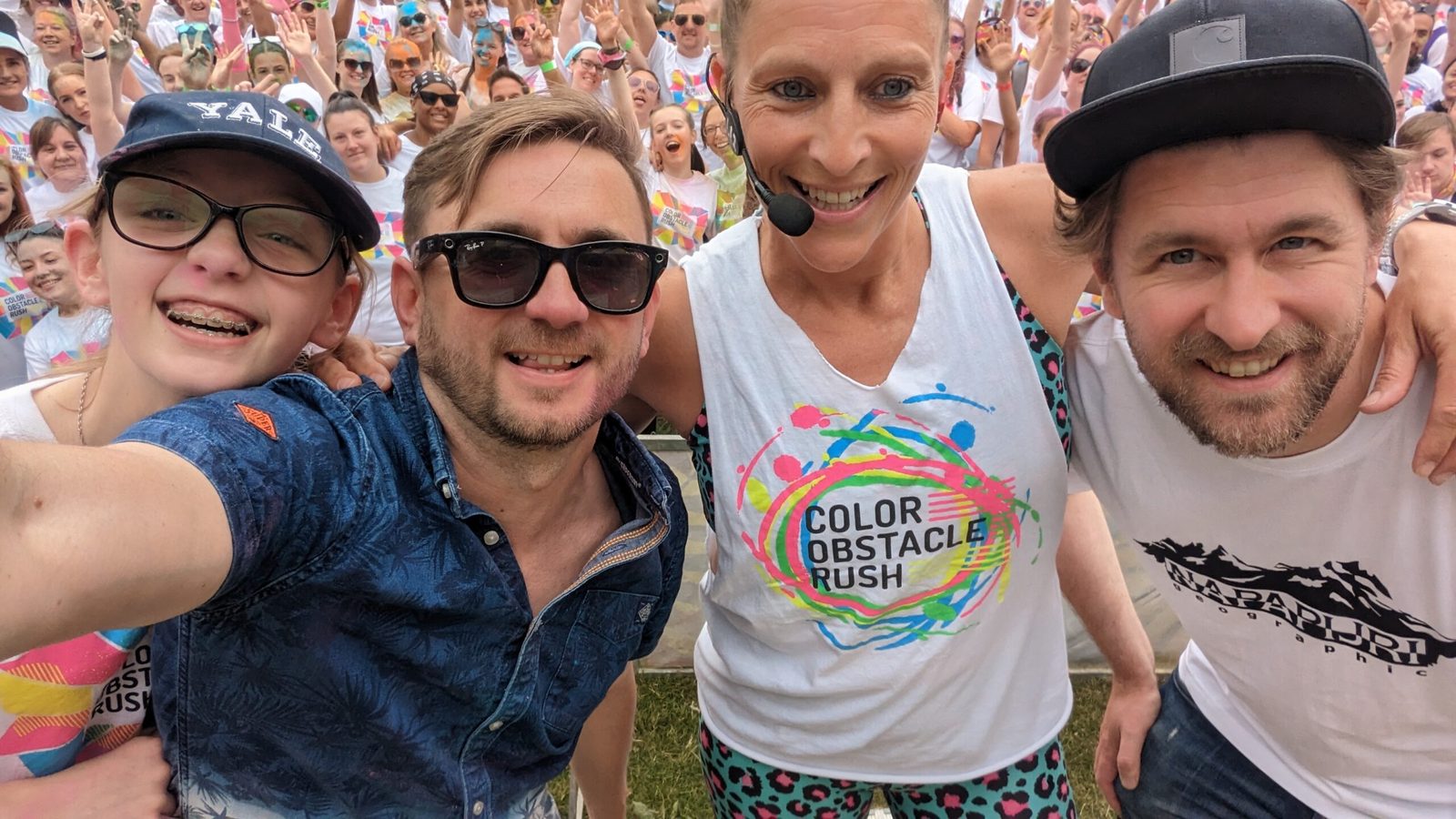
I have presented family festival events with crowds past 80,000, across multiple stages, in weather that changed through the day. At that size a microphone will not do the work for you. The crowd at the barrier and the crowd two hundred metres back are having different experiences, and the ones at the back are the ones you lose. The fix is not volume. It is addressing people at distance as though you can see them, and never letting a gap sit.
There is a safety dividend too. The HSE notes that at outdoor sites people may congregate in prohibited areas and be reluctant to move, and may climb onto structures such as scaffolding to get a better view. A host who has the crowd’s attention can thin a pinch point, or talk a few people down off a fence long before stewards have to.
What is the compere’s job between acts?
The compere’s job between acts is to stop the field emptying. A changeover is twenty minutes of drum risers and cable, which nobody paid to watch, and it is the moment a crowd quietly decides whether to stay or wander. It needs hosting rather than surviving.
Three things make a changeover work. Tell people honestly what is happening and when the next act starts. Give them something to do while they wait. And keep referring forward, so leaving feels like missing out. Everything I know about reading a room applies outdoors, just faster and louder.
Access belongs in this window too. Reading Festival won an Outstanding Attitude Award for a user-led BSL interpretation service that put interpreters on screens at both the viewing platforms and the main stage, with stage-screen updates about upcoming performances alongside. If a festival has that provision, the host needs to signpost changes clearly and early rather than throwing them out as asides.
How do you fill when an act runs late?
You fill a late act by reaching for prepared material in the right length, not by talking until something happens. Have three lengths ready: ninety seconds, five minutes and fifteen minutes. Guessing wrong is worse than the silence, because a five-minute game cut off at ninety seconds reads as chaos from the back of the field.

None of that works if it is invented on the spot. I have had running orders change at the last minute on multi-stage family days, and absorbing that live is far easier when the fallback was agreed in the briefing. More on designing participation rather than hoping for it.
How do you work with sound and weather on a festival stage?
You work with outdoor sound by accepting that it is against you, in ways that are measurable. A big site uses delay towers so the people at the back hear something, and those towers have to be time-aligned to the stage. Temperature, humidity and wind all change the speed of sound, so a delay set in the afternoon drifts by the evening. One acoustics case study put a typical day-to-night weather change at a 4.7 ms timing error over 40 metres and 11.9 ms over 100 metres, rising to 28.3 ms in extreme conditions.
On the mic that means leaving air after a punchline, because the field hears it late and in two places. Talk in short units. Do not step on your own applause.

Then there is the weather itself. Site design is supposed to account for the prevailing wind and for how the ground copes with flooding, and daily staff briefings are expected to include weather forecast news.
Wind is the host’s problem most often. It strips the top off your voice, lifts a running order clean out of your hand, and makes a handheld mic hiss if you aim it into the gust. Turn slightly and keep the mic closer.
Lightning is the one where you stop being an entertainer. The Met Office advice is to find a safe enclosed shelter such as a car when you hear thunder, and not to shelter under or near trees. A stage in an open field is not shelter. Know the show-stop wording, know who can call it, and say it calmly.
One licensing note shapes curfews and therefore your running order: unamplified live music between 8am and 11pm needs no licence, while amplified music leans on the premises licence and an audience cap. The industry reference for the rest is the Purple Guide, published by the Events Industry Forum and written, in its own words, by the industry for the industry.
How a festival stage differs from a seated room
| Seated room | Festival stage | |
|---|---|---|
| Audience | Committed, ticketed, in one place | Mobile, often free entry, can leave |
| Attention | Lighting and layout do half the work | Earned every thirty seconds |
| Timings | Held by catering and the programme | Held by curfews and changeovers |
| Sound | One system, short throw | Delay towers, wind, drifting alignment |
| Mistakes | Noticed by everyone at once | Noticed as a slow drift to another stage |
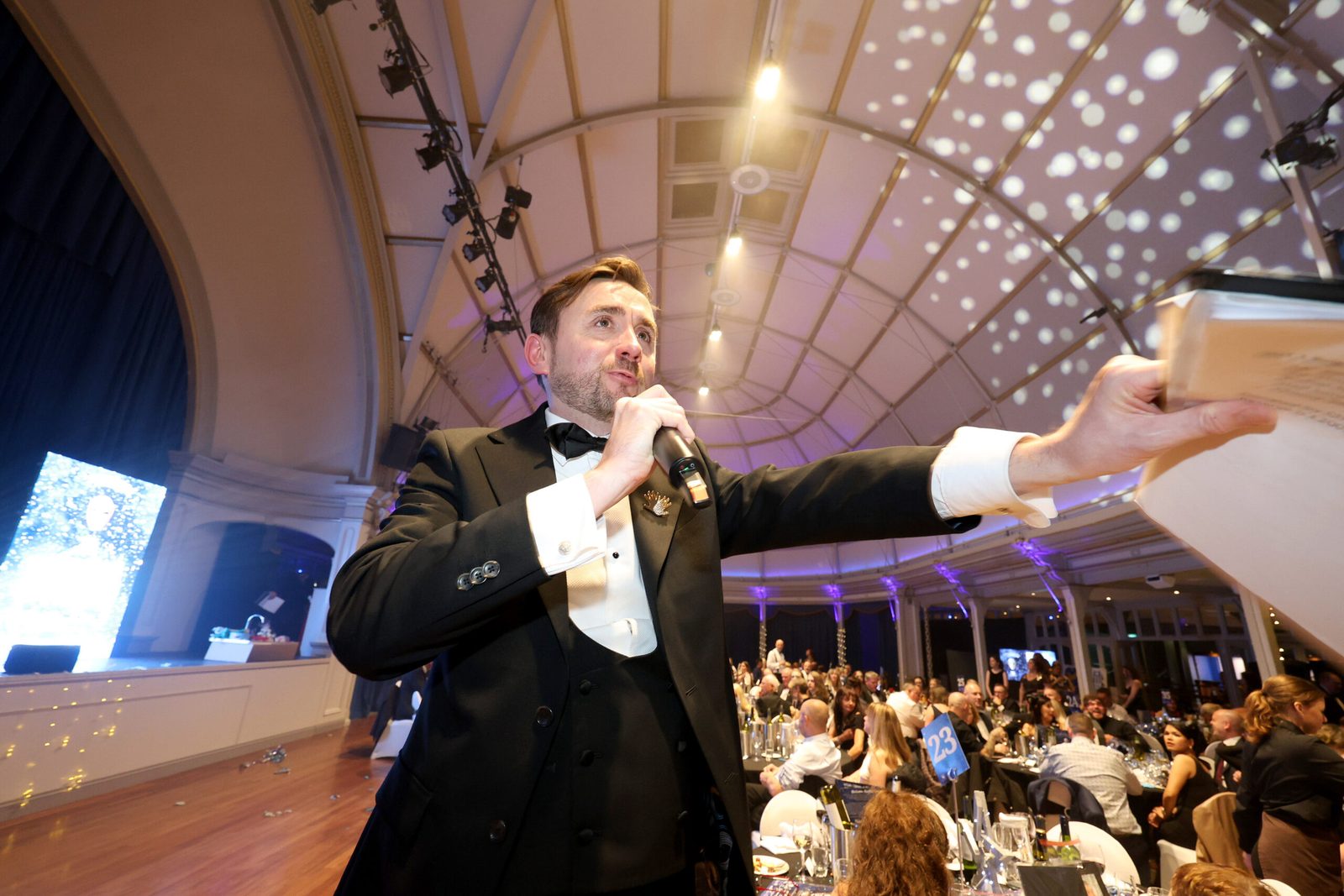
Put it plainly: an award ceremony host can afford a measured opening, because the room is already seated and listening. On a festival stage you have to be worth watching before anyone has decided to watch. Energy up from the first word, and keep it visibly up, because 80,000 people are always one dull minute from somewhere else.
How I host a festival stage
I come from television and live entertainment, so I treat a stage day as a show with a rundown rather than a list of names to read out. That means a briefing first: the running order, who is likely to overrun, what the sponsors need, what the safety wording is, who calls a stop, and what I do if the headliner is thirty minutes late.
One host, the whole stage: one person holding the programme together so the organising team can get on with everything else. If you are putting on a family day, a town celebration or a festival next summer and you want to talk it through, call 07596 851647. I also host family events across the UK and Europe.