In short
- A comedy-experienced event host reads a room the way a stand-up act does, then applies that instinct to keeping a corporate programme on schedule.
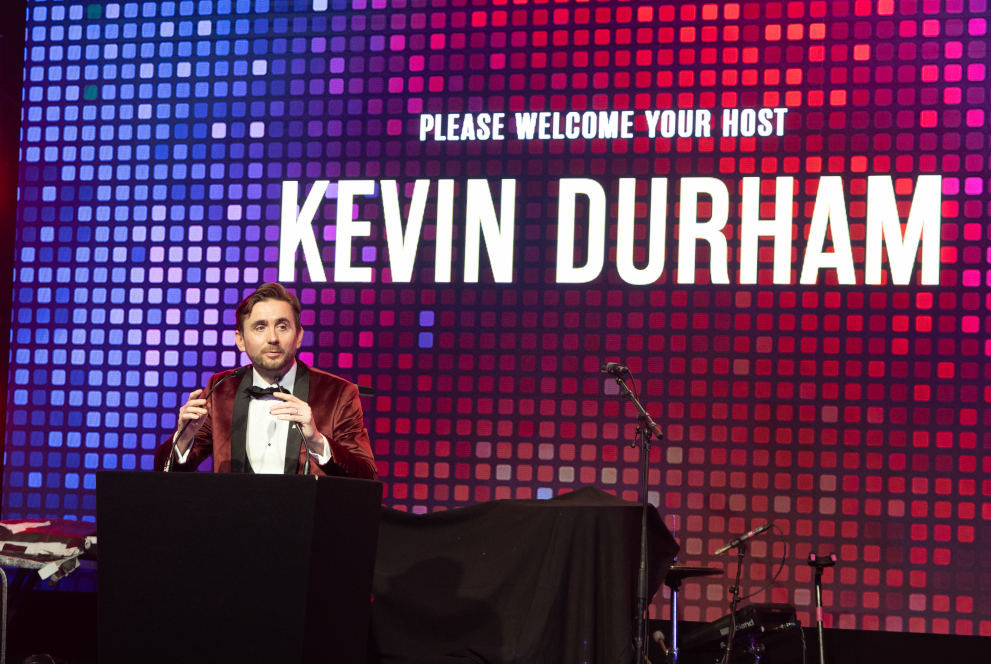
- Kevin Durham’s background includes TV presenting for Fox, Warner, and Universal Studios, interviews with comedy names including Will Ferrell and Robin Williams, and a near-miss on his own Comedy Central chat show.
- Comedy training does not replace event discipline. It sits alongside a pre-event briefing process, a run sheet, and a plan for what happens when something on the night goes wrong.
- Real client feedback (Fireaway, Zentar UK) points to the same thing: clarity and preparation matter as much as the laughs.
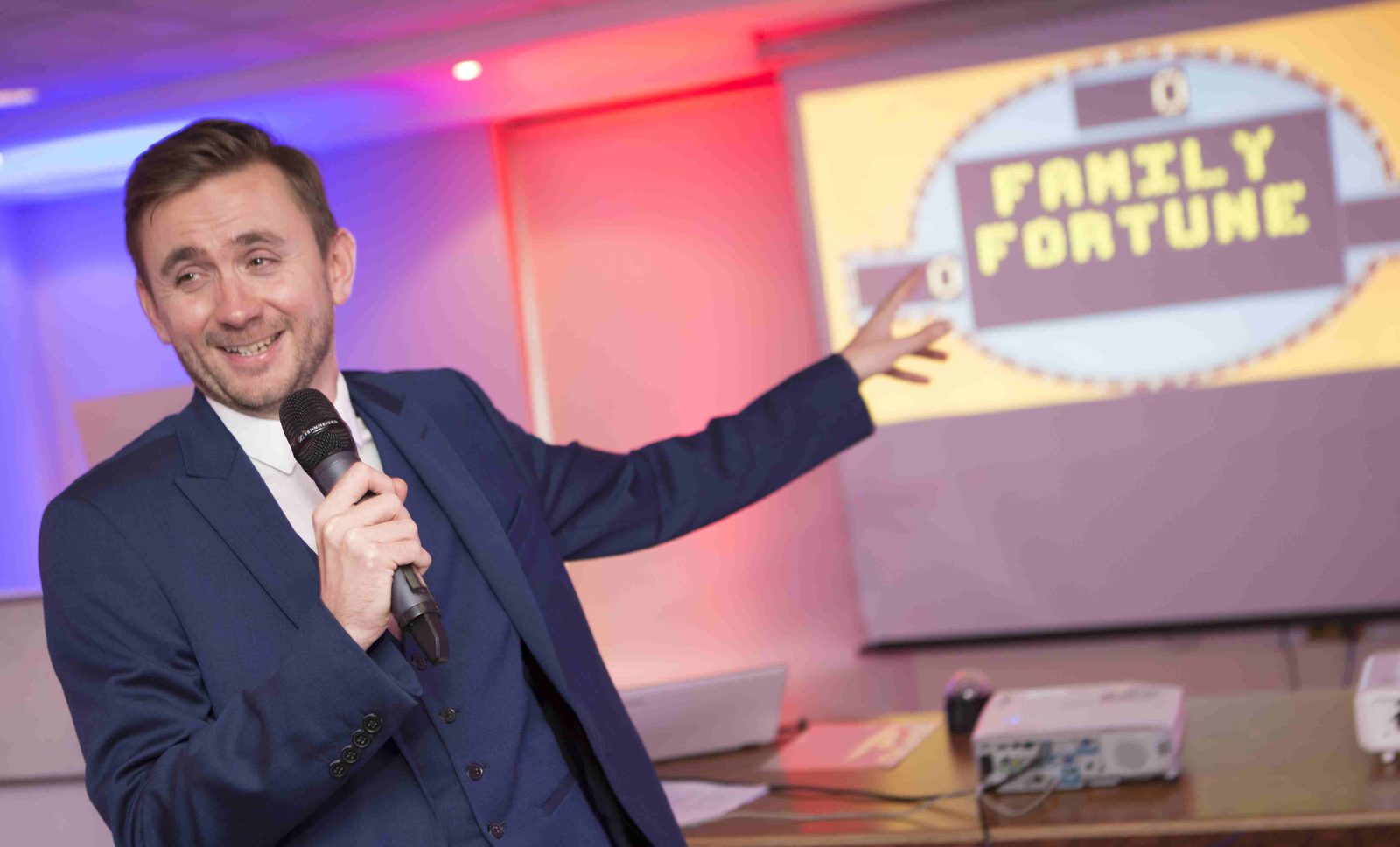
- The entertainer side of the business (interactive games and formats such as Family Fortunes and The Generation Game) is where comedy timing and business hosting overlap most directly.
What does a comedy-experienced event host actually bring to a corporate event?
A comedy-experienced event host brings the ability to read a room in real time and adjust, the same skill a stand-up comedian relies on when a joke lands differently than expected. In a corporate setting that translates into knowing when the audience needs a lighter moment before a dense session, when a Q&A has gone quiet because people are unsure it is really open, and when a joke aimed at the sponsor’s expense would land badly.
This is different from simply being personable. Plenty of confident presenters can hold a room’s attention for five minutes. Fewer can sense, mid-sentence, that a line is not working and pivot without the audience noticing the correction. That instinct is built through repetition in rooms that do not forgive a flat moment, which is where a background in comedy and television becomes directly useful rather than decorative.
Why does comedy experience matter in a boardroom or ballroom?
It matters because corporate audiences are harder to read than they look. A room full of finance directors or brand managers will not heckle a host who misjudges the tone, but they will disengage quietly, and a disengaged room is much harder to bring back than a noisy one. Comedy experience trains a host to notice that shift early, before it shows up in the feedback form.
The other reason is pacing. Comedy depends on timing: knowing exactly how long to let a pause sit, when to speed up, when to let a moment breathe. Those are the same judgement calls involved in running a conference agenda that is drifting behind schedule, or keeping an award ceremony’s energy up through award twenty-two of thirty.
Kevin Durham’s route from Comedy Central to the corporate stage
My background is in television and comedy, not corporate presenting by trade. I have worked as a TV presenter for Fox, Warner, and Universal Studios, and interviewed guests including Will Ferrell, Tom Hardy, Reese Witherspoon, and Robin Williams. At one stage I came close to landing my own chat show on Comedy Central, and I have also worked as a comedy film actor and producer.
My first professional event, back in 2005, had me sharing a stage with Annie Lennox. Since then the work has moved steadily toward corporate hosting: conference hosting for major UK and international brands across finance, retail, and technology, award ceremony hosting, and large-scale festival and family events with crowds over 10,000. The comedy and TV background did not disappear when the audiences changed. It is the reason I can walk into an unfamiliar room, plenty of them corporate, and read it within the first few minutes.
Conference hosting draws on a different part of that background than a ballroom does. A full-day conference is as much about energy management as delivery: keeping a room alert after lunch, managing speakers who run over their allotted time, and making a Q&A session feel like a genuine exchange rather than an awkward silence waiting to be filled. I structure conference days around deliberate energy peaks and recovery points, and brief each speaker personally where I can, which is a habit that comes directly from years of working to a timed television rundown rather than a boardroom one.
Can a funny host still run a tight, professional programme?
Yes, and the two are not in tension when the preparation is right. A polished, funny delivery on the night is the visible 10 percent. The other 90 percent is a detailed briefing process: a pre-event consultation as standard, a full run-through of the script with the organising team, and for award ceremonies specifically, pronunciation checks for every nominee’s name and a briefing on the full shortlist before the room fills up.
The professional discipline is what makes the comedy usable rather than risky. A joke that is well-timed but poorly briefed (aimed at the wrong sponsor, referencing a detail that changed last minute) causes exactly the kind of awkward moment a corporate client is trying to avoid. Preparation is what turns comic timing into something a brand can put its name next to.
What clients say about combining laughter with structure
Doreen K, Project & Operations Manager at Fireaway, booked me as a toastmaster at short notice: “Kevin is a fantastic host. I used him as a toastmaster for a corporate event. I booked him last minute and with minimal prep time, he managed to provide an exceptional service. He was professional and went above and beyond to ensure that our guests were engaged throughout the course of the event.”
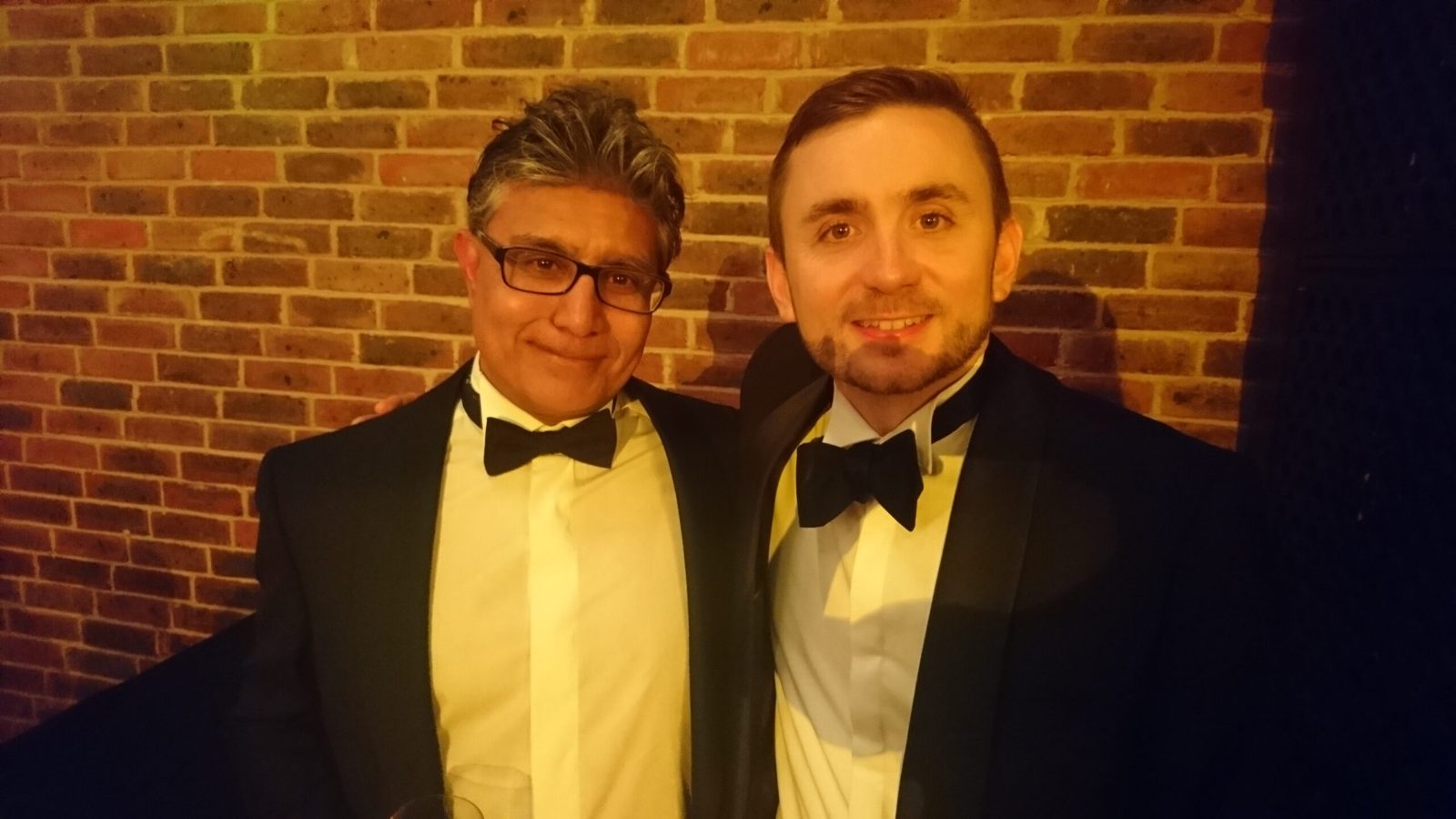
Fahim Modak, Director at Zentar UK, made a similar point after their awards evening: “My company used Kevin’s services for our awards evening, and we were blown away with his performance. From the time of engagement Kevin was very clear and communicative, gave great advice and set clear deadlines. We will definitely be working with Kevin again.” Neither testimonial is about jokes landing. Both are about clarity, communication, and reliability sitting underneath the performance.
How does a comedy-experienced event host handle a room that isn’t laughing yet?
The host keeps the energy visibly high regardless of the room’s early response and treats the first few minutes as a calibration window, not a verdict. At festival and family events with crowds over 10,000, there is no single microphone moment that will win the whole audience, and no option to wait for the room to warm up on its own. The approach is to make the crowd feel personally addressed even at distance, and to keep adjusting delivery until the read is right.
The same logic applies at a smaller scale indoors. I have covered a sponsor video that failed to play by narrating the gap live, and managed award ceremonies that ran significantly over time without letting the final award feel rushed or the energy drop before it. A shortlist that changes at the last minute, multiple stages at the same festival, or a running order that gets rewritten an hour before doors open are all routine rather than exceptional, and the host is the person the organising team relies on to absorb that change without the audience noticing. None of that is comedy in the “telling jokes” sense. It is the same underlying skill: reading what the room needs right now and supplying it, whether that is a laugh, a pause, or a straight recovery from something going wrong.
What should you ask before booking a comedy-experienced event host?
Ask what happens in the briefing, not just what happens on the night. A host who wants a pre-event consultation, asks about your audience and sensitivities in advance, and wants a run-through of the script is telling you the comedy will be controlled rather than improvised into your event. If the answer to “what’s your preparation process” is vague, that is worth noting before you book.
It is also worth asking how the host handles audience participation, particularly if you are considering the entertainer side of a corporate evening rather than straight hosting. Interactive formats such as Family Fortunes, The Generation Game, and Play Your Cards Right depend on the same comic timing as stand-up, applied to getting a room of colleagues playing games in front of each other without anyone feeling exposed. That is a different skill from telling jokes from a stage, and it is worth confirming a prospective host has done it before, not just presented at events.
Recurring feedback from event managers who book this kind of format is fairly consistent. Their previous experience with a generic presenter or agency MC left the event feeling flat, with no one actively holding the room together between segments. Several had used a senior internal figure as host instead, which tends to create its own awkwardness: that person ends up trying to present rather than enjoy the evening as a guest. The common thread is wanting one person who listens properly at the briefing stage and does not improvise in a way that surprises anyone on the night.
Booking a comedy-experienced event host for your next event
If your last event felt flat, or your host talked at the room rather than with it, the fix is rarely “book someone funnier.” It is usually “book someone who can read the room and has the preparation discipline to back it up.” Comedy and TV experience is what builds that instinct. A proper briefing process is what makes it safe to rely on for a corporate audience.
For charity events specifically, the same read-the-room skill applies to fundraising, covered in full by the charity auctioneer side of the business. Whatever the event type, if you want to check availability or talk through what a comedy-experienced host would do differently for your specific evening, email hello@eventhost.info or call 07596 851647.