
- Home
- Blog
- Event Host Blog
- Volunteer awards: how to run a volunteer awards evening people remember
Volunteer awards: how to run a volunteer awards evening people remember
 By Kevin Durham, event host and MC
27 October 2026 · updated 10 November 2026
7 min read

In short
- Volunteer awards work best when every nominee is thanked on stage. It’s recognition, not a contest.
- Six to ten categories that match the work your volunteers actually do, with volunteer of the year saved for last.
- Let anyone nominate, ask for one real story per nominee, and judge with a small mixed panel.
- Write a short citation for every nominee and check every name.
- Keep prizes modest. Certificates and a public thank you count for more, and cash or vouchers can affect a volunteer’s benefits or tax.
Volunteer awards are the one award ceremony where nobody in the room is paid to be there. That changes the job. You’re thanking people who gave their time for nothing, and every one of them needs to feel seen, not just the winners.
And it matters more than it used to. In England, 17% of adults did formal volunteering at least once a month in 2024/25, down from 27% in 2013/14 (Community Life Survey, published December 2025). The people still doing it are worth keeping.
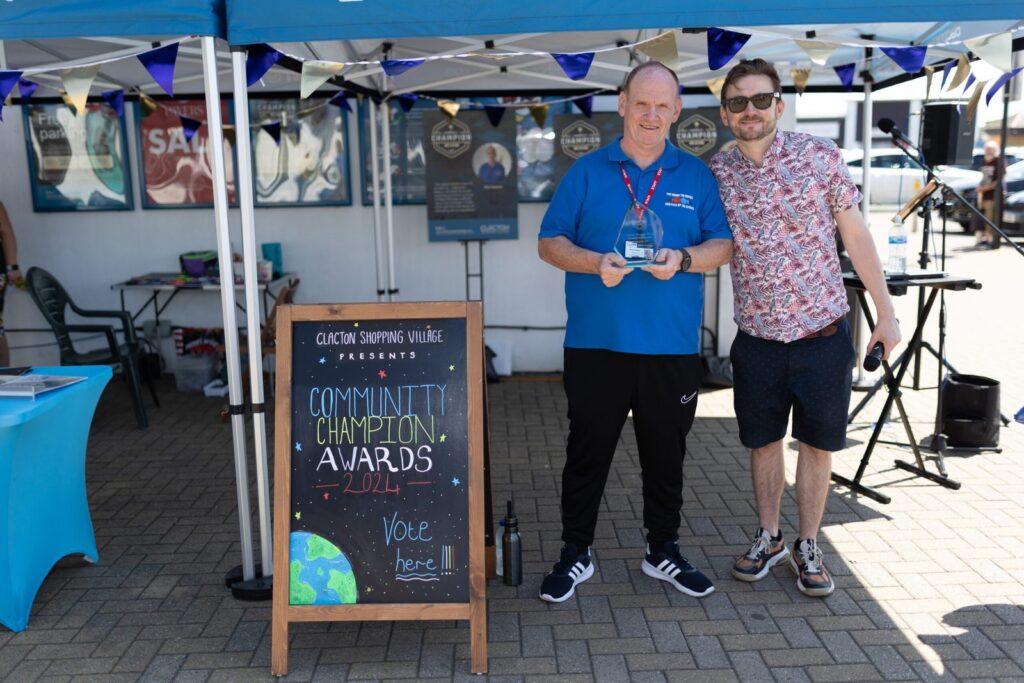
What are volunteer awards?
Volunteer awards are an organised way of thanking volunteers in public: categories, nominations and a ceremony where the stories are told out loud. There are three common types:
- Your own organisation’s awards, from a charity, hospital, club or school.
- Local community awards, run by a council or local voluntary body. Westminster’s community awards recognise individuals and groups for volunteering, leadership, service, culture and environmental work.
- National volunteer service awards. The King’s Award for Voluntary Service is the highest award given to local voluntary groups, equivalent to an MBE.
This guide is about recognition. Raising money on the same night is a different job, and my auction work lives at thecharityauctioneer.uk.
Why recognition matters to volunteers
It matters most to younger volunteers. NCVO’s Time Well Spent survey found 82% of volunteers feel recognised enough, but only 69% of 18 to 24 year olds do, against 89% of those aged 55 and over.
Asked directly, 40% of recent volunteers said receiving recognition was important to them, rising to 49% of 18 to 24 year olds. The same survey found 26% felt their volunteering was becoming too much like paid work. (The survey heard from 7,006 adults in Great Britain in late 2022 and was published in 2023.)
An awards evening won’t fix anyone’s workload. It does tell them somebody noticed.
When should you hold a volunteer awards evening?
The two natural dates are Volunteers’ Week in June and International Volunteer Day on 5 December. Either gives the evening a reason everyone already understands.
Volunteers’ Week has run since 1984 and starts on the first Monday in June (7 to 13 June in 2027). It’s led by NCVO in England, with Volunteer Scotland, Volunteer Now and WCVA in the other nations, and its whole purpose is thanking volunteers. International Volunteer Day on 5 December has been a UN observance since 1985, and the UN named 2026 the International Year of Volunteers for Sustainable Development.
If neither suits, tie it to the end of your season or a big project.
Which volunteer awards categories work best?
The best volunteer awards categories describe the work your volunteers actually do. Six to ten is plenty for one evening. Westminster’s 2026 list included Young Volunteer of the Year, Active Citizen of the Year, a Green Hero award and Volunteering Project of the Year.
A starting set you can adapt:
| Category | Who it’s for |
|---|---|
| Volunteer of the year | The headline award, saved for last |
| Young volunteer of the year | Under 25s, or under 18s if you have them |
| Long service award | Five, ten or twenty years given |
| Newcomer of the year | Someone in their first year who made a mark |
| Team or project of the year | A group effort, so nobody has to be singled out |
| Behind the scenes award | Admin, driving, kit, rotas: the work nobody sees |
| Community impact award | Change people outside the organisation can feel |
| Green volunteer award | Environmental work, litter picks, gardens |
The young volunteer category earns its place: on the NCVO figures, it’s the group most likely to feel overlooked. (Running staff awards too? There’s a separate list of employee award categories.)
Volunteer of the year awards
Volunteer of the year is the headline award and needs the clearest criteria: the whole year, the difference made to the people they help, and how they support other volunteers. Hours alone is a poor measure: it rewards the retired and quietly penalises the parent fitting two hours a week around a job. (Employee of the year has its own guide.)
How do you nominate a volunteer for an award?
You nominate a volunteer by filling in the organiser’s form with what they do, how long they’ve done it and one specific example of the difference they made. Westminster, for one, lets anyone nominate and accepts self-nominations, but would rather hear from people who have seen the work first-hand.
For your own awards, keep the form short and ask for evidence:
- What does this person do, and for how long?
- One moment or example that sums them up.
- What would be different without them?
- A short quote from someone they’ve helped (optional).
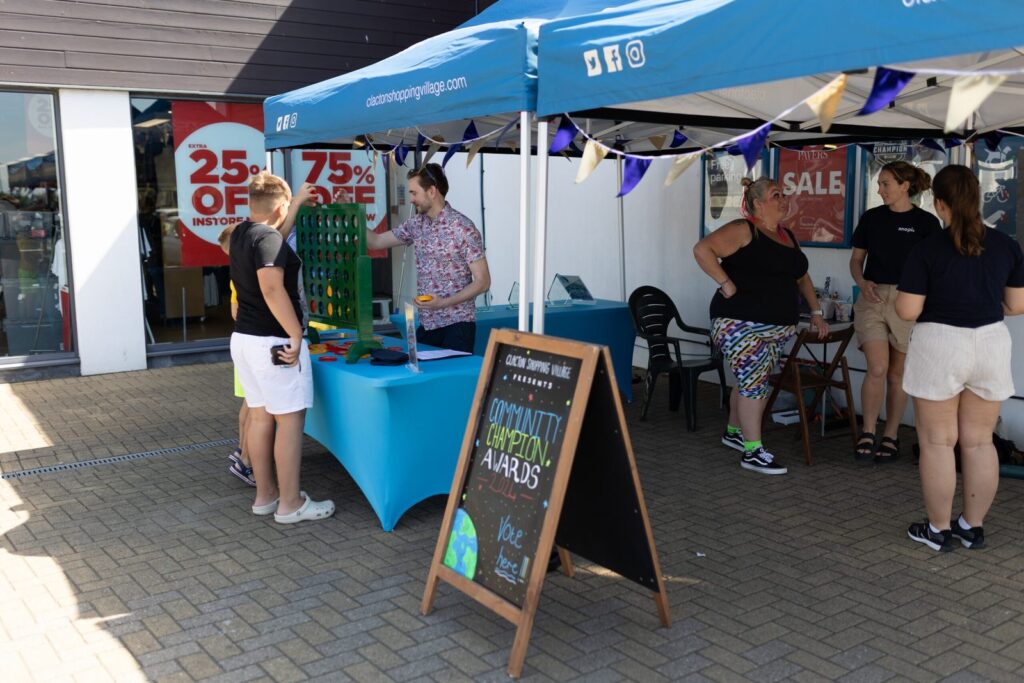
For judging, copy the council model. Westminster’s winners are picked by council officers and community representatives, on contribution, lasting impact and supporting material.
The King’s Award for Voluntary Service
The King’s Award is for groups, not individuals. A group needs three or more people, must be led by volunteers with over half its members volunteering, and must have run for at least three years. It cannot nominate itself: the nominator must be someone outside the group, with two letters of support from other people.
Each round opens in September (for the 2027 awards, nominations close on 1 December 2026). Winners are announced each year on 14 November, the King’s birthday, and Lord-Lieutenants present them in the following months. That presentation can be the centrepiece of your own evening.
Telling each volunteer’s story on stage
Volunteers rarely talk about what they do. The stage is where somebody finally says it out loud for them.
Write a citation for every nominee, not just the winner. Three or four sentences: what they do, how long for, one specific moment and what it meant to someone. “She has driven the Tuesday minibus for eleven years” lands. “She is a valued member of the team” doesn’t. Read every nominee’s citation, then name the winner.
NCVO warns that singling people out can create winners and losers, and suggests some volunteers value a public thank you at an event more than anything else. That’s why every nominee gets their sentence and their applause.
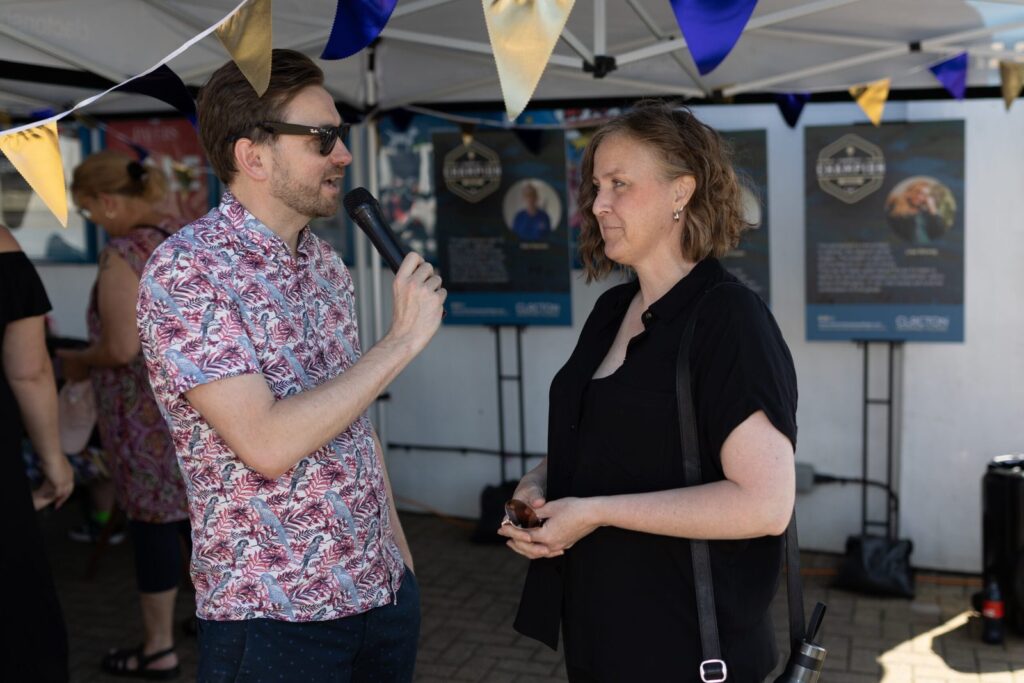
Think about who presents. Someone the volunteer has helped often beats a chief executive. Whoever it is, the guide on how to present an award will keep them steady.
How do you keep a long list of awards moving?
You keep a long list moving by giving each award a time limit and splitting the list into blocks with a break between. Ninety seconds per award, including the walk to the stage, is a good target.
- Two or three blocks of three or four awards, with food in between.
- Give every nominee a certificate in advance or at the table, so the stage time goes on the story.
- Put volunteer of the year last. It’s what people are waiting for.
I’ve had rooms that ran well over time and needed tight management to reach the final award with the energy still there. It’s doable, but only when the script is tight and the organiser trusts me to cut.
Your winners will remember getting on stage. Everyone else remembers whether the room stayed alive. For a really long list, one client’s entertaining awards evening broke the presentations up with game-show rounds, and everyone stayed to the end.
Should volunteer awards come with prizes?
Volunteer awards don’t need expensive prizes. Some can even cause problems. NCVO notes that money, vouchers or gifts that grow in value may affect a volunteer’s benefits or tax, and suggests inexpensive items such as certificates are often better.
What people actually keep: a framed certificate with their name spelled correctly, a photo, and their citation printed to take home.
How do you make the evening work for every volunteer?
You make it work by removing the small costs and barriers that stop volunteers coming. In NCVO’s survey, 10% of volunteers said they had been out of pocket. Cover travel and food for the night, and say so in the invitation.
- Pick an accessible venue with step-free access to the stage, or bring the award to the table.
- Invite a guest per nominee. Being thanked in front of family is half the point.
- Plan for young volunteers. The NSPCC says under-16s need parental consent before a photo is taken, and that names shouldn’t be published alongside children’s images. Collect consent with the nomination.
For the rest of the planning, start with the guide to planning an award ceremony.
Why a host helps on the night
A volunteer awards evening is a lot of names and a lot of nerves. It runs smoothly because someone experienced is holding it together, and the organisers get to enjoy it too.
More awards guides
- Employee of the year: criteria, nominations and the announcement.
- Acceptance speech tips for when you win.
- Employee award categories: 30 ideas for a staff awards night.
- Awards ceremony music: walk-up stings, background tracks and licensing.
I work as an award host across the UK and Europe, from the nominee briefing to the final name. One host. The whole evening. Tell me about your volunteers: call 07596 851647.