
In short
- A great event host is defined by what happens when something goes wrong, not by how polished the scripted parts are.
- Preparation is the biggest, least visible part of the job: nominee briefings, pronunciation checks, and a pre-event consultation as standard.
- Real evidence of this includes handling a failed sponsor video live, and keeping an award ceremony’s energy intact through a running order that slipped badly behind schedule.
- Client feedback (Fireaway, Zentar UK) consistently points to communication and reliability, not just stage charisma.
- If you are booking rather than becoming one, the questions to ask are about preparation process, not performance style.
What actually makes a great event host?
A great event host is judged by how they handle the moment something does not go to plan, not by how smoothly the scripted parts go. Any confident presenter can deliver a good five minutes when everything works. What separates a great host is recovering from a failed AV cue, a speaker who will not stop talking, or a running order that changes an hour before doors open, without the audience feeling the strain.
That distinction matters if you are hiring rather than trying to become one yourself. A demo reel shows you the easy part. It rarely shows you the preparation and judgement that only becomes visible when something genuinely goes wrong.
Why experience outside event hosting actually helps
Particularly a background in live television. My own experience includes presenting for Fox, Warner, and Universal Studios, and interviewing guests such as Will Ferrell, Tom Hardy, Reese Witherspoon, and Robin Williams. Working to camera means working to a timed rundown, taking direction through an earpiece, and staying composed when a segment overruns, none of which forgives hesitation. I have also worked as a comedy film actor and producer, and came close at one stage to landing my own chat show on Comedy Central, which is where a lot of the instinct for reading an audience in real time was actually built.
That discipline transfers directly. A conference speaker running over time or a technical fault mid-session is the event-hosting equivalent of a broadcast segment overrunning, and the skill of absorbing that disruption without the audience noticing is the same skill, just applied to a ballroom instead of a studio floor. My first professional event, back in 2005, had me sharing a stage with Annie Lennox, and the work has moved steadily toward corporate hosting since, across finance, retail, and technology clients, without the underlying instinct changing.
What does the preparation behind a great event host actually look like?
It looks like work that happens weeks before the event, not on the day. For an award ceremony, that means a detailed briefing on every nominee, pronunciation checks for every name on the shortlist, and a full run-through of the script with the organising team. Award ceremonies are where hosting mistakes are most visible: the wrong name called, a winner left standing at the wrong moment, a joke that lands badly in front of a room where everyone knows each other.
A pre-event consultation as standard is the single biggest indicator of this discipline. Event managers who have previously used an in-house presenter or a name booked purely for profile often describe the same gap: little or no real preparation conversation happened beforehand, and the difference showed once the room was live.
The pattern repeats often enough to be worth naming directly. Putting a senior colleague on stage as host takes that person out of the room as a guest, and it tends to show, since they end up trying to present rather than participate. A generic booking through an agency solves the stage-time problem but rarely comes with a genuine briefing conversation, because the agency’s incentive is filling the slot rather than learning your event’s specific detail in advance. Both routes save a step early on and cost more of it back later, usually at the exact moment preparation would have mattered.
Can you see this quality before the event actually happens?
Mostly through specifics, not confidence. Ask a prospective host what their process looks like between booking and the event itself. A vague answer, or one that focuses entirely on stage style, is a signal that the preparation side may be thin. A specific answer, covering briefing calls, run-throughs, and how they handle your particular running order, tells you the recovery skill is backed by process rather than improvisation alone.
I have covered a sponsor video that failed to play by narrating the gap live rather than leaving dead air, and managed award ceremonies that ran significantly over schedule without letting the final award feel rushed or the room’s energy drop before it. Neither situation is solved on the night. Both are solved by preparing thoroughly enough beforehand that a problem becomes a minor detour rather than a crisis.
How does a great event host read a room that isn’t responding yet?
By treating the first few minutes as a calibration window, not a verdict, and adjusting delivery until the read is right. At festival and family events with crowds over 10,000, there is no single microphone moment that wins over the whole audience, and no option to wait for the room to warm up on its own. The approach is to keep energy visibly high from the start and make the crowd feel personally addressed even at distance, across multiple stages and changing conditions.
The same instinct applies differently at a conference, where the challenge is usually energy after lunch rather than an unresponsive crowd. I structure conference days around deliberate energy peaks and recovery points, and brief each speaker personally where possible, since the afternoon slump most conferences hit is predictable enough to plan around rather than just react to.
It applies differently again at a charity auction, where donors respond to giving feeling like a celebration rather than a transaction, and pushing too hard has the opposite effect to the one intended. Reading which version of the room you are in, and adjusting for it, is the actual skill behind “reading a room,” not a fixed set of tricks that works everywhere regardless of what the event actually is.
What clients notice when a host gets it right
Rarely the jokes. Doreen Kasim, Project & Operations Manager at Fireaway, booked me as a toastmaster with almost no lead time: “I booked him last minute and with minimal prep time, he managed to provide an exceptional service. He was professional and went above and beyond to ensure that our guests were engaged throughout the course of the event.”
Fahim Modak, Director at Zentar UK, made a similar point after their awards evening: “From the time of engagement Kevin was very clear and communicative, gave great advice and set clear deadlines. We will definitely be working with Kevin again.” Both comments describe communication and reliability, the parts of the job that happen away from the stage and are much harder to fake than confidence in front of a room. Neither client mentions performance style at all, which is itself the pattern worth noticing: the feedback that sticks is almost always about whether the host was easy to work with beforehand, not just entertaining once the room was full.
What should you ask before booking a great event host for your own event?
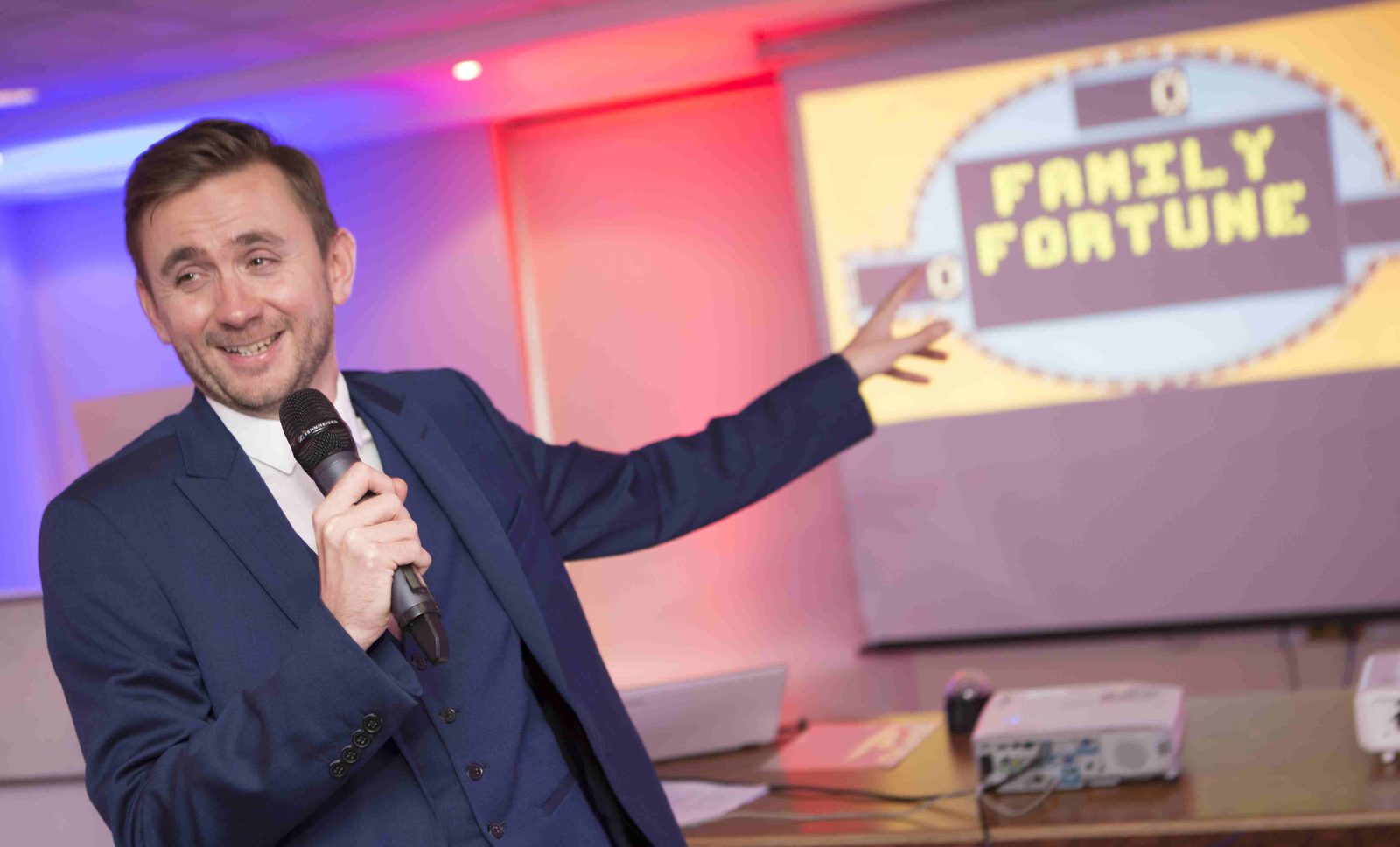
Ask about their preparation process in specific terms, not their presenting style. Ask how they have handled something going wrong before, and listen for a real example rather than a general reassurance. If you are considering the entertainer side of an evening, formats such as Family Fortunes, The Generation Game, or Play Your Cards Right, ask specifically whether they have run audience-participation formats before, since getting a room of colleagues playing games together without anyone feeling exposed is a different skill from presenting from a stage.
It is also worth asking whether the person you are speaking to now is the person who will actually turn up on the day, particularly when booking through an agency rather than directly. A prospective host who wants a proper briefing conversation before quoting a firm answer is usually telling you more about how the event will actually run than any amount of stage confidence in the sales call itself.
If your last event felt flat, or the host talked at the room rather than with it, the fix is rarely about finding someone more charismatic. It is about finding someone whose preparation process you can actually see real evidence of, rather than simply taking their word for it. To talk through what that looks like for your own specific event, email hello@eventhost.info or call 07596 851647 directly.