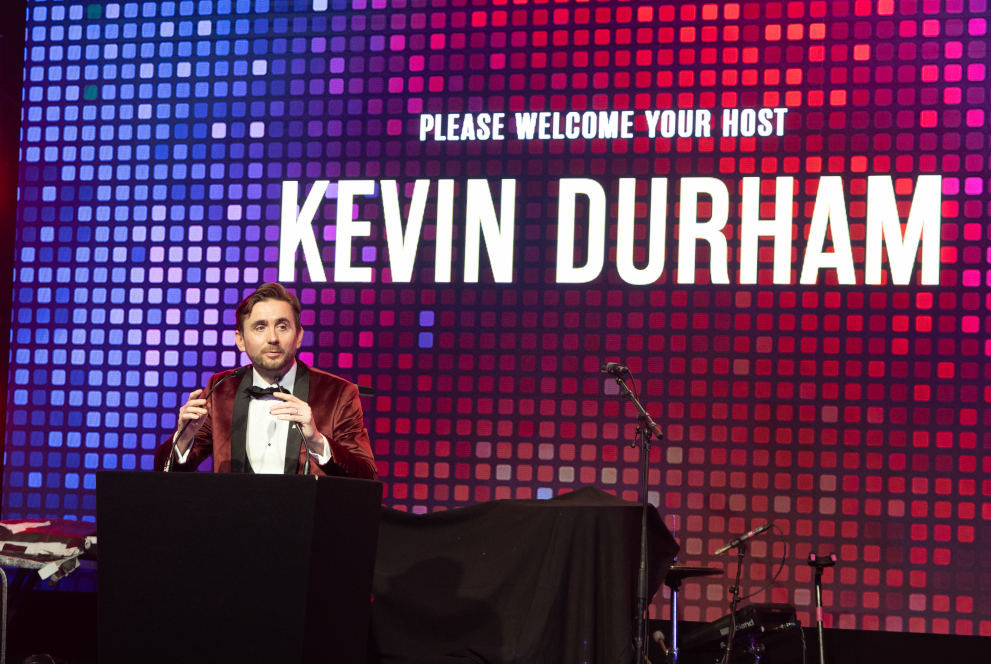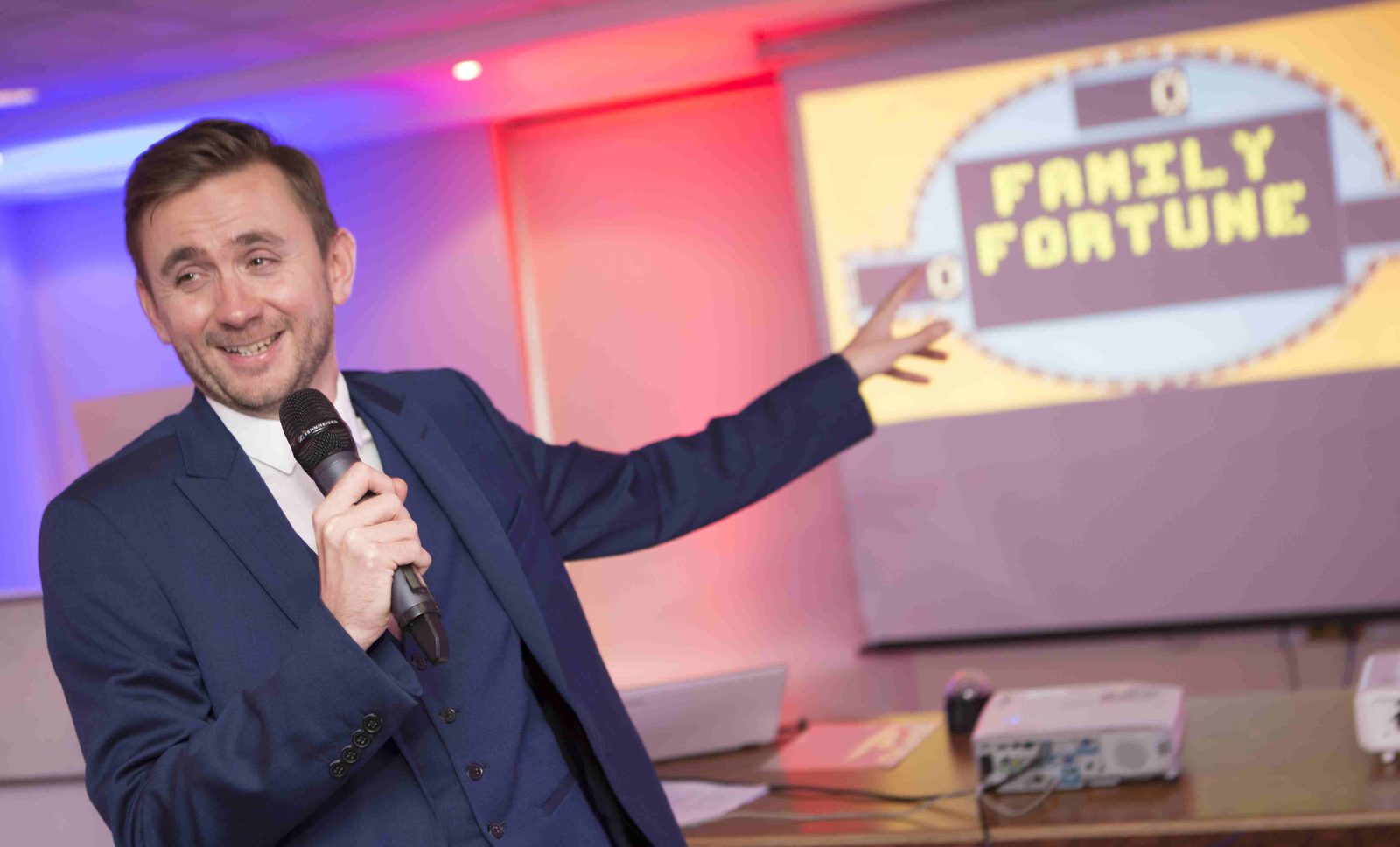

- The conference host vs MC question is one of the most common terminology confusions in corporate event planning. In a conference context, the two roles overlap significantly.
- The practical difference is in emphasis: an MC prioritises formal programme structure; a host prioritises audience energy and conversational flow.
- In UK events, “compere” is often used instead of MC, and “conference host” is often preferred over both. All three describe the same core function.
- For most corporate conferences, you want one professional who brings all of these qualities: structure, energy, and genuine skill at panel facilitation.
If you are planning a corporate conference and searching for the right person to run it, you will quickly encounter a terminology problem. Different professionals describe themselves as a conference host, a conference MC, a compere, an event facilitator, or some combination of all of these. The titles are not standardised and the distinctions between them are genuinely blurry.
This post cuts through the conference host vs MC question: what each role involves, where they differ, and which is the right choice for your event.
Conference host vs MC: why the terminology matters
Understanding the distinction between a conference host and an MC helps you write a clearer brief, ask better questions when interviewing candidates, and set the right expectations for your event.
The confusion exists because the roles genuinely overlap. Both a conference host and a conference MC open the event, introduce speakers, manage transitions, facilitate Q&A, and keep the programme on time. The difference lies in where the emphasis falls.
An MC, which stands for Master of Ceremonies, emphasises formal programme management. In practice, the MC prioritises formal programme management: introducing speakers, announcing the programme’s sequence, and ensuring the event adheres to its planned schedule. The MC is, first and foremost, the guardian of the running order.
A host emphasises audience engagement and energy. The host role is more audience-focused, with responsibilities including energising the crowd, facilitating interactive segments, and maintaining the atmosphere across the event. The host makes the room feel like a room, not just a schedule.
In practice, at a corporate conference, you need both. Which is why most experienced professionals do both, regardless of what title they use.
What is a conference host?
A conference host is the professional who guides the audience through a full business event: opening the day, linking speakers, facilitating discussions, managing the running order, and closing the conference.
The title “host” tends to be preferred for full-day and multi-day conferences where the emphasis is on sustained audience management rather than ceremony protocol. A conference host shapes the atmosphere across several hours, adjusts their energy in response to the room, and keeps delegates engaged through the post-lunch dip and the late-afternoon stretch.
For a conference host, the specific skills that matter most at this format are:
- Energy management across a long running time
- Panel facilitation: drawing out the right answers, managing dominant contributors, curating Q&A
- Speaker management: keeping presenters to time without creating awkwardness
- Real-time programme adjustments when sessions run over or under
What is a conference MC?
A conference MC performs the same core functions as a conference host, with an emphasis on formal structure. The MC title implies a more ceremonial approach: the MC is the official leader of the event’s proceedings, responsible for the integrity of the programme.
The Master of Ceremonies role has formal roots: Wikipedia traces it to 5th-century church officials responsible for overseeing elaborate religious rituals, with adherence to the correct sequence of proceedings as the primary concern. In a corporate conference context, those roots translate into a particular emphasis on adherence to the running order, formal speaker introductions, and clean programme transitions.
In UK corporate events, “MC” is the preferred abbreviation. As this UK guide to event terminology notes, the MC “is the glue that keeps everything together” and serves as the audience’s guide throughout the event, responsible for introducing and linking its elements. The term “compere,” French in origin and historically associated with UK variety entertainment, is also used, particularly for formats involving multiple performers or acts.
Conference host vs MC: the practical differences
For a corporate conference specifically, the differences between a host and an MC are less about what they do and more about the style in which they do it.
Soul Artists offer a useful summary: “a presenter informs, a host connects, and an MC excites.” For a corporate conference, you typically want all three qualities from one person. The host quality comes through in the warmth with which they manage the room between sessions. The MC quality comes through in the precision with which they run the programme. The presenter quality comes through in their ability to contextualise what each speaker contributes.
A conference that leans too far toward the MC end of the spectrum can feel rigid: the professional is clearly managing a script rather than reading the room. A conference that leans too far toward the host end can feel unstructured: warm and approachable, but not reliably keeping the day on time. Christophe Fox puts the distinction neatly: “an MC manages the programme schedule and transitions. An event host manages audience energy and engagement.” At a corporate conference, you need both.
The right conference professional holds both simultaneously.
What about a conference facilitator?
A facilitator is a distinct role from both host and MC, though the terms are sometimes used interchangeably in conference planning.
A facilitator’s primary function is to help a group reach shared conclusions: drawing out contributions, managing discussion dynamics, and ensuring that the session’s objectives are met through the quality of the conversation rather than the energy of the presenter. Facilitation is less about stage presence and more about listening and synthesis.
Some conference professionals are skilled at both hosting and facilitation. Others specialise in one or the other. If your conference includes working sessions, breakouts, or strategy discussions where the group needs to reach decisions, facilitation skills are as important as presenting skills.
As the UK terminology guide notes, a facilitator “helps groups reach shared and agreed conclusions” without contributing to the outcomes themselves. This is distinct from a moderator (who presides over panel discussions while remaining neutral) and from a host or MC (who drives the energy and programme of the event).
When briefing a prospective conference host, it is worth asking directly whether they also facilitate, and what their approach looks like in practice.
Do I need an MC or a host for my conference?
For most corporate conferences, the title matters less than the skill set. Whether a professional calls themselves a conference host, a conference MC, a compere, or an event facilitator, the question to ask is whether they can manage your specific event.
A useful checklist:
- Can they run a full day? A full-day conference needs different energy management than a two-hour awards ceremony. Ask for examples at a similar format and duration.
- Do they facilitate panels? If your conference includes panel sessions or audience Q&A, facilitation experience is essential, not optional.
- Do they prepare speaker introductions? A professional host writes introductions specifically for each audience. Ask to see examples of how they approach this.
- What is their pre-event process? The briefing call, running order review, and speaker research that happens before the event determines the quality of what happens on the day.
The distinction between conference host and conference MC is useful for clarifying emphasis in a brief. But at the level of actual delivery, the best professionals do not choose between them. They bring structure and energy, precision and warmth, and they adapt the balance in real time to what the room needs.
If you are planning a conference and want to discuss whether a host or MC format suits your event better, find out more about the conference hosting service here or get in touch.