
In short
- A corporate comedian adds warmth, energy and a shared laugh that makes the rest of the evening land better.
- A booked stand-up slot performs and leaves. It does not run your room, manage your timing, or cover the moment something slips.
- For most business events, a host who can genuinely be funny beats a comedy slot bolted onto a night someone else is running.
- Comedy has to fit the room. The same material that kills at a club can misfire in front of colleagues who all know each other.
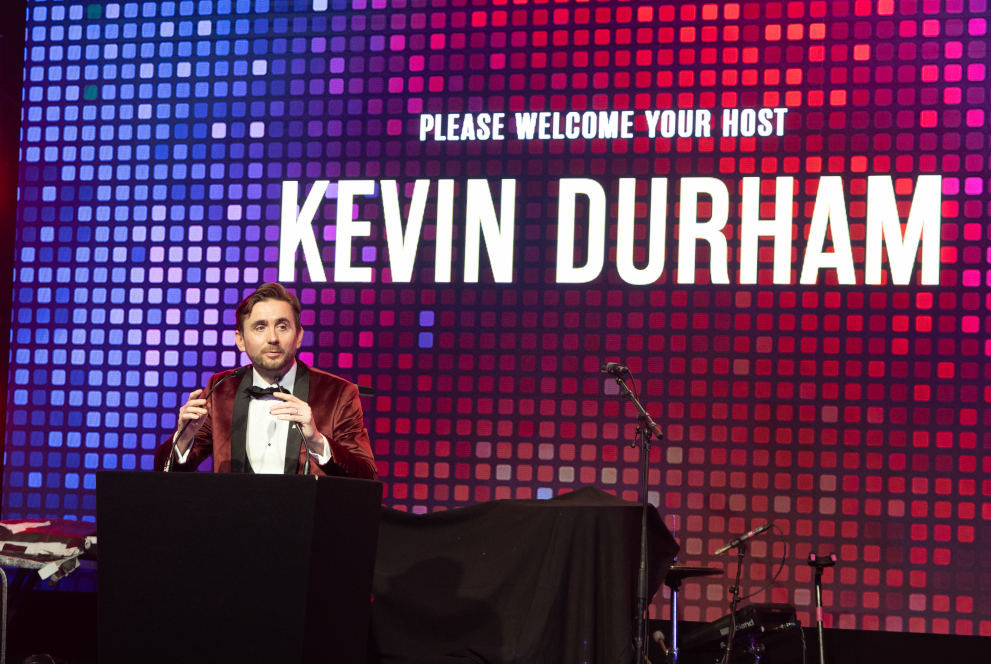
- My background is comedy and television, so humour is built into how I run the whole evening, not delivered as a separate act.
Booking a corporate comedian feels like a safe way to guarantee the room has fun, and sometimes it is exactly right. But comedy at a business event is not the same as comedy at a club, and a twenty-minute set dropped into an evening that sags either side of it can leave the night feeling oddly disjointed. Here is what comedy genuinely adds, and when a funny host serves you better than a booked act.
What does a corporate comedian actually bring to an event?
A corporate comedian brings a shared laugh, and a shared laugh does real work. Humour relaxes a room, builds warmth between people who may not know each other, and buys attention that the rest of the evening then benefits from. Harvard Business Review’s work on leading with humour makes the point that laughter is not frivolous, it strengthens trust and engagement.
It also resets expectations fast. Guests walk into most corporate evenings braced for something dry, and a genuinely funny opening changes the tone of the whole night in the first few minutes. That shift is the real value, more than any single joke.
And it sticks. We remember an event mainly by its funniest, highest moment and how it ends, a pattern researchers call the peak-end rule, so a well-timed laugh at the right moment does more for the memory of the night than a steady stream of gentle chuckles.
Where does a booked comedy slot fall short?
A booked comedy slot falls short when it is the only funny thing in an evening nobody is really hosting. The comedian performs their set and leaves, which is fine, except the room still needs someone to open it, introduce the speakers, manage the timing, and hold the energy in the gaps. A slot is not a host.
The other risk is fit. A set written for a paying club crowd does not automatically work in front of colleagues who share in-jokes, hierarchies and history. Comedy that ignores the specific room can misjudge the tone badly, and in a corporate setting that lands worse than no comedy at all.
Is a corporate comedian better than a host who is funny?
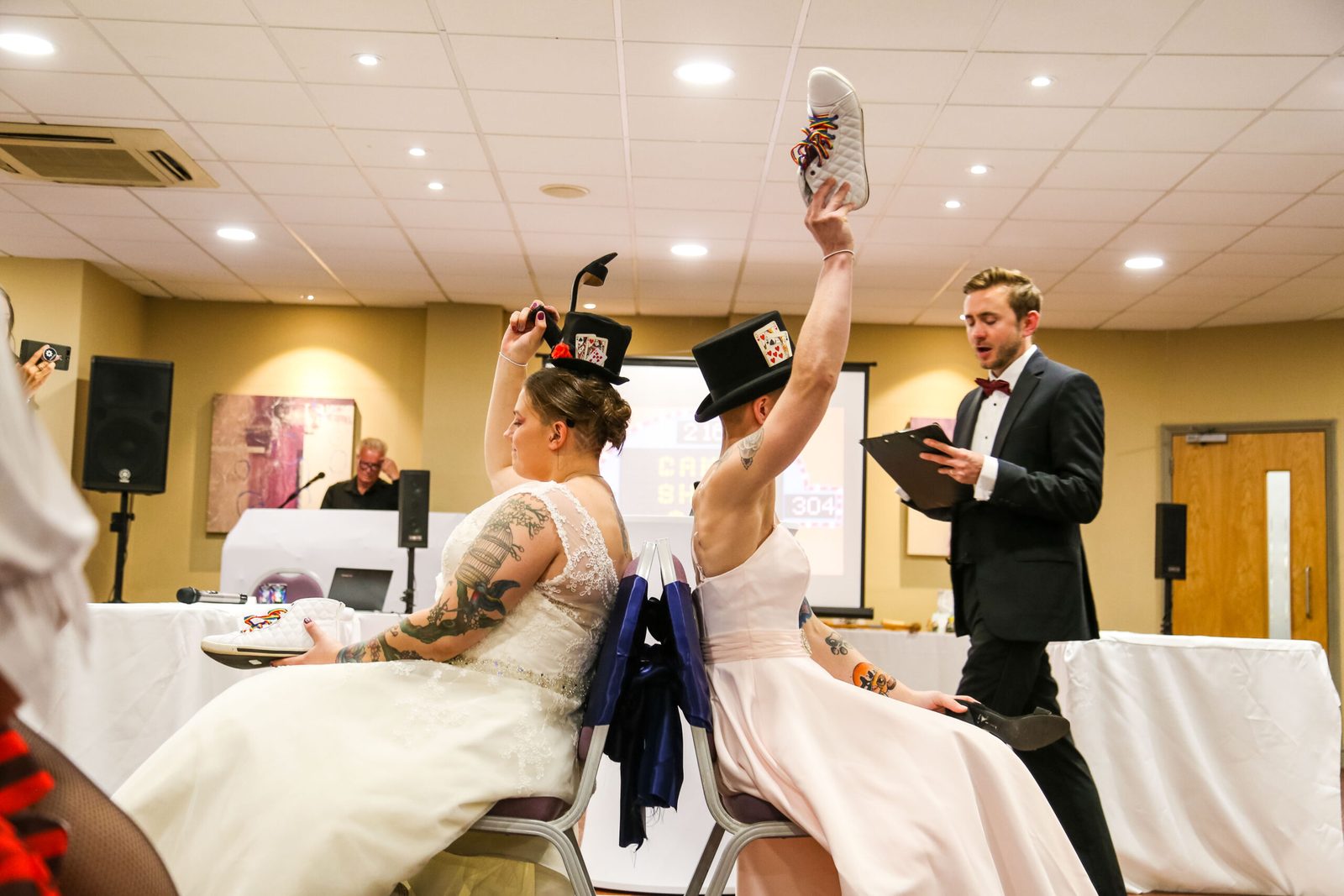
For most business events, a host who is genuinely funny beats a standalone corporate comedian, because you get the humour and the running of the room from one person. The laughs are woven through the evening rather than confined to one slot, and the same person who made the room laugh is also managing the timing and covering the moment a video fails.
Stanford’s business school even teaches humour as a leadership skill, precisely because knowing when and how to be funny is a form of control. A host who can read a room and choose the moment is doing something more useful than delivering a fixed set regardless of what the evening needs.
Here is a short clip of a comedic corporate moment so you can see the tone.
Why does comedy have to be written for the room?
Comedy has to be written for the room because the same joke changes meaning depending on who is listening. A line that is warm among a sales team can sting in front of the board, and a reference that lands with a young crowd can fall silent with a senior audience. The skill is not having jokes, it is choosing the right ones live.
This is where customisation matters most. My own game-show entertainment works because the material is written for that specific audience: the survey questions, the running gags, the moments that pull individuals in are all shaped around the people actually in the room, not delivered from a fixed script.
How my comedy background shapes the whole evening
My comedy is built into how I host, not bolted on as a separate act. I came up through comedy and television, as a comedy film actor and producer and a presenter who interviewed the likes of Will Ferrell, Tom Hardy and Robin Williams, so timing and reading an audience are the foundation of how I run a room rather than an add-on.
That means the humour flexes to the evening in real time. It lifts an awards night that is dragging, warms up a conference room after lunch, and gives a staff party its energy, all while the same person keeps the timing tight and the transitions smooth. You can see the formats on my corporate entertainment and game show hire pages, and more on my background.

Here is one more clip of a comedic corporate moment.
Quick answers: corporate comedian
What is a corporate comedian? A comedian who performs for a business audience, usually as a set within a wider event. It can be pure stand-up, or comedy folded into hosting and interactive entertainment.
Do I need a comedian or a funny host? For most single evenings, a funny host, because you get the humour plus the running of the room from one accountable person rather than a slot inside a night someone else is managing.
Is comedy risky at a corporate event? Only when it ignores the room. Material written for the specific audience, delivered by someone who can read the crowd, is far safer than a generic set.
Can entertainment and hosting come from one person? Yes, and that is the point of a host with a comedy background. See what a corporate entertainer covers for the fuller picture.
If you want a night with real laughs that is also run properly from start to finish, take a look at the game show hire options and tell me about your event.