
In short
- How to open a conference matters more than most agendas suggest, because of the primacy effect: people remember what happens first disproportionately well.
- A strong conference opening does three things quickly: sets the tone, gives the audience a reason to pay attention, and gets out of the way.
- Conference opening remarks examples that work tend to be short, specific to the room, and confident rather than apologetic.
- Who should open a conference matters less than how well-briefed and comfortable they are in front of the room.
- The most common mistake in a conference welcome address is spending too long on logistics before giving the audience a reason to care.
How you open a conference shapes how the whole event gets remembered, more than most organisers plan for. Here is what the psychology of first impressions says about why the opening matters so much, and what a strong conference opening actually includes.
Most conference planning time goes into the agenda, the speakers, and the logistics, with the opening minutes sketched out last as an afterthought. That ordering has it backwards. The opening is the one part of the day every single attendee experiences at full attention, before fatigue, phone-checking, or competing sessions start pulling focus away.
Why does how you open a conference matter so much?
How you open a conference matters because of the primacy effect, the well-documented tendency for people to remember what comes first far better than what comes later. The Decision Lab describes the primacy effect as the reason we remember the first items on a list far better than the ones in the middle, and the same bias shapes how an audience experiences an event.
Academic research on first impressions backs this up from a different angle: early information creates a frame that colours how everything afterwards gets interpreted. A conference that opens flat has to fight that frame for the rest of the day. A conference that opens with energy gets the benefit of the doubt through the slower patches later on.
What should a strong conference opening actually do?
A strong conference opening should do three things quickly: set the tone for the day, give the audience a clear reason to pay attention, and then get out of the way so the actual content can start. An opening that tries to do much more than that usually ends up doing all three badly.
In practice, this means:
- A confident, energetic tone from the first sentence, not a nervous apology for technical delays or a slow start.
- A clear, brief statement of what the day is for and why it matters to the specific people in the room.
- Fast movement into the substance, rather than a long stretch of logistics and thanks before anything of value happens.
- A clear sense of who is in charge of the room, so the audience knows whose lead to follow through the transitions ahead.
Good conference opening remarks
Good conference opening remarks are short, specific to the room, and confident. Generic opening lines that could apply to any conference anywhere waste the primacy effect on content nobody will remember. Remarks tailored to the actual audience, referencing the specific reason this group is in this room today, use that early attention far better.
A few conference opening remarks examples that work well:
- Acknowledging something specific and current relevant to the audience’s shared context, rather than a generic welcome.
- A short, honest statement of ambition for the day: what attendees should walk away with.
- A brief moment of genuine warmth, thanking the people who made the day possible, kept tight rather than turned into a long list.
- A single, well-chosen question put to the room, which turns passive listening into active attention within the first minute.
How do you open a conference speech without sounding rehearsed?
You open a conference speech without sounding rehearsed by treating the opening as a conversation with the room, not a recitation. Reading a scripted opening word for word from a page or slide is one of the fastest ways to lose an audience that is judging, consciously or not, whether the next hour is worth their full attention.
The National Speakers Association guidance on opening a speech makes a related point: an opening does not need to be elaborate to work, it needs to feel genuine and present in the room. A confident pause, a moment of real eye contact with the audience, and a line that responds to what is actually happening in the room right now will outperform a polished but generic script every time.
What belongs in a conference welcome address?
A conference welcome address should cover the essentials briefly: who is welcoming the room, why the day matters, and what to expect, without turning into the day’s first long speech. The most common mistake is treating the welcome address as an opportunity to cover everything at once, logistics, thanks, agenda, and inspiration, when a good welcome does far less and does it well.
A tight welcome address usually covers:
- A genuine, brief welcome, not a rushed formality.
- One clear idea about what makes today matter.
- Essential logistics, kept as short as humanly possible, since this is the part of any opening the audience is least interested in.
- A handover, either to the first speaker or to whoever is hosting the rest of the day, that feels deliberate rather than abrupt.
Research on primacy effects in memory, including work on how early impressions persist even through later repetition, suggests that even repeated later exposure to better content struggles to fully override a weak first impression. That is a strong argument for protecting the opening minutes rather than treating them as throat-clearing before the real event starts.
How to open a conference: who should do it?
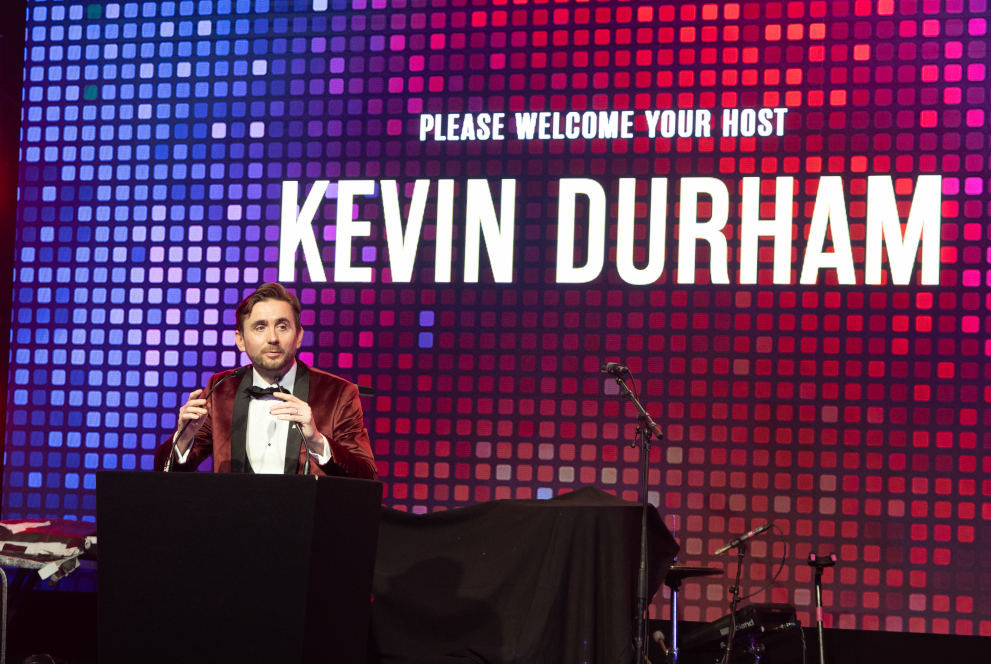
Who opens a conference matters less than how comfortable and well-briefed they are in front of the room. A senior figure with genuine authority to set the day’s ambition works well if they are a confident speaker. A professional host or MC works well because reading a room and setting tone under pressure is their actual job, not a once-a-year task squeezed in alongside their usual role.
The two are not mutually exclusive. A common, effective structure has a senior leader deliver a brief, genuine welcome, handed straight to a professional conference host who manages the pace, transitions, and energy for the rest of the day. That combination gets the authenticity of leadership and the pacing of someone whose job is the room itself, without asking a senior figure who is not a natural performer to carry the whole day on their own.
Quick answers: how to open a conference
Why does the opening of a conference matter so much? Because of the primacy effect: people remember what happens first far more than what happens later, and that early impression colours how the rest of the day is experienced.
How long should a conference opening be? Short. A confident, specific opening followed by fast movement into the actual content beats a long stretch of logistics and thanks before anything of substance happens.
Who should open a conference? Whoever is genuinely comfortable and confident in front of the room. A brief welcome from senior leadership followed by a professional host managing the rest of the day is a common, effective structure.
What is the most common mistake when opening a conference? Spending too long on logistics and thanks before giving the audience a reason to care about the day ahead.
If your conference needs someone who can open the room with confidence and keep the energy through every session that follows, take a look at event hosting built around exactly that.