In short
- How to host a gala dinner well comes down to pacing across the whole evening, not just the speeches.
- A typical gala runs three to four hours: reception, seated dinner, a formal moment, and time left over for the room to relax.
- One person should hold the evening together, from welcome to closing remarks, rather than passing the microphone between roles.
- Entertainment between courses is what keeps tables engaged, not a single big number at the end.
- If your gala includes a live pledge or auction, that segment needs its own dedicated slot, not a squeeze between dessert and coffee.
A gala dinner is not simply a fancier dinner. So here is how to host a gala dinner properly, built from the corporate galas, award dinners and large-scale evenings I have actually stood in front of, not a generic events checklist.
What makes a gala dinner different from an award ceremony?
A gala dinner is built around the room and the evening as a whole, where an award ceremony is built around the categories. Both share a seated dinner, a running order and a host holding it together, but a gala dinner has more open space in the middle for entertainment, speeches or a fundraising moment, and less of a fixed structure than a category-by-category award show.
In practice, many evenings are both at once: an awards presentation wrapped inside a wider gala format, with drinks, dinner and entertainment either side of the ceremony itself. If your evening is mostly about celebrating winners in fixed categories, treat it closer to an award ceremony structure. If it is built around a cause, a launch, or simply bringing a community together for one big night, the looser gala shape below will serve you better. The planning principles apply whichever version you are running, only the balance between structure and open space shifts.
How long is a gala dinner, and how should the evening be paced?
A gala dinner typically runs three to four hours doors to doors. A common shape is a cocktail reception of around 30 to 60 minutes, followed by seated dinner service of 60 to 90 minutes, with the formal part of the evening, whether that is speeches, an award, or a fundraising moment, sitting inside or just after the meal.
Pacing matters more than exact timing. Guests should never feel like nothing is happening, and they should never feel rushed through a course to hit a schedule. I aim for a rhythm of build, peak, and release across the evening: energy rises through the reception, holds through dinner with light entertainment, peaks at the formal moment, then releases into music and conversation once the structured part of the night is done.
That release phase matters more than organisers usually plan for. A gala that ends abruptly the second the formal moment is over feels flat, no matter how good the speeches were. Give the room somewhere to land, whether that is music, a bar reopening, or simply time to talk, before people start reaching for coats.
How to host a gala dinner: what should the running order look like?
Start with a welcome from the stage as guests are still finding their tables, not before. A sample structure I have used runs: doors and reception, seated welcome, starter, a short entertainment or engagement moment, main course, the formal segment (speeches, awards, or a fundraising moment), dessert and coffee, then closing remarks that hand the room over to music. One well-known charity gala format runs doors at 6pm with dinner at 7, the formal moment around 8:15, and a natural close around 10:30, which is a reasonable shape to adapt for a corporate evening too.
Build slack into the reception and the main course, not the formal moment itself. If the evening runs late, those are the two places you can trim ten minutes without anyone in the room noticing.
Who should host a gala dinner?
One experienced host, for the whole evening, rather than splitting duties between a welcome speaker, a separate presenter for any awards, and someone else again for a fundraising segment. Event managers who have tried the split version consistently describe the same problem: handoffs between roles cause confusion, momentum drops at every changeover, and nobody in the room is actually responsible for the pacing.
The alternative that also causes trouble is using a senior internal figure as host. It sounds like a cost saving, but it usually creates an awkward evening, because that person is now trying to present rather than participate as a guest, and the room can feel it. A dedicated event host who is not otherwise part of the evening can read the room without also worrying about their own speech, their own table, or their own boss watching them present.
How to host a gala dinner that keeps people at their tables
The single biggest risk to a gala dinner is the lull: the stretch between courses, or after the formal moment, where the room’s attention drifts and conversation gets loud enough that nobody can hear the stage. I plan against this deliberately rather than hoping it does not happen.
That means never leaving more than fifteen or twenty minutes of unstructured time in a row. A short interactive segment between courses, a table-based game, or a quick engagement moment does more to hold a room than a long, polished speech in the middle of dinner. Guests are there to enjoy the evening together, not to be talked at continuously.
What entertainment actually works at a gala dinner?
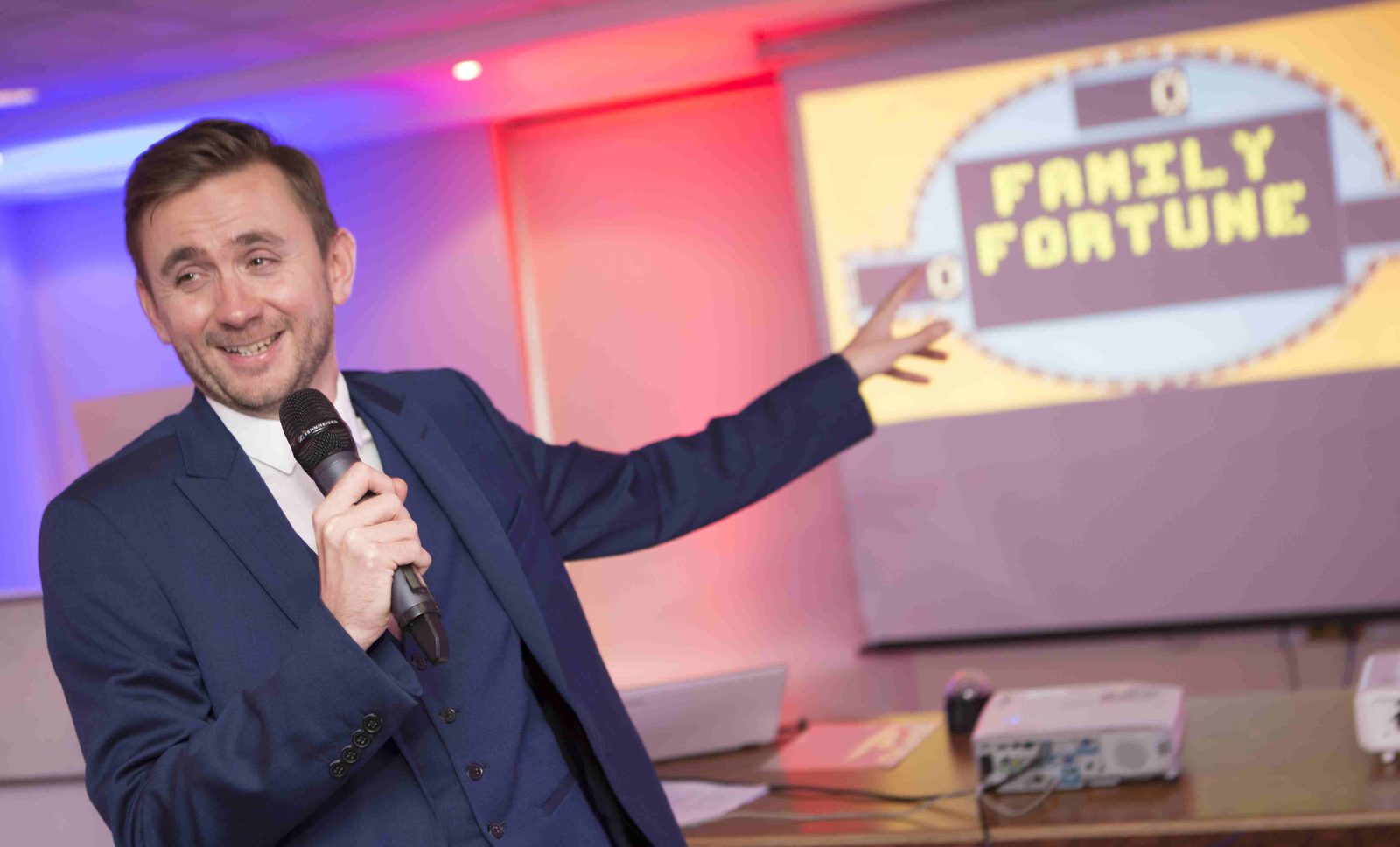
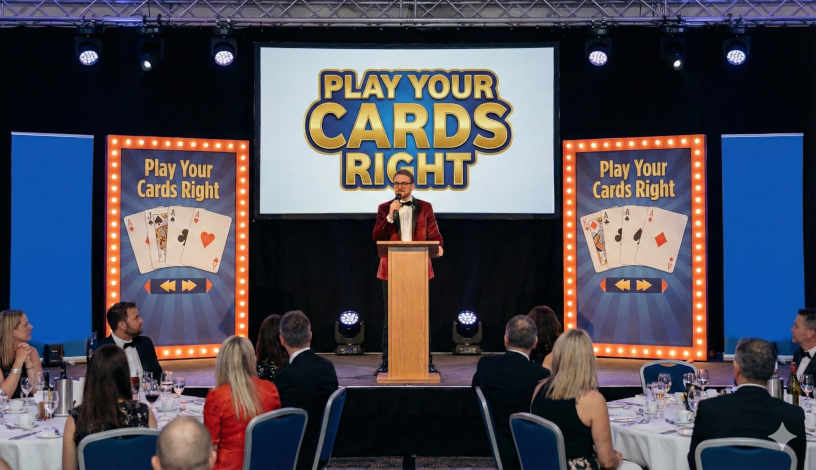
Interactive, table-to-stage formats consistently outperform passive entertainment at a seated gala. I run formats like Family Fortunes, The Generation Game and Play Your Cards Right, adapted for corporate audiences, precisely because they get the whole room competing and laughing together rather than watching one act perform at the front.
The format matters less than the principle: entertainment at a gala dinner should involve the room, not just face it. A band or a comedian facing an audience still works, but woven between courses rather than as one long block, it holds attention for longer and gives tables something to talk about between segments.
I have run a table-based higher-or-lower card game at corporate galas that takes barely five minutes but leaves the room noticeably louder and warmer for the segment that follows it. That is the real value of a short interactive break: it is not the game itself people remember, it is that the room came alive together, which makes whatever comes next, an award, a speech, a fundraising ask, land better.
Where does a live pledge or auction fit, if you’re running one?
If your gala includes a fundraising element, whether that is a live auction, a pledge, or both, it needs its own protected slot in the running order, ideally straight after the main course while energy is still high and before dessert service pulls attention back to the table. Rushing a fundraising moment between two other segments is the single most common way I have seen a gala underperform on the night, regardless of how good the cause or the room is.
That segment is its own specialism. If your gala needs a dedicated charity auctioneer to run the fundraising moment properly, it is worth booking that separately from general entertainment, and briefing the two roles together so the handoff on the night is seamless rather than visible.
A simple checklist before you book a gala dinner host
- Confirm the total evening length and where the formal moment sits inside it.
- Decide who holds the microphone from welcome to closing remarks, and keep it to one person.
- Build two buffers into the schedule: after the reception, and after the main course.
- Plan entertainment between courses, not just one act at the end.
- If there is a fundraising segment, give it a named, protected slot.
- Share the running order with the venue, the caterer, and anyone on AV before the day.
Get those six right and the rest of the evening tends to look after itself. I have run enough gala dinners to know the room forgives almost anything except a dead stretch with nobody holding it, and that is the one thing worth planning against hardest.