In short
- An event host with TV experience brings habits television demands: working to a timed rundown, staying composed on camera, and recovering from a live fault without the audience noticing.
- Business acumen and event management experience matter just as much: knowing how a conference agenda, an award ceremony running order, or a product launch schedule actually needs to work.
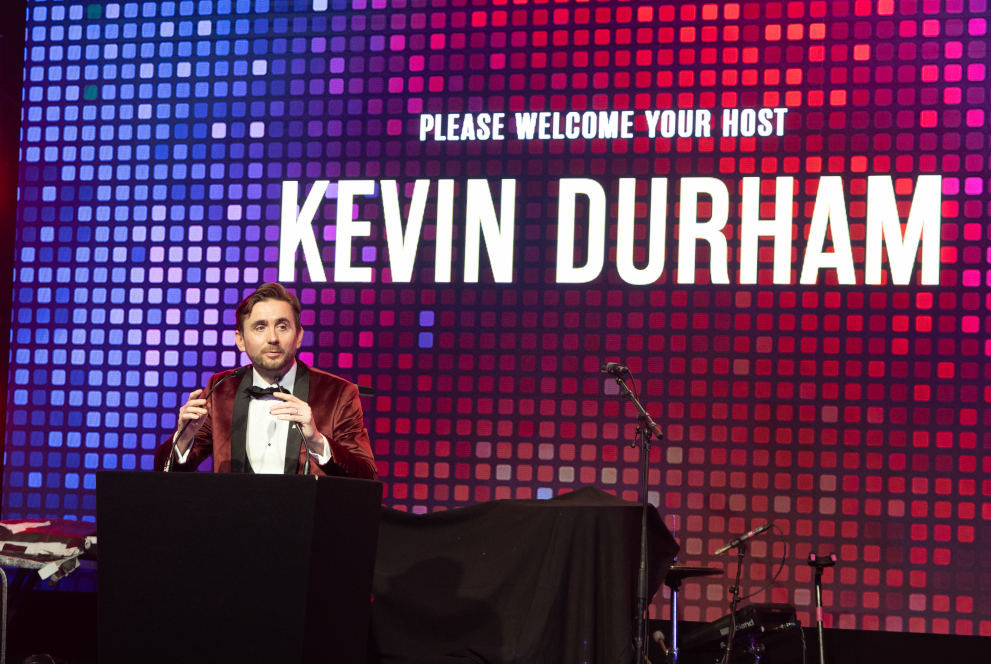
- Kevin Durham combines both: TV presenting for Fox, Warner, and Universal Studios, plus years running conferences, award ceremonies, and festivals for major UK and international brands.
- Real client feedback (Fireaway, Zentar UK) backs this up in terms of clarity and reliability, not just stage presence.
- Direct booking means the person you brief is the person who shows up, with no agency layer in between.
What does an event host with TV experience actually add to a corporate event?
An event host with TV experience brings the discipline of working to a schedule that does not bend for anyone, because a broadcast rundown does not stop for a nervous presenter. That discipline transfers directly to a conference agenda drifting behind time, a product launch with a fixed embargo, or an award ceremony with thirty names still to call before the room’s patience runs out.
It also brings composure under a specific kind of pressure: performing to camera, taking direction through an earpiece, and continuing smoothly when a guest goes off-script or a segment overruns. None of that forgives hesitation, and none of it looks like hesitation to the audience when it is done well.
Why does business acumen matter as much as stage presence?
Because a corporate client is not just buying a performance, they are buying someone who understands what the event is actually for. A product launch has commercial stakes: a wrong tone in front of press or stakeholders costs more than an awkward pause would at a private party. An award ceremony has reputational stakes for every sponsor whose name gets read out.
Understanding those stakes changes how a host prepares. It means treating a conference agenda as something to interrogate for weak points before the day, not just deliver on the day, and it means knowing when a light touch is appropriate and when the room needs the host to simply get out of the way of the message.
Kevin Durham’s background: TV, comedy, and corporate hosting
I have worked as a TV presenter for Fox, Warner, and Universal Studios, and interviewed guests including Will Ferrell, Tom Hardy, Reese Witherspoon, and Robin Williams. I have also worked as a comedy film actor and producer, and at one stage came close to landing my own chat show on Comedy Central.
My first professional event, in 2005, had me sharing a stage with Annie Lennox. Since then the work has moved into corporate hosting for major UK and international brands across finance, retail, and technology, award ceremony hosting, and family and festival events managing crowds of over 10,000. The television background did not stay behind when the audiences changed to boardrooms and ballrooms. It shows up as the same instinct: read the room, hit the mark, and never let the audience see the machinery.
Managing a festival crowd of that size is a genuinely different skill from working a single stage indoors, and it is one that took years of live broadcast work to build properly. There is no relying on proximity to a microphone to hold an audience, no single moment where the whole crowd is won over, and often multiple stages and changing weather to manage across the same afternoon. The habit that carries over from television is treating every minute as live, because at that scale it genuinely is, with no retake available if the energy drops.
What does event management experience add that presenting talent alone does not?
It adds the ability to run the whole evening rather than just perform a slot within it. A confident presenter can deliver a good five-minute segment. Event management experience means understanding the run sheet as a whole, knowing where the pinch points are (a speaker changeover, a technical handover, a sponsor moment that has to land at a specific time) and managing the evening around them rather than just through them.
This is also where a business-and-TV background compounds rather than simply adding up. Preparation habits from broadcast work (a full run-through, a briefing on every name and every cue) combine with an event manager’s understanding of where an evening tends to go wrong, which is usually the handover points rather than the content itself.
What clients notice when business, TV, and event management experience come together
Fahim Modak, Director at Zentar UK, described the result after their awards evening: “My company used Kevin’s services for our awards evening, and we were blown away with his performance. From the time of engagement Kevin was very clear and communicative, gave great advice and set clear deadlines. We will definitely be working with Kevin again.”
Doreen K, Project & Operations Manager at Fireaway, saw the same combination under time pressure: “I booked him last minute and with minimal prep time, he managed to provide an exceptional service. He was professional and went above and beyond to ensure that our guests were engaged throughout the course of the event.” Neither comment mentions a single joke or performance flourish. Both are about communication, deadlines, and reliability, the business side of the job doing its work quietly underneath the stage presence.
Why does direct booking matter for this kind of event host?
Direct booking matters because the person you brief is the person who turns up, with no agency layer that can substitute a different presenter at the last minute. When you book through a speaker agency, the profile you are sold is not always the person who arrives, and the pre-event consultation, if it happens at all, may happen with someone other than your actual host.
Booking directly also means the pre-event consultation is standard rather than an add-on. Event managers who have previously used an in-house senior figure as host, or a generic agency booking, often describe the same gap: little or no real preparation conversation happened before the day, and it showed once the room was live.
There is a second, quieter problem with the in-house option specifically. Putting a senior manager or executive on stage as host takes that person out of the room as a guest, which creates its own awkwardness when they are trying to present rather than mingle with colleagues and clients. It also means the person running the evening usually has no dedicated experience managing a live programme, which shows up exactly when something needs recovering rather than simply reading from a script.
How does this combination apply to different types of corporate event?
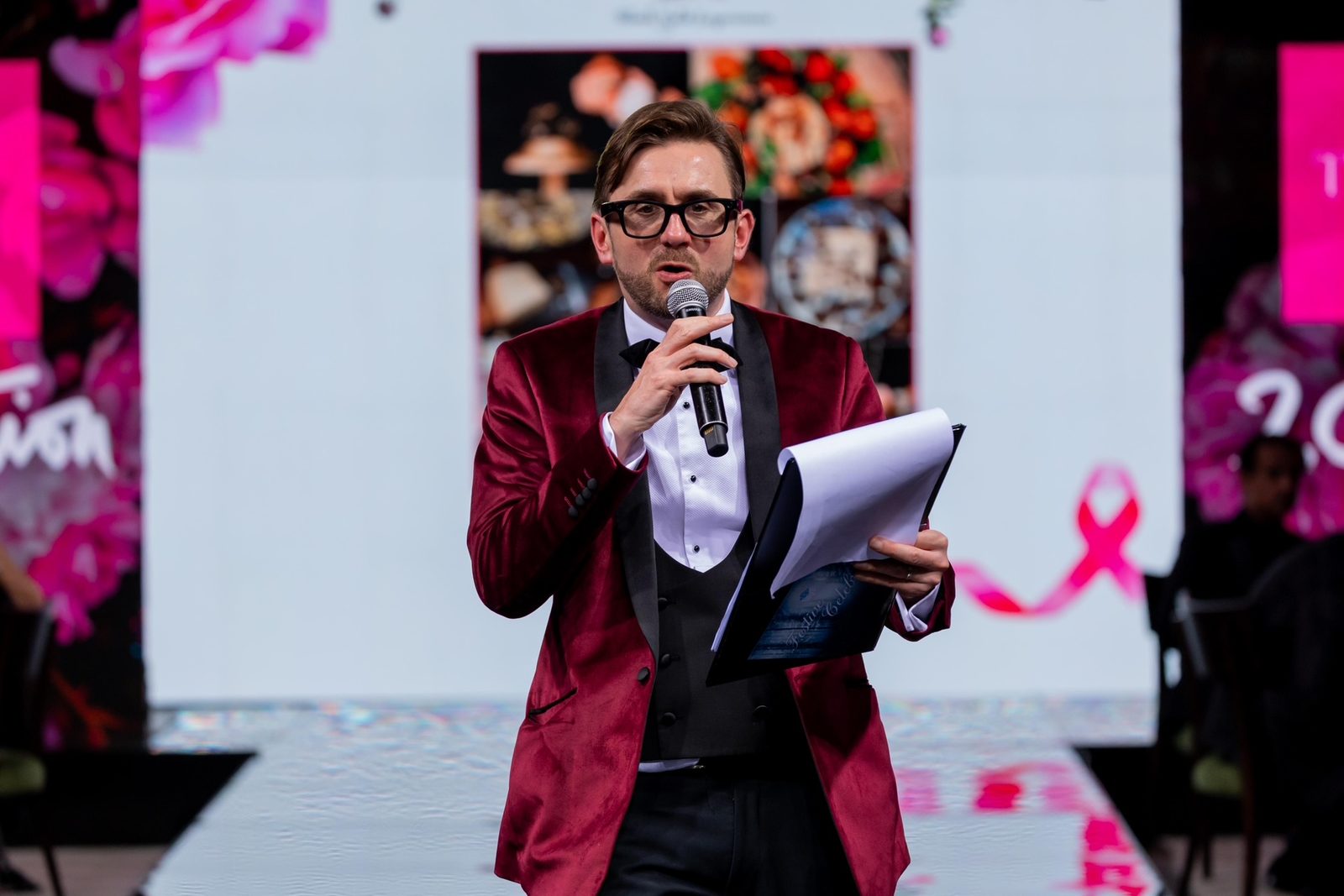
It applies differently depending on the room. A conference rewards the event-management side most heavily: managing energy across a full day, briefing each speaker personally, and keeping a Q&A session feeling like a genuine exchange rather than dead air. An award ceremony rewards the TV-honed composure most: reading exactly when energy needs to lift through award twenty-two of thirty, and recovering cleanly if a sponsor video fails to play, which I have done by narrating the gap live rather than leaving silence.
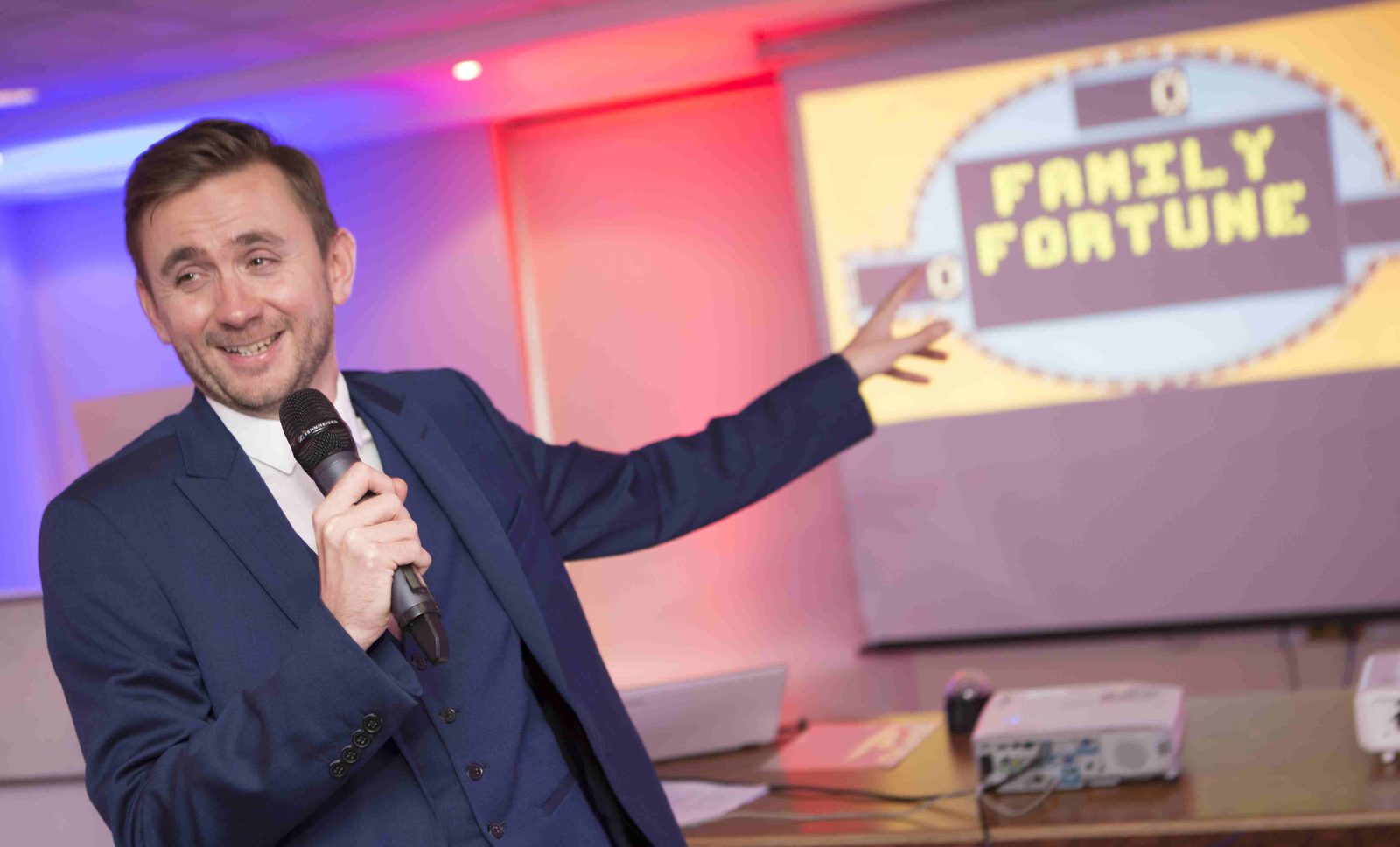
For events that also need interactive elements, the entertainer side of the business, covering formats such as Family Fortunes, The Generation Game, and Play Your Cards Right, depends on business awareness too: reading which colleagues in the room will enjoy being picked and which would not, before the format ever gets confirmed. Getting that judgement wrong at a corporate event is a different order of problem to getting it wrong at a private party, because the people on stage are colleagues who will still be working together on Monday morning.
Product launches sit at the far end of this spectrum, where the business stakes are highest and the room is least forgiving of a tonal misstep. A launch audience typically includes press, investors, or senior stakeholders who are assessing the brand as much as the presenter, and the host’s job is to keep the message central rather than compete with it. That is a business judgement dressed up as a presenting one, and it is where TV experience earns its keep: staying composed and on message when a demo glitches or a run of show changes at the last minute, without ever making the moment about the host.
Booking an event host with business, TV, and event management experience
If your event has commercial or reputational stakes, whether that is a product launch, an award ceremony, or a conference in front of stakeholders, the presenting talent is only part of what you are booking. The business understanding and event management discipline behind it are what keep the evening safe when something does not go to plan.
For charity events, the same combination of composure and commercial awareness applies directly to fundraising through the charity auctioneer side of the business. To check availability or talk through what this looks like for your specific event, email hello@eventhost.info or call 07596 851647.