In short
- An event compere is the person who runs the whole evening from the front: introducing, linking segments and keeping the energy up between them.
- The forgettable ones just announce the next item. The good ones read the room, control the timing and cover the moment something goes wrong.
- Most of the quality is decided in the briefing, before anyone is anywhere near a stage.
- I have held a festival crowd past 10,000 and covered a sponsor video that failed live, and both came down to the same skill: never leaving a gap.
- If a room felt flat last time, it usually had an announcer, not a host.
I have watched plenty of events where a perfectly nice person stood at the front and read the running order aloud. Nothing went wrong, exactly, and nobody remembered a second of it. That gap, between a night that merely happened and a night that felt run, is the whole case for hiring a proper event compere rather than handing a microphone to whoever is free.
What does “compere” actually mean?
A compere is the person who introduces the acts, speakers or segments at a show or event and holds the whole thing together in between. The Oxford definition puts it as a person who introduces the performers in a show or programme, and the word carries a slightly theatrical, British flavour: think a host who is part of the entertainment, not just an announcer. You will also see it spelled with an accent, compère, and pronounced “kom-pair”.
In practice the word overlaps heavily with master of ceremonies, or MC. The distinction is mostly one of feel. A compere leans warmer and more performance-led; an MC can sound more formal and procedural. On the night, the same person is usually doing both jobs. If you want the fuller breakdown, I have written a plain-English guide to what a compere is.
What does an event compere do on the night?
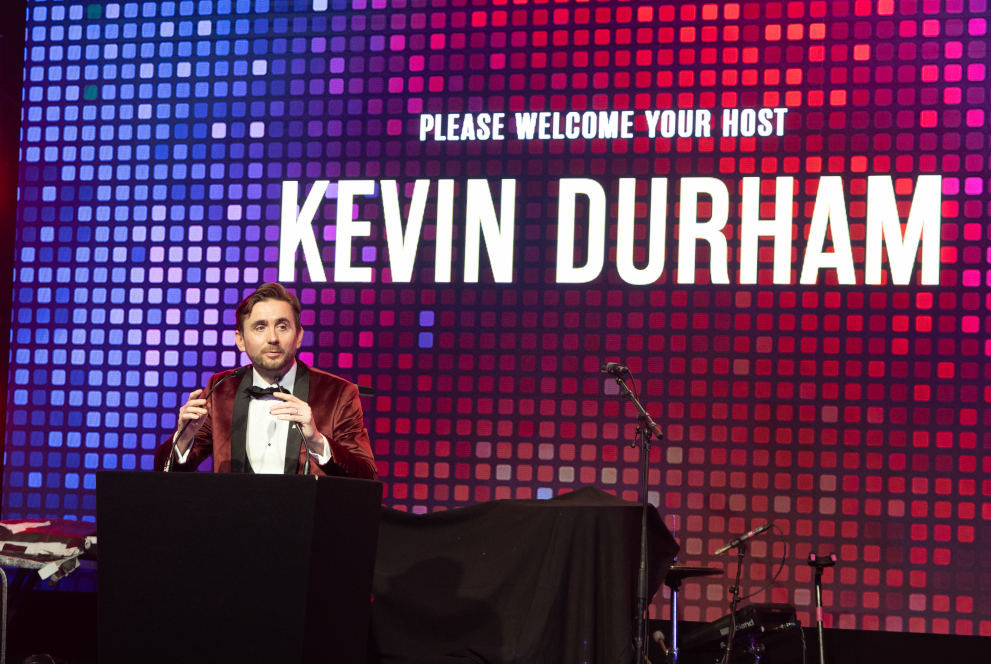
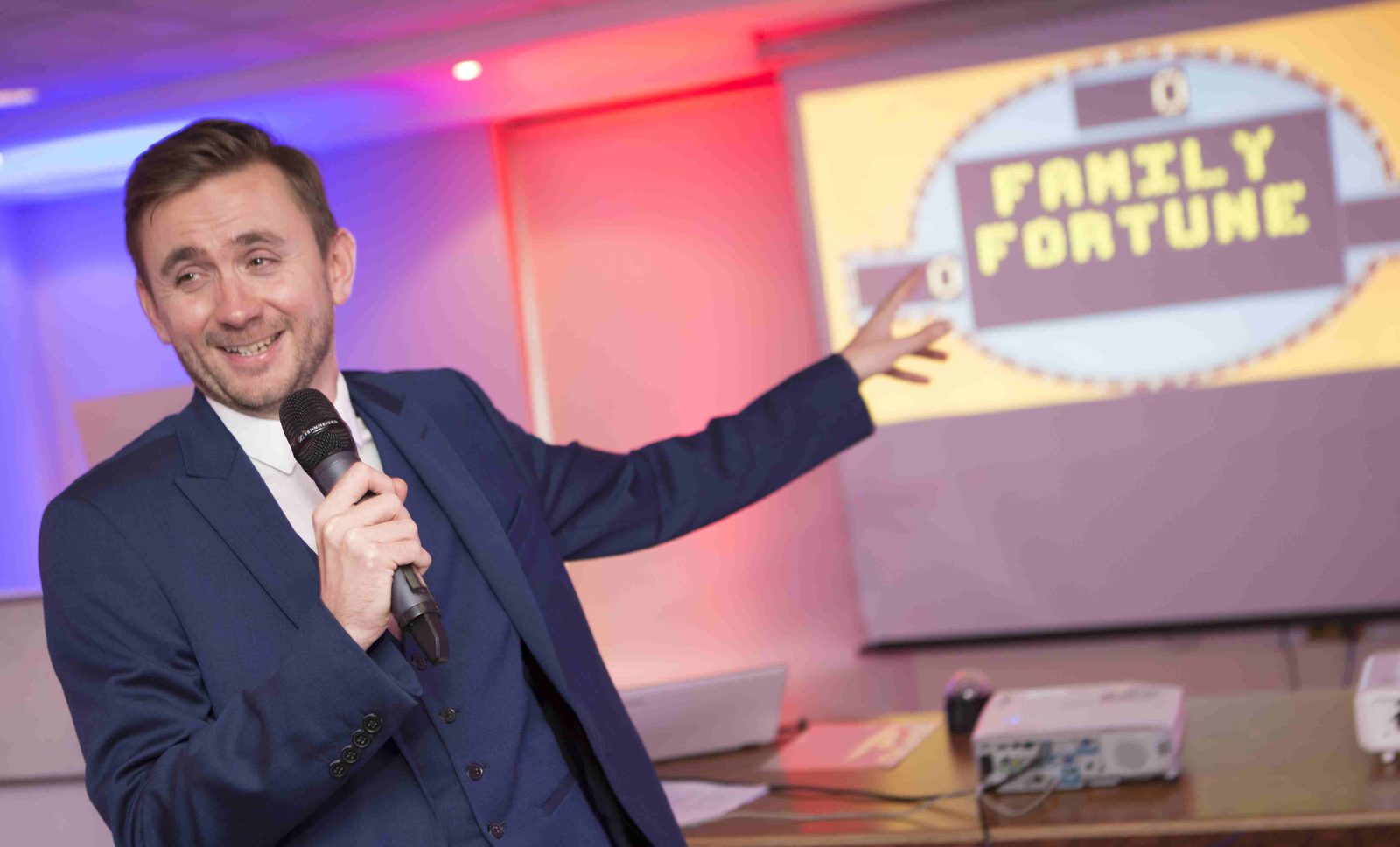
An event compere runs the evening from the front so that nobody in the audience ever has to wonder what happens next. The dictionary definition of an MC, a person who introduces guests or entertainment at a formal occasion, only describes the visible half of it. The real work is the connective tissue: opening the room, setting the tone, introducing each speaker or act, filling the changeover while the next person gets miked up, managing the timing, and closing the night cleanly.
Done well, most of that is invisible. You notice the individual moments (a sharp intro, a laugh that lands, a smooth handover) but you do not notice the join. That invisibility is the point. A good compere makes the evening feel like one continuous thing rather than a series of items that happen to be on the same stage. For a wider look at the role beyond the mic, here is what an event host does across a full day.
What separates a good event compere from a forgettable one?
The difference is that a good event compere reads the room and adjusts in real time, while a forgettable one reads the running order and hopes. That single habit, watching the audience rather than the script, is where almost everything else comes from.
The forgettable version is easy to picture because most of us have sat through it. Low energy, eyes down, “and next up we have…”, then a retreat to the side of the stage until the following announcement. Technically a host. Functionally a signpost. The room slowly cools because nobody is actively keeping it warm.
The professional version looks like this:
- Prepares properly. Names checked, pronunciations confirmed, running order rehearsed with the organising team.
- Watches the audience, not the clock alone. Reads whether the room needs lifting or settling, then acts on it.
- Controls timing without it showing. Pulls a section back on schedule, or lets a good moment breathe, deliberately.
- Covers trouble live. When something fails, the audience never learns there was a problem.
- Carries the client’s message. The night still does its job, whether that is thanking a team or launching a product.
Reading the room is the whole job
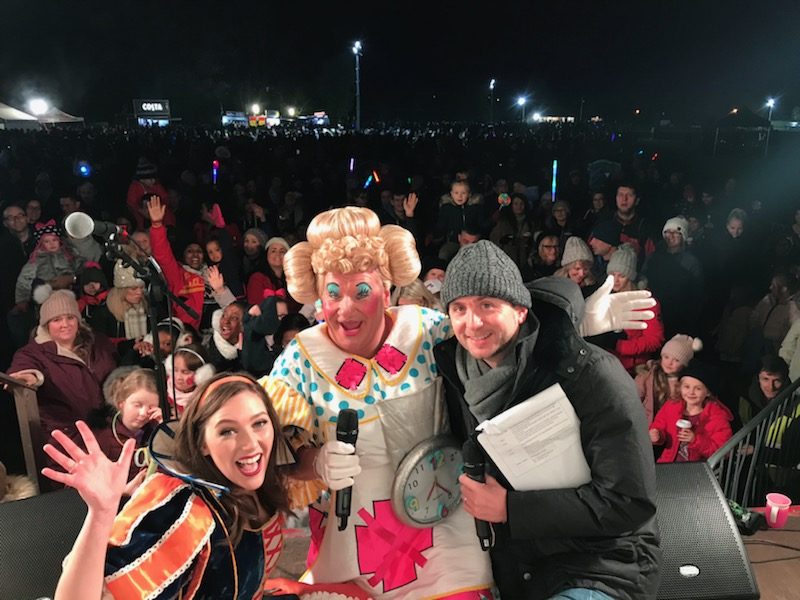
At a family festival with a crowd past 10,000, reading the room stops being a nice-to-have and becomes survival. A microphone will not do the work for you at that scale, and you cannot afford a single dead moment, because ten thousand people are always one dull minute away from drifting to a different stage. You keep the energy visibly high from the moment you walk on, and you make people feel personally addressed even at distance.
Those events came with multiple stages, changing weather and running-order changes handed to me late. The skill that holds it together is adapting live without the audience ever seeing you adapt. It is exactly the same skill in a conference room of 200, just quieter. After lunch, a room sags. A compere who is genuinely reading it builds in a lift at that point rather than ploughing on and losing everyone.
How do you keep a night from feeling flat when things go wrong?
You keep it alive by never leaving a gap, and by treating the thing that just broke as normal rather than a crisis. Awards evenings are where this gets tested hardest, because the mistakes are the most visible: a mispronounced name, a winner left standing at the wrong moment, a joke that misreads a room full of people who all know each other.
I have covered a sponsor video that failed to play, live, by carrying the room until it was fixed. I have handled a finalist list that changed at the last minute, and pulled a ceremony that ran badly over back on time so the final award still landed with the energy intact. None of that is heroics. It is preparation plus the refusal to let silence become dread.
Silence, used on purpose, is a tool rather than an emergency. A deliberate pause lands a point or sets up a laugh, and Toastmasters International notes that even a brief pause “interrupts the daydreaming of audience members and brings them back to active listening.” The difference between a pro and a panicker is knowing which silences to hold and which to fill.
The compere is the connective tissue of the evening
A night made of strong individual parts can still feel flat if nothing links them, and that link is the compere’s real product. Your speakers, your winners, your headline act: they each own their few minutes. Everything between those minutes belongs to the host, and that in-between time is most of the evening.
This is why the quality is decided in the briefing, not on the stage. A pre-event consultation is standard for me, because the only way to link segments cleanly is to understand them before the night. Clients who have used in-house MCs or a celebrity name often tell me those options arrived with little or no preparation conversation, and it showed. If you are booking anyone, it is worth knowing how to brief them so you get the same benefit.
Do you need a compere at a wedding?
A wedding compere is worth it whenever you want the day to run to time without a family member having to police the schedule. The role is the same connective tissue in a warmer setting: announcing the room in for the meal, coaching a nervous speaker through their moment, keeping the gap between courses and speeches from turning into a lull, and steering the evening without the stiffness people associate with a traditional toastmaster.
The instinct to hand it to a confident uncle is understandable and usually a mistake. The moment a guest becomes the host, they stop being a guest, and they spend the day working instead of enjoying it. A professional keeps the day moving so the people who matter get to be present in it.
Quick answers: event compere
What is an event compere? The professional who runs an event from the front: introducing, linking segments and keeping the energy up between them, so the night feels like one produced show rather than a list of items.
What makes a good compere? Reading the room and adjusting live, tight timing that does not show, thorough preparation, and the calm to cover anything that fails without the audience noticing.
Is a compere the same as an MC? Effectively yes. Compere leans warmer and more performance-led, MC a touch more formal, but on the night one person does both jobs.
Do I really need one for a smaller event? If you want it to flow and finish on time without a colleague or relative running it, yes. The connective tissue matters just as much at 40 guests as at 400.
Most rooms only need one thing from the front of the stage: someone experienced holding the whole evening together so nobody else has to. If that sounds like the night you are planning, get in touch or call 07596 851647 and tell me what went flat at the last one.