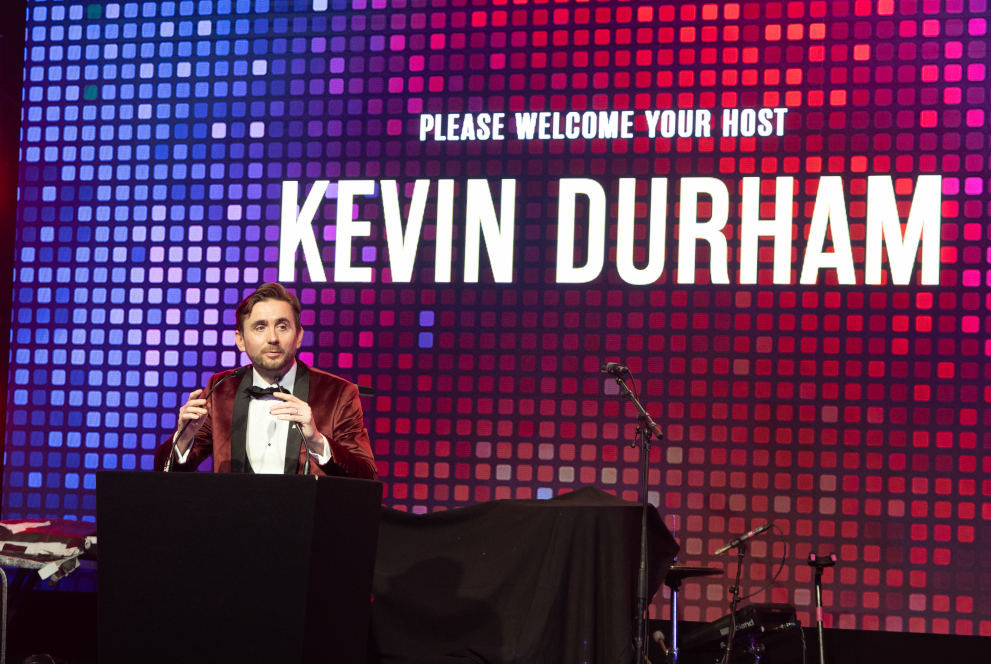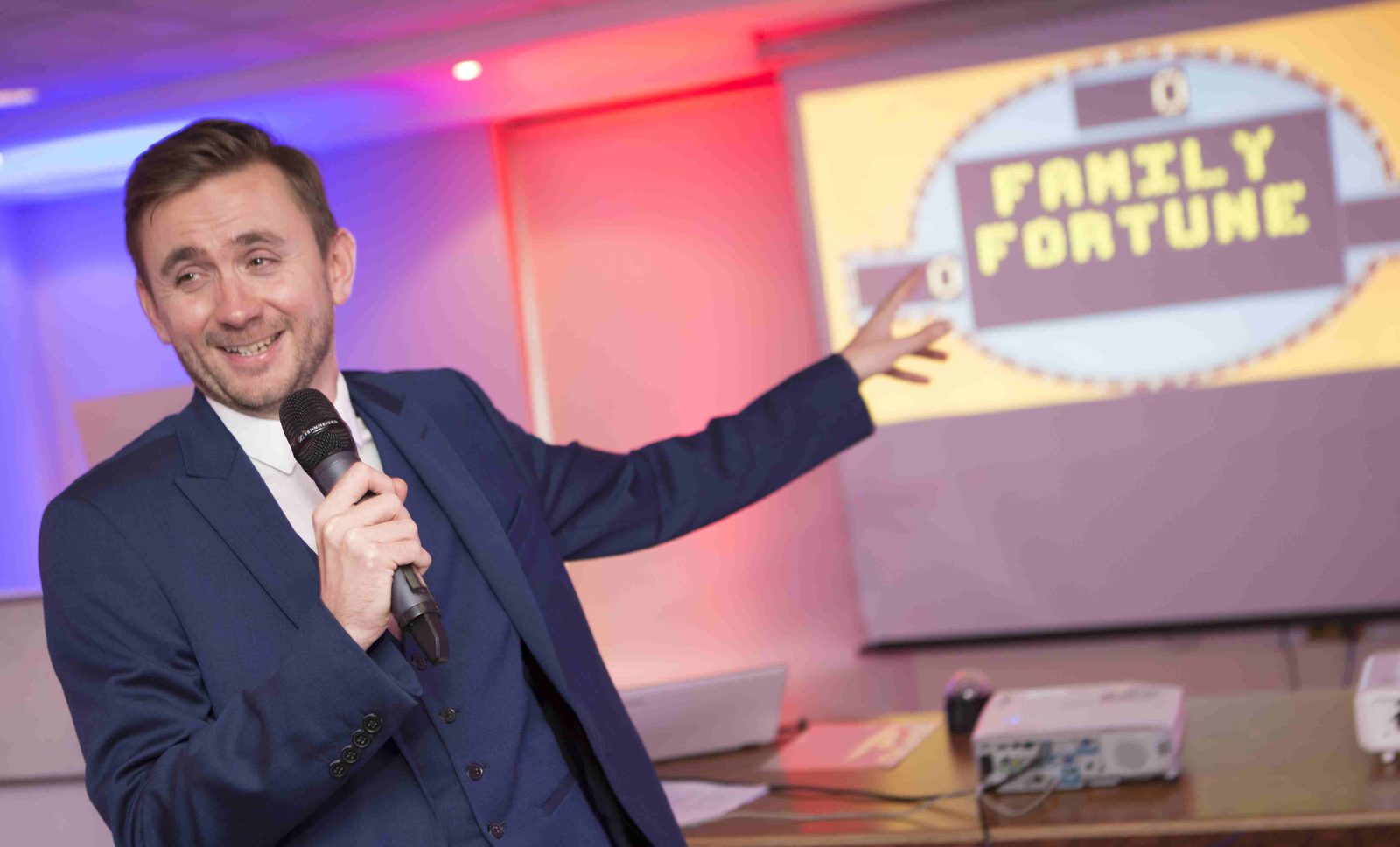

- An event host manages the complete flow of a live event: introductions, transitions, time-keeping, and audience energy, all running simultaneously.
- Most of the quality you notice on the night was built in the preparation beforehand. The host’s work starts weeks before the event.
- “Event host” and “MC” are often used interchangeably, but they describe slightly different emphases. Understanding the difference helps you brief the right person.
- Hiring a professional removes the hidden programme management burden from your team so everyone else can actually be present at the event.
If you have ever sat in an audience and thought “this evening is running really smoothly,” it is almost certainly because there was a professional event host at the front of the room making it look that way.
The role is widely misunderstood. Most people assume it involves a lot of talking, a few introductions, and an occasional joke between segments. In practice, it is a preparation-heavy job that determines the quality of everything else in the programme.
This post explains what an event host does, how the role differs from an MC, a toastmaster, or an event planner, and why getting the right person matters more than most event briefs acknowledge.
What is an event host?
An event host is the professional who leads a live event from the audience’s perspective: opening the proceedings, linking segments, managing the programme, and holding the room’s energy across the full running time.
The term covers a wide range of formats. A conference host facilitates a multi-speaker day. An award ceremony host guides the room through a formal programme of presentations. A gala dinner host manages the atmosphere across an evening with multiple acts, speakers, or fundraising segments.
What they all share: responsibility for the experience the audience has, from the moment the programme begins to the moment it closes.
What does an event host do before the event?
The work that looks effortless on the night is built in the weeks before it. The event host is the glue that holds everything together, and that preparation starts long before the venue doors open.
Pre-event responsibilities typically include:
- A briefing call with the organiser to understand the objectives, audience profile, and tone
- A detailed review of the running order, including questions about likely timing risks
- Research on every speaker, award winner, or presenter the host will introduce
- Pronunciation checks on names, which matters most at an award ceremony where every wrong call is heard by everyone in the room
- Writing transitions and links between segments in advance, not on the night
- A walkthrough of the venue and AV setup before guests arrive
The quality of an event is determined in the briefing, not on the night. Events that run smoothly are almost always the ones where the host was genuinely involved in the programme beforehand. The events that feel rough are usually the ones where the host received a running order by email a few days before.
What does an event host do on the day?
On the day, a professional event host manages several things simultaneously: the programme, the audience, the speakers, and the unexpected.
Indeed UK identifies 12 core responsibilities across the event lifecycle, from engagement facilitation and time management through to event closure. In professional presenting terms, the most critical come down to four.
Opening the room. The first 90 seconds set the tone for the entire event. A professional host opens with authority and warmth, signals what kind of event this is going to be, and gives the audience a reason to pay attention from the start.
Managing the running order. A programme never runs exactly to schedule. The host absorbs overruns, tightens transitions, and keeps the evening on track without the audience feeling rushed or aware that anything has changed.
Speaker introductions. Each introduction is a short act of persuasion. The host frames a speaker’s credibility so the audience is already interested before that person says a word. Reading a biography aloud is not this. A professional writes introductions specifically for each audience and each occasion.
Handling what goes wrong. At every event, something does. At award ceremonies I have hosted, this has included a finalist list that changed at the last minute, a sponsor video that failed to play mid-ceremony, and a programme that ran 40 minutes over with the final award still to present. The host’s job is to manage all of this without the room knowing.
What is the difference between an event host and an MC?
In practice, the terms are often interchangeable. Many professionals use “event host” and “MC” to describe the same role. There is, however, a distinction worth understanding before you write a brief.
Soul Artists describe an MC as “a mix of a presenter and a host who controls the flow of the event.” Christophe Fox adds that the MC “manages the programme schedule and transitions,” while the event host “manages audience energy and engagement,” with more weight given to energising the crowd and facilitating interactive segments. The MC title implies a more formal, ceremony-led function: introducing acts, managing transitions with precision, adhering strictly to the agenda. The “host” title implies a slightly warmer remit, with more weight given to audience connection and the overall feel of the room.
In UK events, “compere” is often used in place of MC for variety and entertainment formats. A widely referenced guide to UK event terminology notes that comperes “need a strong personality and are usually quick-witted,” while a host combines audience engagement with “a sense of occasion.” The Master of Ceremonies role traces back to 5th-century ceremony in the church and carries the most formal connotation in the UK events market.
For corporate events, the distinction rarely matters in practice. What matters is whether the person can manage your specific programme and audience.
Event host vs toastmaster: how the roles differ
A toastmaster is a formal role specific to ceremonial occasions, most commonly weddings and formal dinners. Their function is to announce proceedings, manage the traditional order of the evening, and maintain protocol. They work to a set script of established announcements.
A professional event host has a wider and more flexible remit: adapting to the programme in real time, writing their own material, and actively managing the energy of the room rather than announcing its schedule. The two roles serve different purposes and suit different events.
Why hire a professional event host instead of someone internal?
The most common alternative to a professional event host is a senior internal figure: a director, a manager, or someone in the communications team who is confident speaking in front of people.
This approach carries a cost that rarely appears in the event brief. That internal person is simultaneously managing their professional relationships with the people in the room, their own nerves, their standing within the organisation’s hierarchy, and the mechanics of the programme. A professional host is managing one thing: the quality of the event.
There is also a practical difference in what a professional can do. An internal presenter cannot comfortably hold a speaker to time without risking a relationship. They cannot easily redirect a room that is drifting during a panel. They cannot fill an unexpected gap with prepared material and genuine composure.
Clients who have moved from internal hosts to a professional often say the same thing: their previous experience left the event feeling flat, with no one actively holding it together between segments. The evening happened. It did not land.
A professional event host takes the programme management burden entirely off your team and removes the risk of the event’s shape depending on someone who was also trying to enjoy the evening as a guest or colleague.
What to look for when choosing an event host
The right event host for your event is not simply the most confident person you have seen on a stage. Four things matter more than charisma in isolation.
Preparation process. Ask what their pre-event process involves. A professional has a defined answer: a briefing call, a running order review, speaker research, and a venue walkthrough. “I’m quite adaptable on the night” is not a process.
Relevant experience. An event host experienced in conferences is not automatically the right fit for a gala dinner, and vice versa. Ask for specific examples that match your format, tone, and audience size.
Composure under pressure. Every experienced host has a story about something going wrong on the night. Ask what happened and what they did. The quality of that answer tells you more than any showreel.
Direct booking. The host who personally carried out the briefing, the preparation, and the walkthrough is a different proposition from a name supplied through an agency. You want the person who was briefed to be the person on stage.
If you are planning a corporate conference, award ceremony, gala dinner, or product launch and want to discuss a brief, get in touch.