In short
- A professional corporate event MC runs the whole room, not just the microphone: energy between segments, timing, and your message carried all day.
- The gap between a booked host and an internal one shows in the quiet moments, after lunch and when something goes wrong.
- Ask a colleague or the CEO to host and they usually end up performing instead of enjoying the night, and the room feels it.
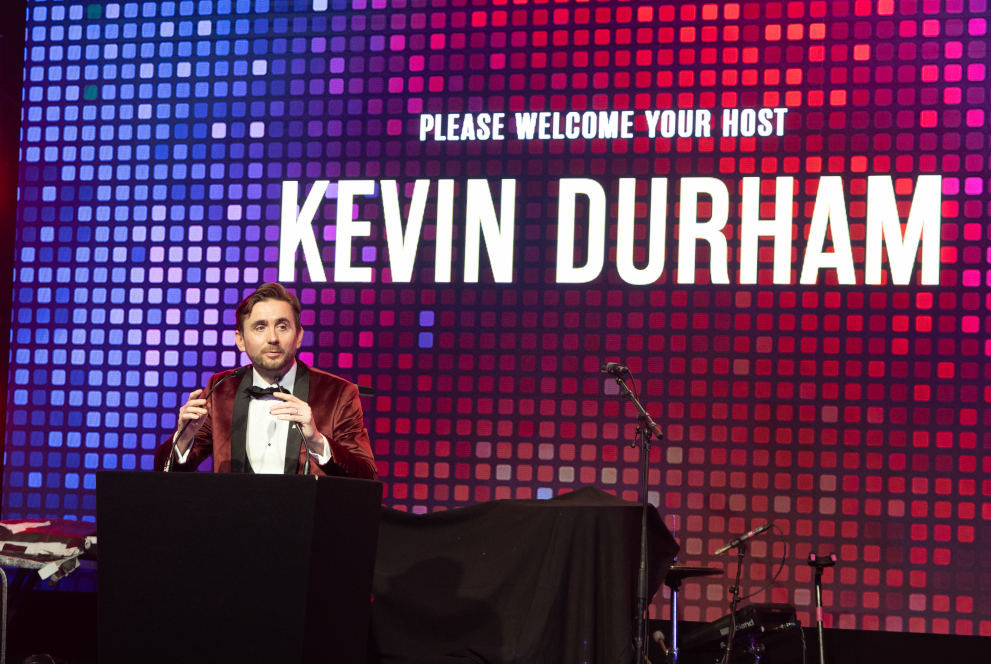
- My difference is that I come from television and game-show entertainment, so I hold a room like a show rather than reading a running order aloud.
- Book someone whose day job is holding the room, and you free your team to be guests at their own event.
I have spent 20 years watching corporate nights live or die in the gaps between the things people planned. The speeches get written, the awards get engraved, the AV gets tested, and then a corporate event MC either holds all of it together or lets it sag in the middle. Most people only notice the host when there is nobody good in the role. This is a look at what a professional actually does, and what booking one gives you that asking a willing colleague never will.
What does a corporate event MC actually do across the day?
A corporate event MC runs the room from the first welcome to the last goodnight, keeping the energy, the timing and the message consistent while everyone else does their bit and steps away. The visible part is the introductions and the links between segments. The larger part is invisible: watching the room, adjusting pace, and quietly deciding when to speed up, slow down or lift the mood.
Across a typical day that means opening with enough energy to settle a distracted room, handing cleanly to each speaker, chairing the questions so they do not turn awkward, and carrying the thread from the morning session to the evening awards. One person, the whole event, so the audience never feels the joins. If you have been asked to run one yourself rather than book someone, my guide on MCing it yourself is written for you instead.
What difference does a professional MC make?
The difference is control of energy, and it is most obvious exactly where amateurs lose it. A professional master of ceremonies treats the day as a series of peaks and recoveries, not a list of items to announce.
Take the slot straight after lunch. The early-afternoon dip in alertness is a documented thing, not a feeling: research on the post-lunch dip records reduced alertness and cognitive performance between roughly 2pm and 4pm, and it is a known cause of workplace lapses (study). A speaker who walks into that flat room without help will lose it inside five minutes. My job is to hand them a warmed audience, so the content lands instead of dying. That single handover is often the difference between a conference people remember and one they endure.
The moments that go wrong, and who covers them
A good host absorbs the problem so the room never sees it, which is the whole point of paying for one. Things go wrong at every event: a sponsor reel that will not play on cue, a finalist list that changes at the last minute, a session that runs 20 minutes long and eats into the awards.
I have covered a sponsor video that failed live, filling the gap myself while the AV team fixed it, and the room simply thought it was part of the show. I have pulled a night that ran badly over back on time without cutting the moments that mattered. The reason to book a professional is not the good half of the evening, which almost anyone can front. It is the 90 seconds when the plan breaks, and someone has to keep 300 people comfortable while it does.
Why does asking a colleague or the CEO to MC a corporate event go wrong?
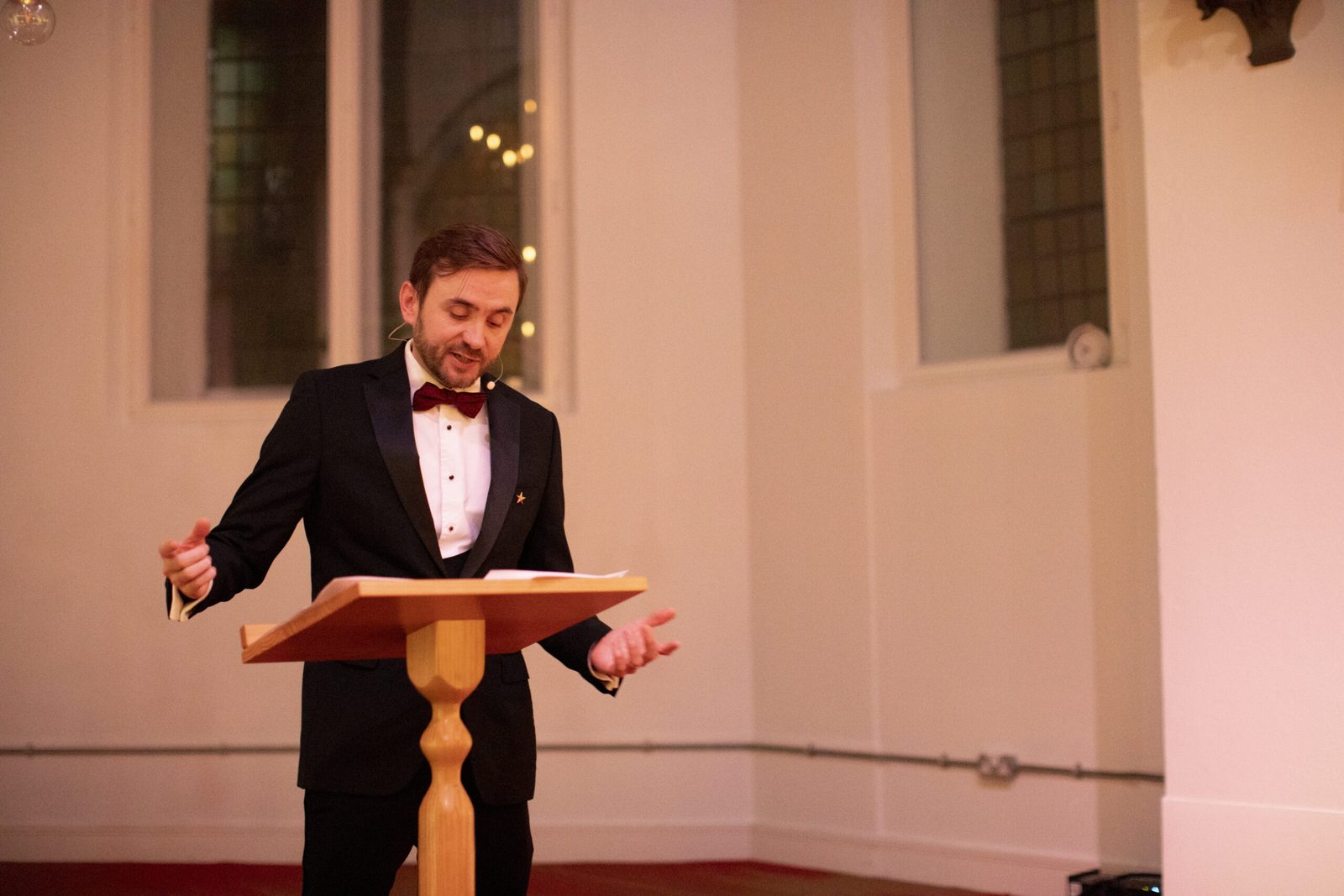
It goes wrong because a senior colleague asked to MC a corporate event stops being a guest and starts trying to perform, and they are rarely equipped to do both. They know the business, which is why the idea sounds cheap and safe. What they do not have is a way to read a cooling room, recover a running order live, or land a link between two segments without notes.
The pattern I hear from event managers is consistent: the internal host over-prepares the jokes and under-prepares the transitions, the energy drops whenever they leave the stage, and the person themselves spends the evening anxious rather than enjoying it. You also lose them as a leader in the room, because they are backstage worrying about the next cue. The night ends up costing more than a booked host, just not on the invoice.
When should you book a corporate event MC versus using someone in-house?
Book a professional the moment the event carries a message, an audience you want to impress, or a running order with more than a couple of moving parts. An internal voice is fine for a short, informal team update where nothing is really at stake. Anything with clients, press, awards or a full-day agenda deserves a host whose only job that night is the room.
A simple way to decide:
| Use someone in-house when | Book a corporate event MC when |
|---|---|
| It is short and internal | There are external guests or press |
| Nothing rides on the pacing | It is a full day or a long evening |
| The tone is casual | It is an awards night or product launch |
| No handovers to manage | Multiple speakers, segments or sponsors |
Attendee engagement is now one of the top ways organisers judge whether an event worked at all: in Cvent’s 2026 planner research, engagement tied as the single most-used success metric (report). That is precisely the thing a host is there to protect.
Why does the entertainer angle change the room?
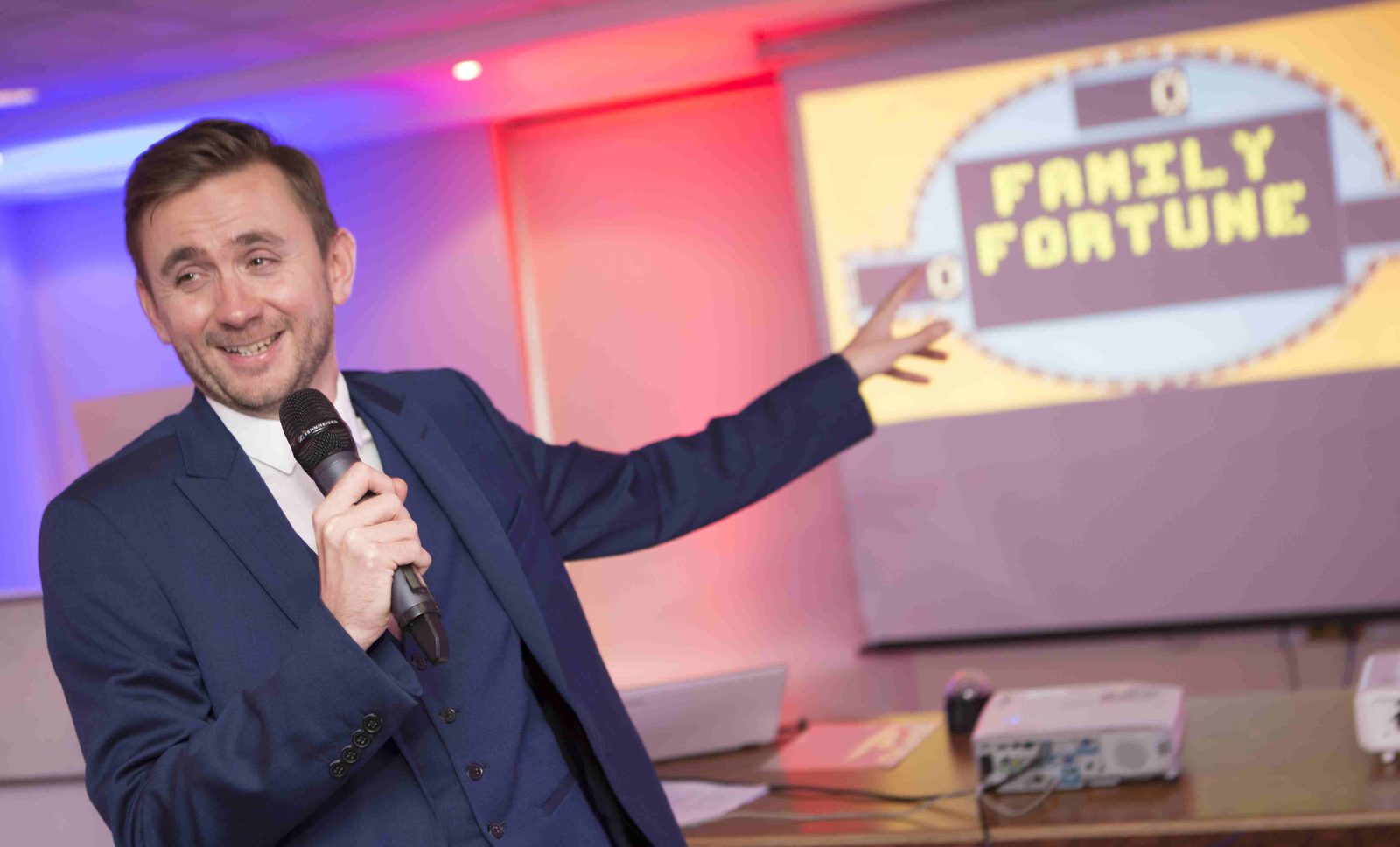
Because an entertainer holds attention by default, where a presenter has to keep asking for it. I came up through television and live comedy, so I run a corporate room the way I would run a show, and my signature is corporate entertainment built as game-show formats written for the actual people in front of me.
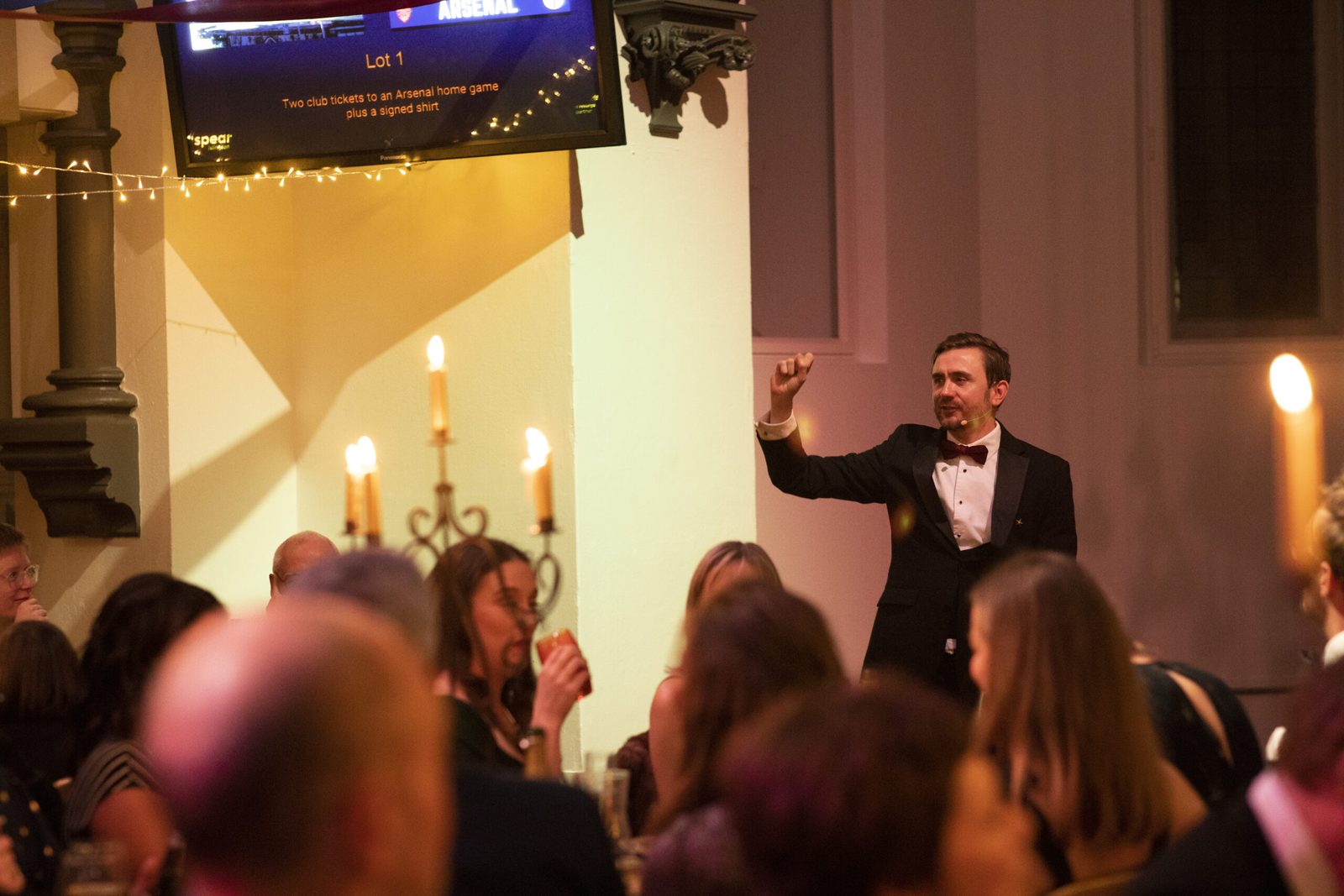
That means Family Fortunes with “our survey says” questions written for your teams, or splitting the whole room into two sides and rotating each round so nearly everyone plays rather than watches. My favourite recent example was an awards hybrid: a client wanted an awards night that did not drag for everyone who was not winning, so I interleaved the presentations with game-show rounds. Everyone stayed to the final award. That is the effect a host with an entertainer’s instinct brings, and it is hard to get from someone who only presents.
What should you look for in a corporate event MC?
Look for preparation first, because the night is won in the briefing, not on the stage. Ask how much time a host spends with you before the event, whether they do pronunciation checks on names, and whether they run the script with your team in advance. A host who wants a proper conversation weeks out is telling you they take the room seriously.
Then look for range and recovery. You want proof they can lift a flat room, chair a Q&A without it going silent, and stay calm when the plan changes. Ask for a specific story of something that went wrong and how they handled it live. Vague answers about being “adaptable” are a warning sign. Specifics about a real failure and a real fix are the reassurance you are actually buying.
What clients say about working with a host
The clearest picture comes from the people who have stood in the room and watched it work, so here is a short clip from one of my events with hosting and MC feedback from clients.
The themes are always the same: they wanted one person to run the whole evening rather than juggle an MC and a separate act, they had been let down before by a low-energy presenter who just announced the next item, and the difference they noticed most was the room staying alive between the planned moments. Testimonials from brands including Fireaway and Zentar UK sit on the site if you want the detail.
Quick answers: corporate event MC
What does a corporate event MC do? They run the whole event from welcome to close, keeping energy, timing and your message consistent while handling anything that goes wrong without the audience noticing.
How much does a corporate event MC cost? Fees are bespoke and set per event, based on the format, length and travel, so the honest answer is that it is a conversation rather than a price list.
Can we just ask a manager to host instead? You can for a short internal update, but for anything with guests, awards or a full agenda a booked host protects the pacing and lets your leaders stay in the room as guests.
How far ahead should we book? As early as you can, because the value is in the briefing and rehearsal, and good dates in the corporate season go months in advance.
If you have an awards night, conference or launch coming up and you want one professional holding the whole room together, talk it through with me or call 07596 851647. Tell me what went flat at the last one, and I will tell you honestly how I would run it.