
In short
- Learning how to MC a corporate event is less about the script and more about being the one person holding the whole night together.
- Build a minute-by-minute running order first, then rehearse the joins between segments, not just your own bits.
- Open with energy and a reason to listen, keep housekeeping short, and never wing your speaker introductions.
- The hard part is the unplanned moment: a failed video, a speaker who over-runs, a room that drifts. You cover it out loud and keep the room with you.
- When a room goes flat, a game-show round can pull everyone back in faster than any speech, which is where I earn my keep.
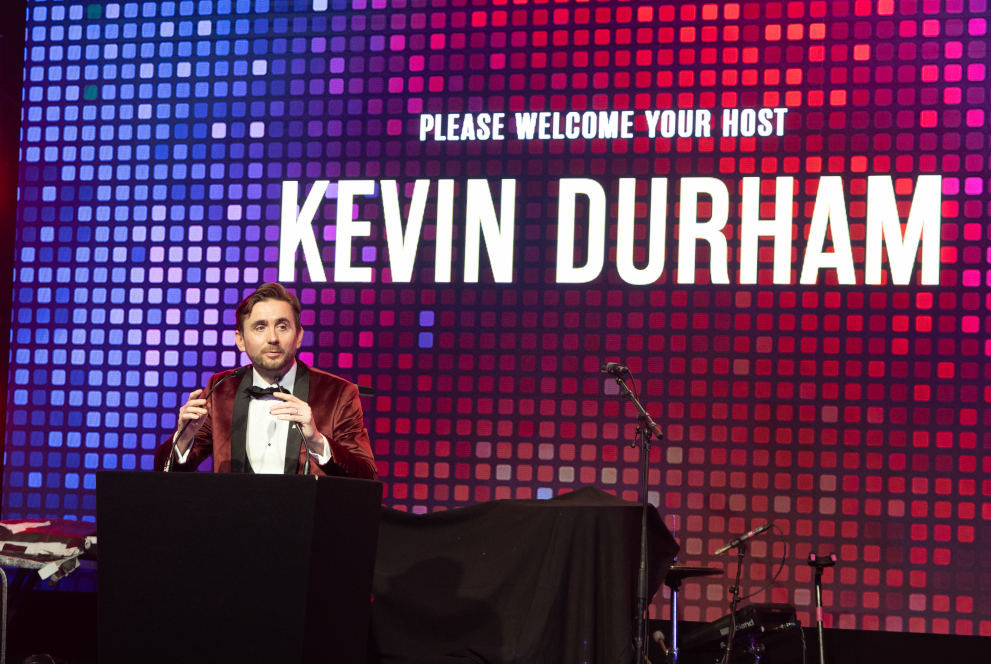
Being asked to MC a corporate event is flattering right up to the moment you realise nobody has told you what the role actually involves. I’ve spent 20 years hosting award ceremonies, conferences and product launches, and the difference between a night that flows and one that stalls is rarely the script. It is whether one person is genuinely holding the room together between the moments other people have prepared. Here is how to MC a corporate event so the evening feels produced, not just read aloud.
What does it take to MC a corporate event?
More than reading the running order into a microphone. The job of a corporate MC is to be the through-line of the evening: the person who sets the tone at the top, carries the energy across the gaps, introduces each speaker so they walk on to a warm room, and quietly fixes the things the audience is never meant to notice. Some organisers search for an emcee for corporate events and others want a corporate MC, and they mean the same role.
Think of yourself as the connective tissue. Speakers arrive, do their ten minutes and leave. The awards land, the panel finishes, lunch happens. You are the only person on the bill from the first word to the last, which means the room’s mood is largely your responsibility. Get that right and everything in between has room to breathe.
How to MC a corporate event: build the running order first
Before anything else, get the running order and turn it into your own minute-by-minute document. Ask the organiser for the agenda, the exact timings, who is speaking and in what order, where the sponsor moments sit, when breaks fall and when the room needs to be in its seats. If you only take one thing from any guide on how to host a corporate event, take this: the night is won in the briefing, not on the stage.
I write my version with the joins marked, not just the items. Next to each handover I note the speaker’s name with a pronunciation check, one true line about them, and where I pick the energy back up when they finish. I build in buffer time too, because something always runs long. A good briefing conversation with the organiser will surface half the problems before they happen. If you want a fuller checklist for that conversation, my note on the briefing covers what to ask.
How do you open the room?
Open with energy and a genuine reason to pay attention, not a list of thank-yous. The first 90 seconds decide whether the room settles towards you or keeps half-talking. I get the audience quiet, welcome them warmly, set the tone for the evening in a sentence, and give them one light moment early so they know they are allowed to enjoy themselves. Save the housekeeping and the sponsor credits until you actually have their attention.
Your opening should match the spirit of the event: sharper for an awards evening, steadier for a stakeholder briefing. The advice from Toastmasters International is worth repeating, that the host should seize the spotlight rather than simply read the agenda, and end on time. Print your opening in a font size you can read at a glance, then deliver it looking at the room, not the page.
Housekeeping, then handing off to your speakers
Housekeeping is unglamorous and unavoidable: fire exits, phones on silent, the wifi, when the bar closes, the timings for the evening, the event hashtag if there is one. Deliver it quickly and with a little personality so it does not flatten the energy you just built. Then move to the real craft of an MC for a corporate event, which is the speaker handover.
Never wing an introduction. Keep it short, keep it prepared, and make it land the applause before the speaker has said a word. Confirm every name with the person themselves if you can, because getting a senior guest’s name wrong on stage is the one mistake nobody forgets. When they finish, do not just say thank you and move on. Acknowledge one specific thing they said, bridge to what is next, and lift the room back up. That handover back is where flat nights are quietly made or saved.
How do you keep the energy up between segments?
You plan the dips before they arrive. The most predictable one is the graveyard slot after lunch, and it is not your imagination: research on the post-lunch dip shows a real fall in alertness and concentration between roughly 2pm and 4pm, largely down to our body clock rather than the food. If you know it is coming, you build the room a peak just before it and a lighter, more interactive moment just after.
A full-day conference is energy management as much as presenting. I structure the day with deliberate high points and recovery moments, and I brief each speaker personally where I can so the transitions do not sag. If you are running a longer programme, my page on the conference host role goes deeper on pacing a full day. The short version: your job between segments is to give the room a reason not to reach for their phones.
How to MC a corporate event when the plan falls apart?
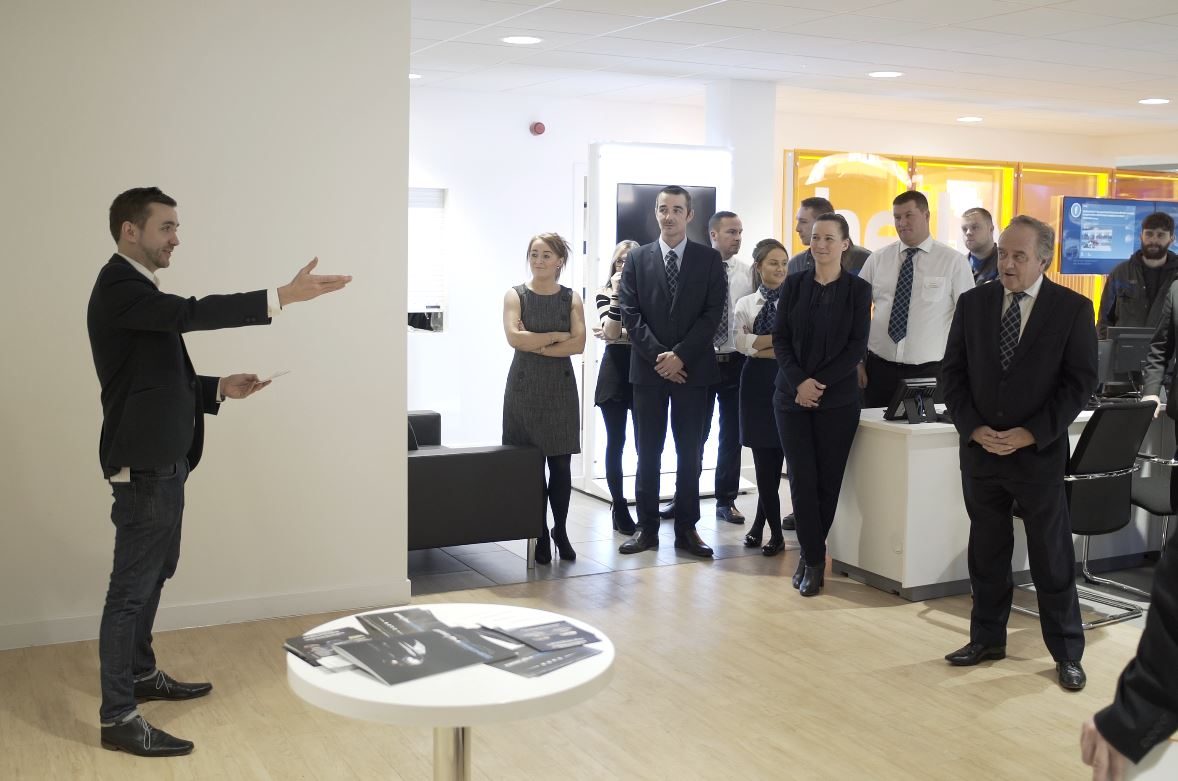
You cover the gap out loud, calmly, and keep the room with you while the fix happens behind you. Something will go wrong, and how you handle it is most of what people remember. At one awards evening the sponsor video failed to play on cue, so I covered the content live from the stage while the team sorted the file, and most of the room never knew there had been a problem. The trick is to narrate forward, never apologise into a silence.
Speakers over-run. I have quietly pulled a session back on time by shaping the Q&A and trimming my own links, so the schedule recovers without anyone feeling rushed off. I have also taken a room that had run badly over and steered it back to the final award with the energy still intact, which matters, because your winners remember getting on stage and everyone else remembers whether the room stayed alive. Adapting live without it showing is the core skill of a good corporate MC.
Could a game-show round lift a flat room?
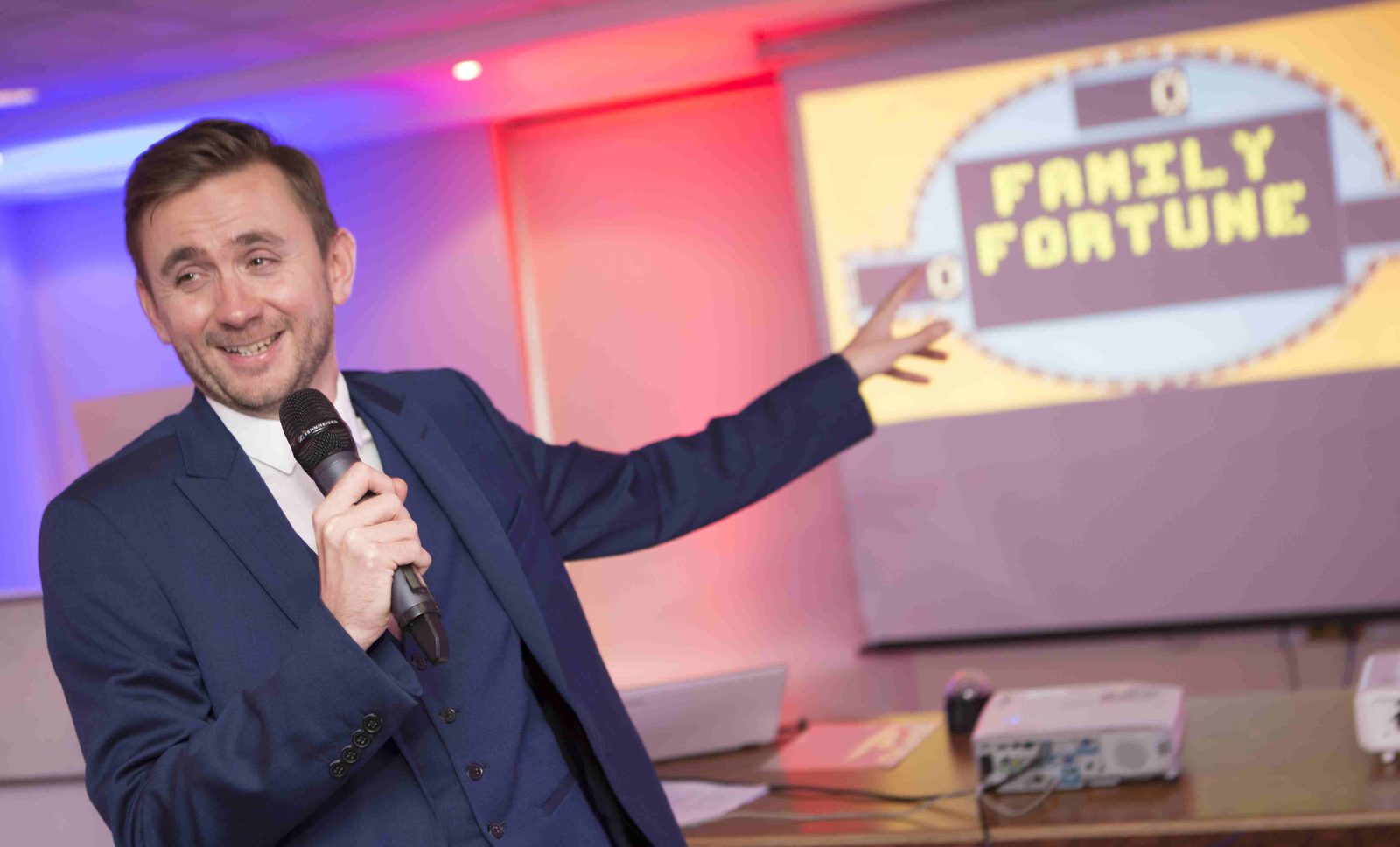
Yes, and it works faster than another speech when the room has gone quiet. When the energy has dropped and the agenda still has an hour to run, a short interactive round pulls everyone back in. My signature is a game-show format written for the specific crowd: a Family Fortunes round where I split the whole room into two teams and rotate each round, so as many people as possible actually get to play instead of watching a few volunteers.
This is where a corporate MC can offer something a straight presenter cannot. My favourite recent example was an awards night built as a hybrid, with the presentations interleaved with game-show rounds, because standard ceremonies drag for everyone who is not winning. Everyone stayed to the end. Used well, it is not a gimmick bolted on, it is a deliberate tool for a room that needs lifting.
Quick answers: how to MC a corporate event
What does an MC actually do at a corporate event? They run the room from first word to last, set the tone, introduce and hand off speakers, manage timings and cover anything that goes wrong so the audience never sees the join.
How do you open a corporate event as MC? Get the room quiet, welcome them with real energy, set the evening’s tone in a sentence and give them one light moment early, then handle housekeeping once you have their attention.
What do you do if a speaker over-runs or a video fails? Stay calm and keep talking to the room while the fix happens, then reshape the schedule by trimming your own links so the night recovers on time.
Should a corporate event have games? They are optional, but a short game-show round is one of the quickest ways to revive a flat room and get an audience participating rather than watching.
If you have been handed the microphone for your company’s night and you would rather hand the whole evening to someone who does this for a living, get in touch or call 07596 851647 and tell me what went wrong at the last one.
I take bookings across the UK, from Manchester to London and Birmingham.