In short
- Team building games split into three tiers: quick no-prep games for a huddle, physical or outdoor games for an active day, and hosted TV-style formats for anything bigger than about twenty people.
- Hosted games solve a problem DIY games can’t: someone has to run the room, keep every table on the same pace, and stop the energy dying when one group finishes early.
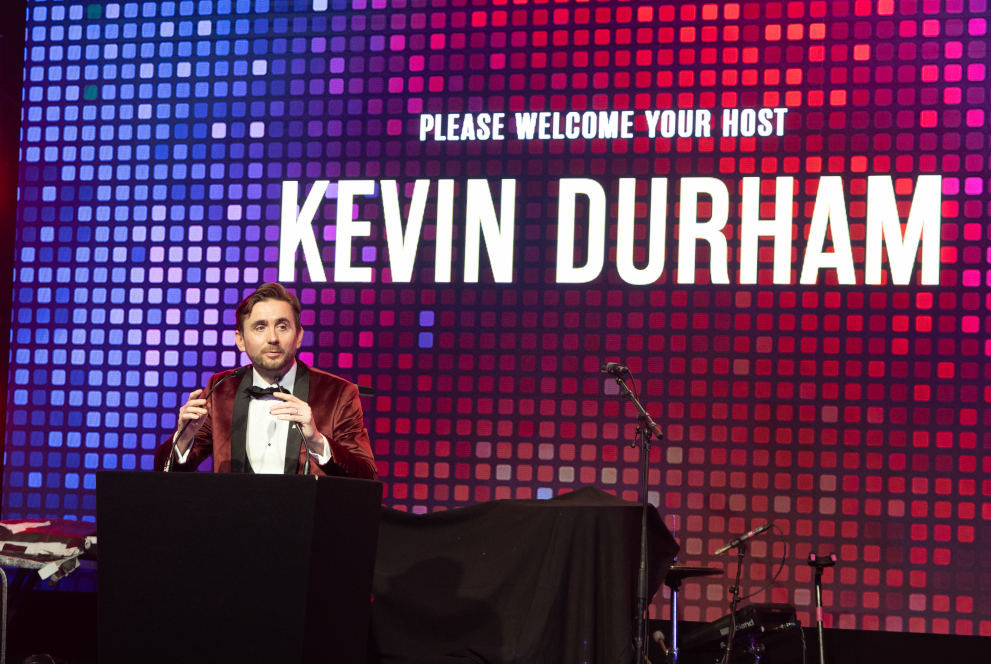
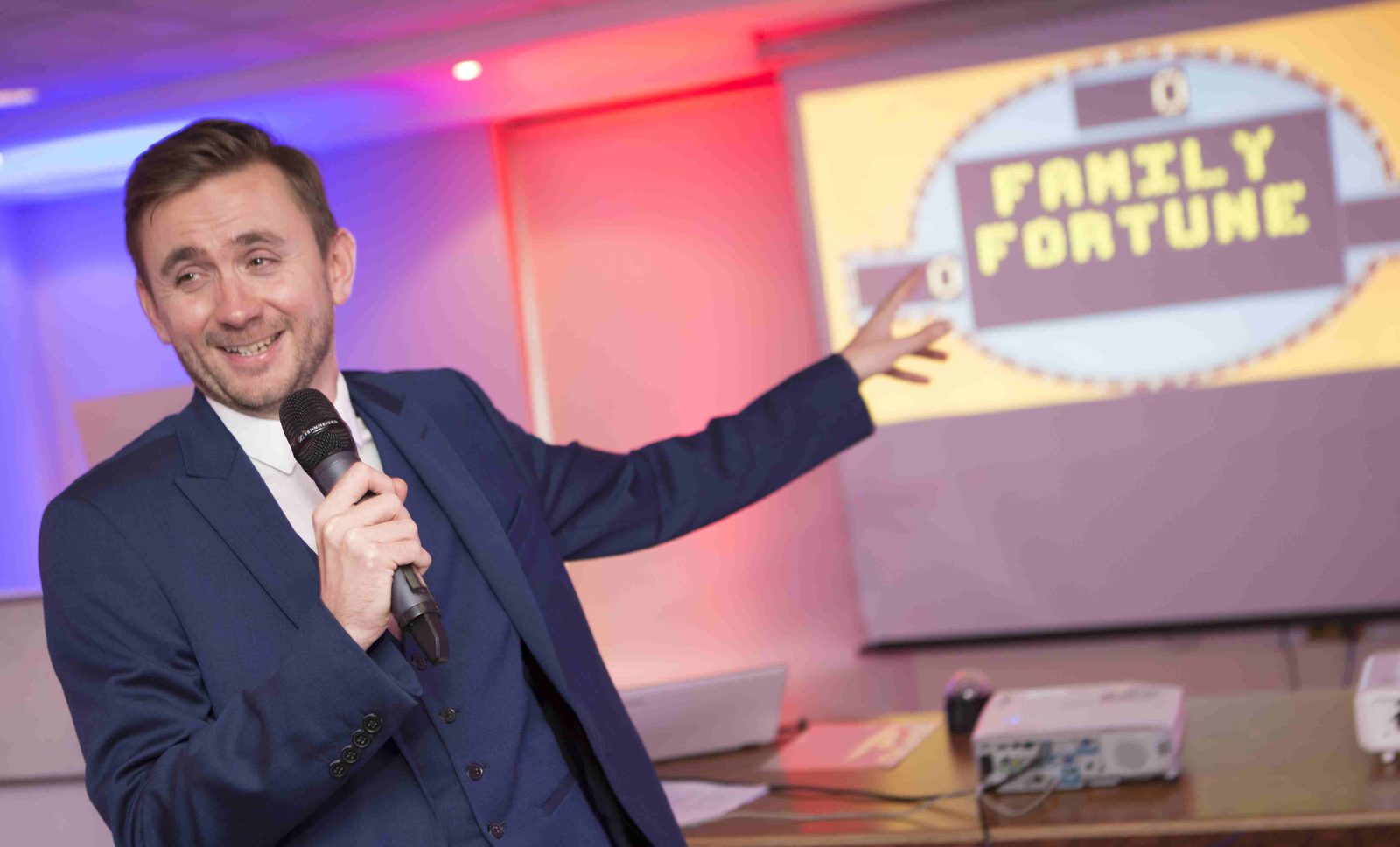
- I run Family Fortunes, The Generation Game and Play Your Cards Right, rebuilt for the specific audience in the room, not read from a script.
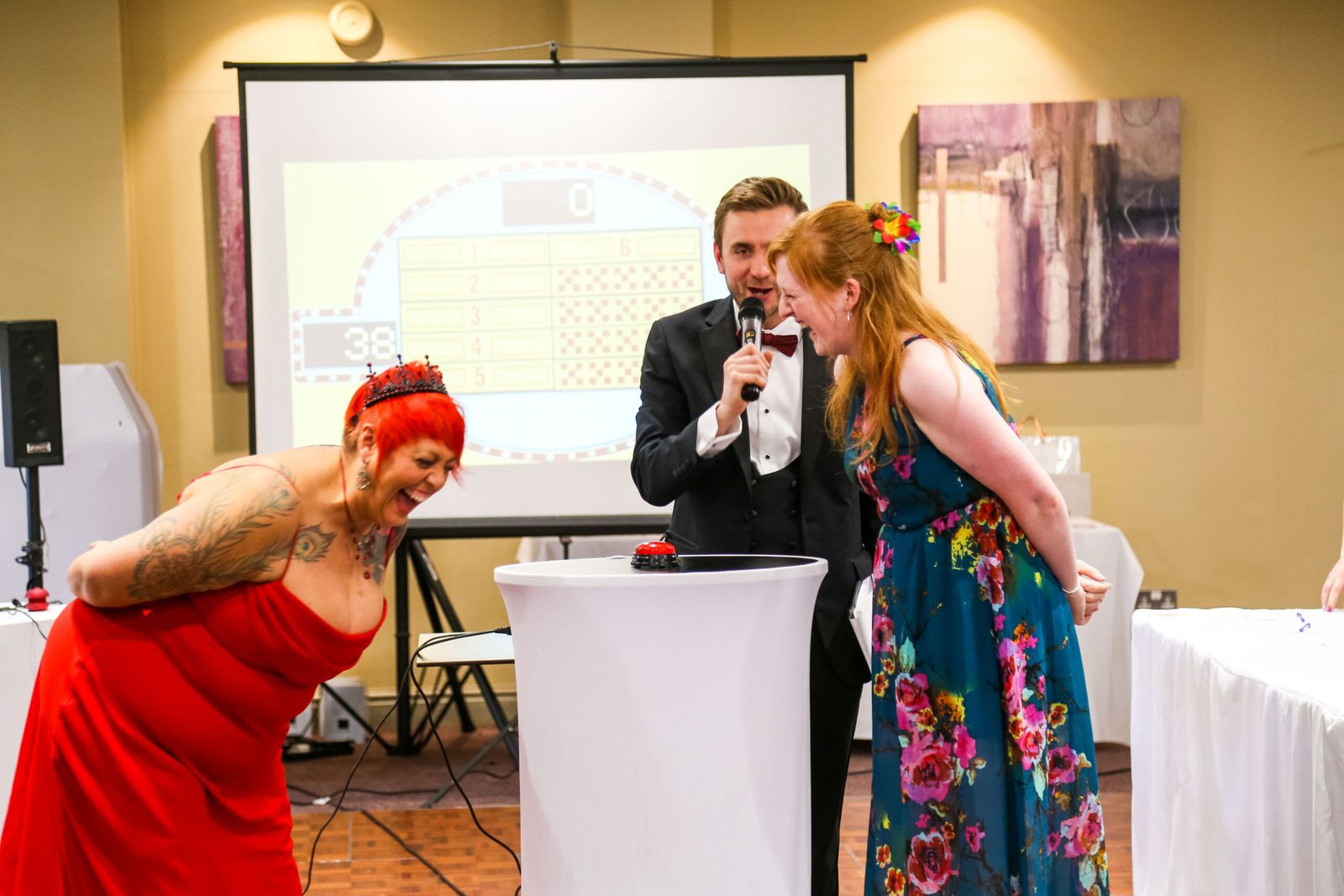
- My signature move for Family Fortunes is splitting the whole room into two big teams and rotating who’s up at the buzzers each round, so nearly everyone actually plays.
- It is a produced game show, built for your room and paced to your day.
I get asked the same question after almost every event: “how do we get that energy again next year without you?” The honest answer is that most DIY team building games can’t reproduce it, not because the games themselves are bad, but because nobody’s job on the day is to run the room.
This post covers the full range of team building games I see working for UK companies: the quick ones you can run yourselves with zero budget, the physical and outdoor options, and where hosted, TV-style formats earn their place. I’ll also cover exactly how I run mine, because “game show entertainment” means very different things depending on who’s offering it.
What makes a team building game different from a broader team building activity?
A team building game has a clear goal, a way to win, and a defined end point, which is what separates it from looser “activities” like a lunch and learn or a volunteering day. That structure is exactly what gives it energy: people know when they’ve won, and they know when the next round starts.
This matters more than it sounds. Asana’s roundup of 45 team building games groups them by size and format precisely because the wrong game for the wrong group falls flat fast. A five-person icebreaker doesn’t survive contact with a room of eighty.
Quick, no-prep team building games for small groups
If you need something for a huddle of five to fifteen people with no budget and five to fifteen minutes, these consistently land well:
- Two truths and a lie: classic for a reason, works for any group size, zero cost.
- Back-to-back drawing: pairs sit back to back, one describes an image, the other draws it blind. Asana lists this among its most repeated formats.
- Desert island or “one word” exercises: quick verbal games that need no equipment, popular in quick team-building roundups for exactly that reason.
- A short written quiz: works as a stand-alone warm-up or as the whole activity if the slot is tight.
These are the right call for a stand-up, a Friday wind-down, or a warm-up before something bigger. They’re the wrong call as the entire content for a room expecting a proper event.
What are the most popular hosted, TV-style team building games?
The most popular hosted, TV-style team building games are Family Fortunes, The Generation Game and Play Your Cards Right, because all three translate instantly, everyone already knows the rules, and none of them need the audience to have prepared anything in advance.
I run all three, and I build each one specifically for the audience in front of me rather than pulling a generic script off a shelf. For Family Fortunes, that means writing the “our survey says” questions around your team, your company, your in-jokes, not a stock question bank. For The Generation Game, I pick and adapt the individual rounds to suit the room: I recently reworked it for a family event with a modified egg-and-spoon race judged purely on the silliness of the walk rather than who finished first, which only works because the format isn’t locked to a script. Play Your Cards Right runs differently again: it works brilliantly table-by-table, so nearly every table in the room is playing at once rather than a handful of people up front.
Outdoor and physical team building games
Physical formats, relay races, scavenger hunts, obstacle-style challenges, work well for teams that want to be active rather than seated, and they’re a good fit for a summer or off-site day where weather cooperates. Playground-style teamwork games built for schools translate surprisingly well to adult corporate groups when the stakes are kept light.
The trade-off is the same one every outdoor format has: weather risk, more logistics, and a harder time including anyone who can’t take part physically. For an indoor, all-weather, everyone-can-play alternative, a hosted TV-style format solves all three problems at once.
How does a hosted game show format actually run on the day?
A hosted game show is a full production dropped neatly into your room, with no fuss on your side. It feels like a proper event, and I am set up and ready within minutes of arriving.
That flexibility is deliberate. It means I can bring the same quality of show to a hotel function room, an office breakout space, or a marquee, without turning your day into a production job. The two modes I offer are a fixed TV-format version, with a handful of people up on stage throughout just like the real show, or a flexible version working with as many audience members as possible, where the room can choose to play or sit back and enjoy the show.
Why does splitting the room work better than a handful of volunteers on stage?
Splitting the room works better than a handful of volunteers because it gets far more people actively playing, not just watching. My signature move for Family Fortunes is dividing the whole room into two big teams and rotating who’s up at the buzzers each round, so nearly everyone gets an actual turn rather than the same five confident colleagues doing it all.
This is the single biggest difference between a game I host and a generic pub-quiz-style format. Very few entertainers offer that range of flexibility, running a tight, TV-accurate version for a smaller stage-focused crowd, or flipping the same format so most of the room is competing simultaneously. It’s also why hosted formats outperform DIY games once your numbers climb past what one whiteboard and a volunteer moderator can manage.
What sets a hosted game show apart from a typical quizmaster?
The sheer level of customisation and interaction. Most quizmasters run the same fixed script from room to room, reading questions off a sheet regardless of who’s in front of them. I write the questions, the rounds and the pacing for your specific team, and I can flex the format live if the room’s energy calls for it.
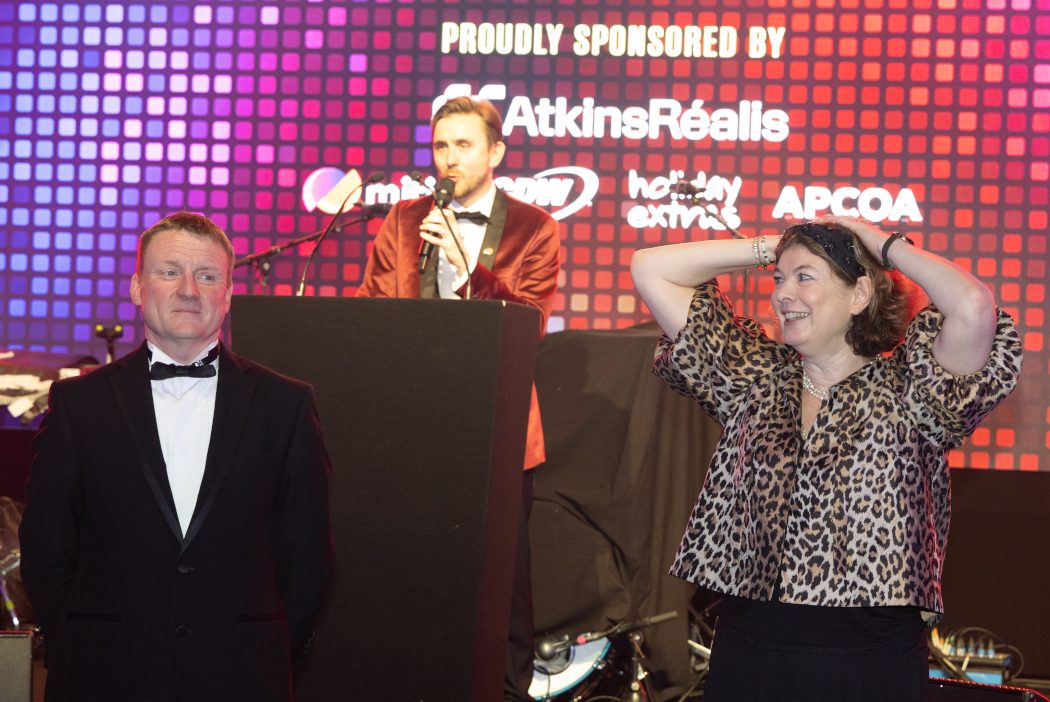
The other difference is what I bring beyond the games themselves. I’ve spent years working as a straight corporate host and as a charity auctioneer, both jobs that demand holding a room and carrying a clear message at the same time. When you book me for a hosted game, you’re not just getting an entertainer. You’re getting someone who can run the whole segment of your day, timings included, the way an event manager would, and still make it genuinely fun.
How do you choose between DIY games and a hosted format?
Choose based on group size and how much is riding on the day. Under twenty people with no budget: a DIY icebreaker or quick game does the job well. A single team of twenty to fifty, or any event where the day genuinely needs to land: a hosted format earns its cost, because engaged teams see meaningfully lower absenteeism and stronger day-to-day collaboration, and a flat afternoon undoes that goodwill fast.
I treat every hosted booking as game show entertainment built for that specific audience, the same care I’d put into team building activities more broadly, not a template I run on autopilot from room to room.
Quick answers: team building games
What’s the best team building game for a large group? A hosted, TV-style format with rotating teams. Family Fortunes with a split-room rotation is built specifically to keep 100 or more people involved at once, which most DIY games can’t manage.
Do team building games actually need a host? Under about twenty people, no. Past that, someone needs to run the pace, explain the rules once for the whole room, and keep the energy from dying when one table finishes early. That’s a hosting job.
How long does a hosted game show format take? It flexes to the slot: a focused 45-minute session works as well as a full evening built around two or three rounds. I plan the length around your event, not the other way round.
Can team building games work for a fully remote team? Some can, quizzes and verbal games travel well online, but the split-room energy of a hosted in-person format doesn’t translate to video calls. For a hybrid team, I’d save the hosted format for the one time a year everyone’s actually in the same room.