
In short
- The team building activities ideas that most reliably turn a flat afternoon into a day people still talk about are hosted, interactive ones, with a TV-style game show at the top of that list.
- The cheaper options (quizzes, blind drawing, two truths and a lie) are great warm-ups for a small huddle, but they struggle to hold a full room on their own.
- UK engagement is low right now: only one in four UK employees say they are engaged at work, so a forgettable day out is a wasted budget.
- My game show format is built for the specific room, split-room Family Fortunes, an adapted Generation Game, table-by-table Play Your Cards Right, and it flexes from a table of six to a room of two hundred without losing anyone.
- Match the activity to your group size and your goal, and put the spend on whatever keeps the whole room involved for the main event.
I have hosted enough team building days to know the pattern within the first twenty minutes. Either the room is leaning in, laughing, actually talking to people outside their usual desk cluster, or it is checking phones and waiting for lunch. The activity you pick decides which one you get.
This guide runs through the full range of team building activities ideas I see work for UK corporate groups, but I will be straight with you about where each one belongs. Hosted game show entertainment is the option I am known for and the one that most consistently lands, so I will start there, then cover the cheaper warm-ups, the social formats and the off-site days, and how to choose between them.
What makes a team building activity actually work?
A team building activity works when it gives people a reason to talk to colleagues they would not normally sit with, and a shared moment they will still mention weeks later. That is the whole test.
It is a low bar on paper, and yet most team days fail it. A lecture-style away day with a guest speaker and a buffet lunch ticks the calendar box but rarely produces either outcome. The research backs this up: engaged teams see 41% less absenteeism than disengaged equivalents, and cross-functional team building improves collaboration by 35% in the same round-up of McKinsey and Gallup data. The activity has to mix people up and give them something to do together, not just something to watch.
Which team building activities ideas actually make a day memorable?
The ones that get the whole room playing at once, not watching a chosen few. That is why hosted, interactive entertainment sits at the top of my list of team building activities ideas for any group past about twenty people: someone whose only job that day is to run the room, keep every table on the same pace, and stop the energy dying the moment one group finishes early.
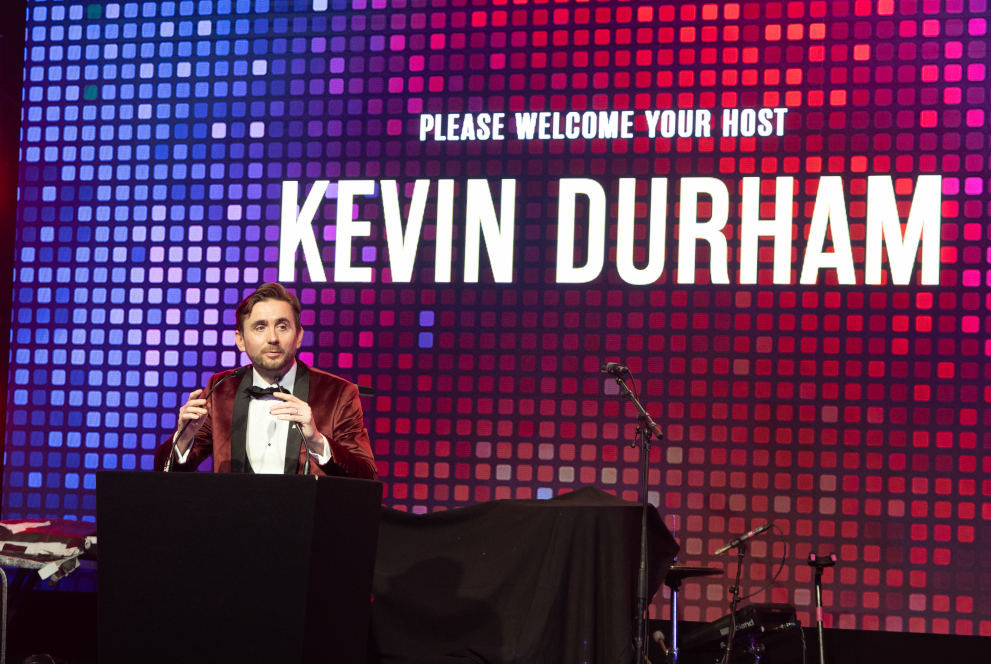
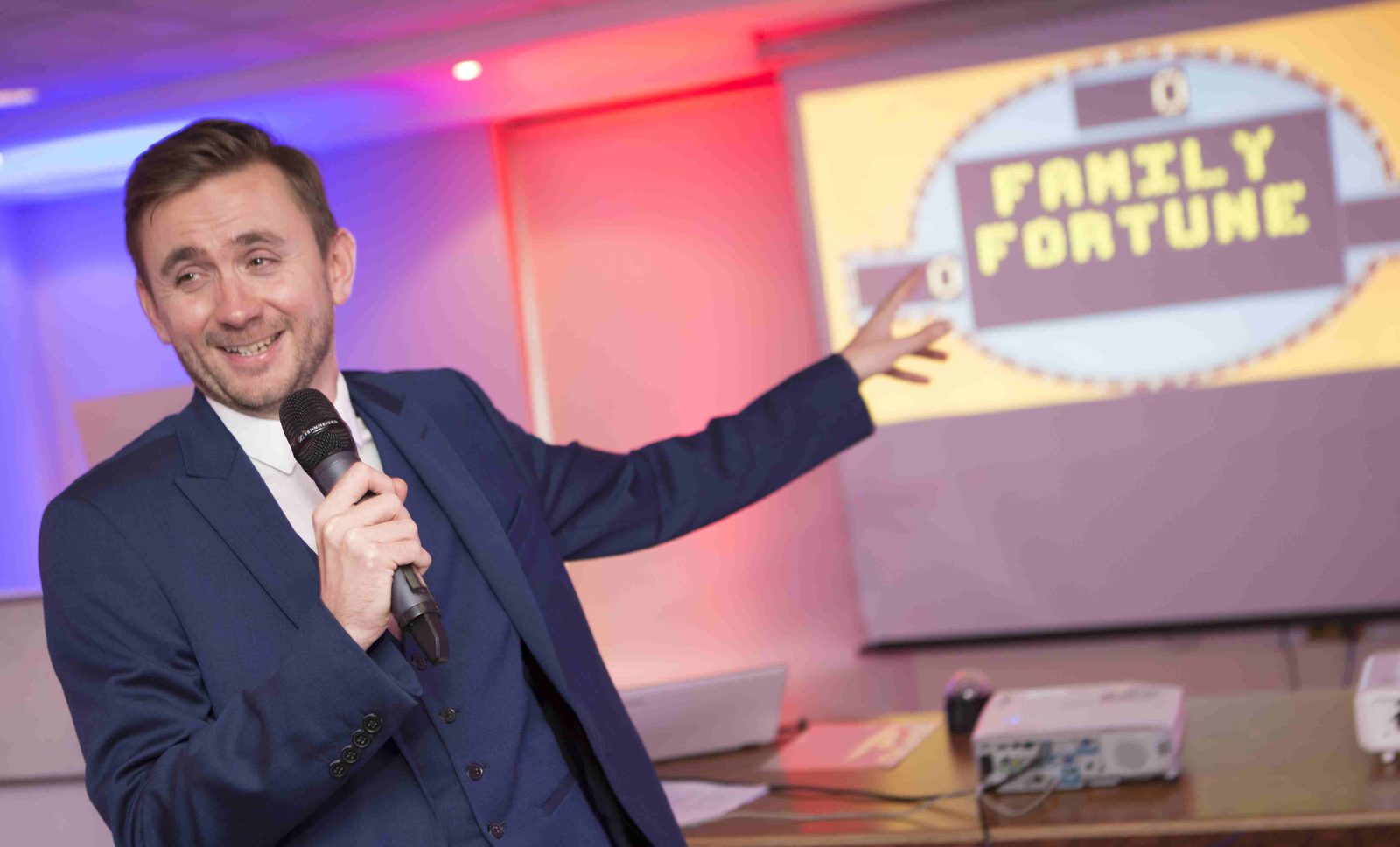
This is what I do. I run TV-style game show formats, Family Fortunes, The Generation Game and Play Your Cards Right, built specifically for the group in front of me rather than a generic script. The questions, the rounds and the pacing are written for your team, your company and your in-jokes.
What makes it work at scale is the customisation and the range of format. I can run a tight, TV-accurate version with a few people up front while the rest of the room plays along, or flip the same format so nearly everyone is competing at once. Very few entertainers offer that range, and it is the single biggest reason a hosted show outperforms a DIY activity once your numbers climb.
Here is a short clip of the formats in action.
How does hosted game show team building run on the day?
It runs like a proper show, produced for your room and paced to your day, not a box of props dropped in a corner. The whole point is that it feels like an event, the kind of interactive entertainment you simply do not get from a standard team-building supplier.
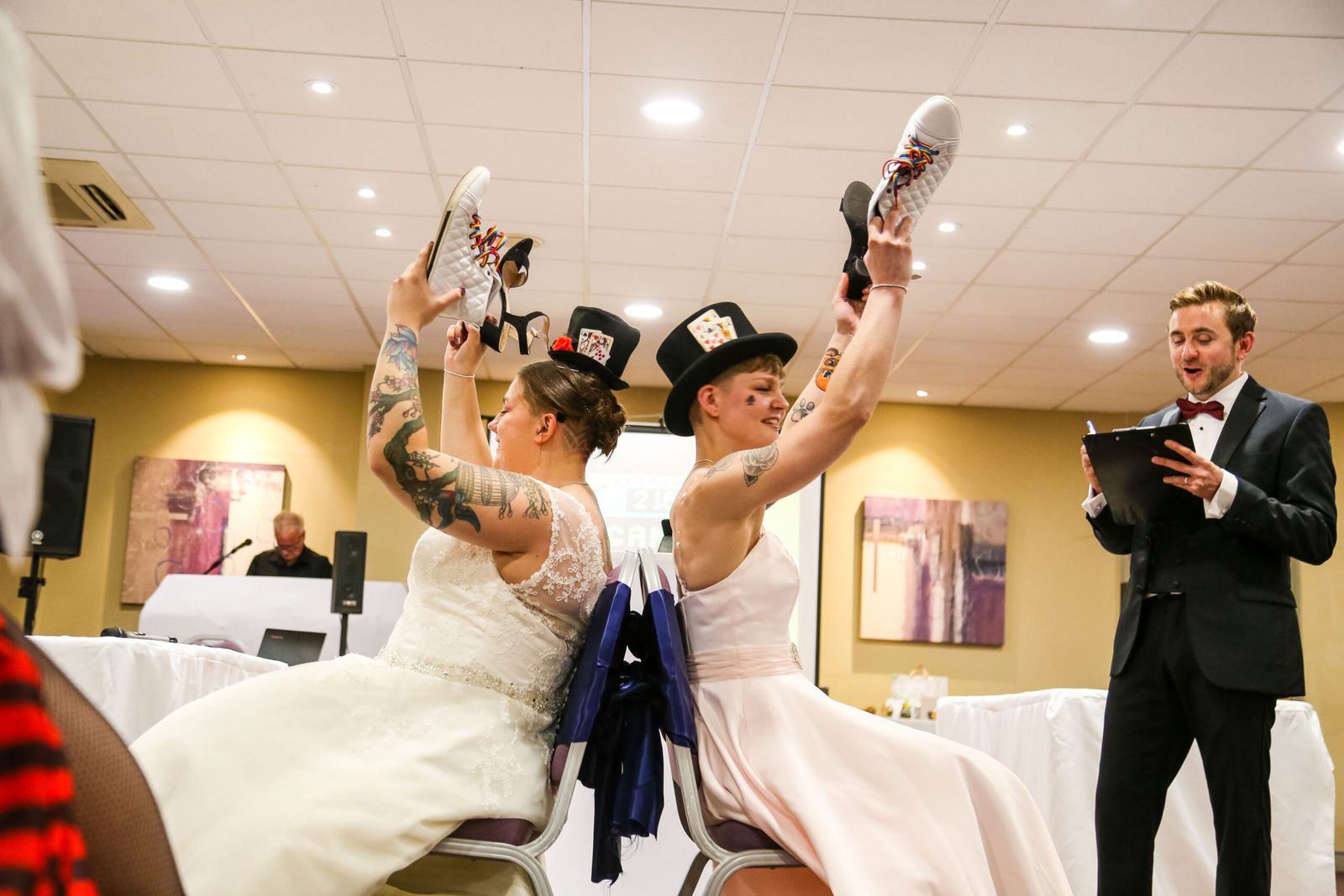
For Family Fortunes rounds, my signature move is splitting the whole room into two big teams and rotating who is up each round, so almost everyone actually gets to play rather than watching five colleagues do it all. For The Generation Game, I pick and adapt the rounds to suit the audience. I recently reworked it for a family event with a modified egg-and-spoon race judged purely on the silliness of the walk rather than who finished first, the kind of tweak that only works because the format is not locked to a script.
Play Your Cards Right runs table-by-table, so nearly every table in the room is playing at once. All three flex between a small stage-focused version and a whole-room version depending on what your day needs. That is the range of game show entertainment I bring to a team day, and the same craft I put into corporate entertainment bookings more broadly.
What are the best low-budget team building activities?
The best low-budget team building activities need almost no setup and work for any group size: quizzes, drawing games and short icebreakers you can run in a normal meeting slot. If you need something quick and cheap, these hold up well:
- Two truths and one lie: everyone shares three statements, the group votes on the false one. Zero cost, five minutes, any size.
- Blind drawing: pairs sit back to back, one describes an image, the other draws it blind. Genuinely funny every time.
- The marshmallow challenge: teams race to build the tallest standing structure from spaghetti, string, tape and a marshmallow. A favourite for good reason, per Workhuman’s rundown of low-cost formats.
- A quick written quiz: a solid warm-up before the main event, or the whole activity when time is tight.
These are the right call for a small huddle or a light warm-up. They are the wrong call as the entire team day for a group expecting something memorable, which is exactly where a hosted format earns its place.
Food, social and off-site team building ideas
Social formats lower the stakes, and the conversation does the work. Lunch and learns, where a colleague presents on a hobby outside their job title, surface people your team did not know they had. Virtual coffee breaks do the same job for hybrid teams. The limit is that they rarely create one shared story: everyone remembers a nice lunch, almost nobody retells it six months later.
Off-site days, escape rooms, volunteering, multi-activity challenges, sit at the bigger end of the budget and planning scale, and they suit teams that want a proper day-out feel. The trade-off is logistics: transport, venue, catering and a weather backup. For a group under about fifteen that overhead is often disproportionate. For a full department day it can be exactly right, provided someone is holding the running order together so the day does not drift.
How do you pick the right team building activity for your group?
Match the activity to your group size and your goal, not the other way round. Under 15 people with no budget: a desk-based icebreaker. A full afternoon for one team of 20 to 40: a hosted game format or an off-site outing. A company-wide day of 100 or more: something built to scale, because that is where DIY formats and generic team challenges both start to struggle.
I structure this properly rather than winging it. Before any event I ask what the actual goal is, breaking down silos, celebrating a milestone, or simply giving people permission to switch off for an afternoon, and build the format around that, the same way I would prepare an awards evening or a conference. The preparation is what separates a day people enjoy from a day people actually remember.
How much should you budget for team building?
I will not quote a figure here, because fees genuinely depend on group size, format and location, and I would rather talk it through than throw out a number that does not fit. What I will say is that the spend matters less than the fit. A cheap icebreaker for 12 people can outperform an expensive off-site day that was not built for the group attending it.
If you want a proper conversation about what would work for your team, get in touch and I will talk you through the options rather than sell you a package that does not fit.
Quick answers: team building activities ideas
What is the best team building activity for a large group? A hosted, interactive format with rotating teams. A split-room game show handles 100 or more people far better than DIY games designed for a huddle of six.
How long should a team building activity run? Anywhere from 15 minutes for a desk-based icebreaker to a full day for an off-site or a hosted event. Match the length to the goal, not the calendar slot you happen to have free.
Do team building activities actually work? When they are done properly, yes: 79% of employees say team building strengthens workplace relationships. The activity has to genuinely mix people up to earn that result.
What if my team is hybrid or remote? Virtual coffee breaks and lunch-and-learns work day to day, but for a bigger annual event, bringing a hybrid team together in person for a hosted format lands harder than another video call, precisely because it is rare.