In short
- Corporate team building days fail most often on pacing, not activity choice: too slow and people switch off, too intense and they burn out.
- A good structure mixes content and connection, arrivals and framing, an activity block, a proper break, a change of energy after lunch, and a clear close.
- Half a day suits a single focused outcome. A full day allows more variety, but only if the pacing is actually planned, not just filled.
- I treat a team building day the way I’d treat any event I host: the goal decides the format, not the other way round.
- Interactive, hosted entertainment works well as the energy peak of a day, not the whole day itself.
Most corporate team building days that go badly aren’t badly chosen, they’re badly paced. The activity was fine. The day around it wasn’t structured to actually land.
This guide covers how to build a corporate team building day that holds energy from arrival to close, including where a hosted, interactive segment fits and where it doesn’t.
What actually makes a corporate team building day work?
A corporate team building day works when the pacing matches the goal, not when the activity is impressive on paper. Planning guidance on running these days consistently comes back to the same point: energy management matters as much as content, because a day that’s too slow loses the room and a day that’s too intense burns people out before the close.
That means the honest first question isn’t “what should we do”, it’s “what does this day actually need to achieve”. A team that’s just been through a difficult reorg needs something very different from a team celebrating a strong year, and the two days shouldn’t look alike even if the venue and budget are identical.
Getting this right also changes what “success” looks like afterwards. A day judged only on whether people had fun misses half the point. A day judged on whether the team came back genuinely more connected, with a shared moment they’ll actually reference weeks later, is a different and higher bar, and it’s the one worth planning towards.
How should you structure the timeline for a team building day?
Structure the day in blocks, not a single long activity. A typical well-paced full day runs roughly: arrival and framing, a first activity block, a proper break, a second block after lunch that shifts energy rather than repeating the morning, and a clear, deliberate close. Away-day planning advice consistently recommends building in real breaks rather than packing the agenda solid, because a day with no breathing room exhausts people before the parts meant to matter most.
A rough half-day version: arrival, one focused activity, a short break, then a close that ties back to why everyone’s there. Save the full-day structure for when you genuinely have enough content and energy to fill it, not because the venue’s booked for the whole day anyway.
Should you run a half-day or full-day event?
Run a half day for a single focused outcome, communication, a specific team problem, a quick reset. Run a full day when you need more variety, a genuine change of pace, or the team is spread across locations and travel already justifies the longer slot. General planning guidance draws this same distinction: half-day sessions suit a tight, specific goal, full days allow more depth but only pay off if the extra time is actually used well.
The mistake to avoid is defaulting to a full day because it feels more generous, then padding it with content nobody needed. A tight half day people actually enjoy beats a full day that drags through its own agenda.
Where does hosted, interactive entertainment fit in the day?
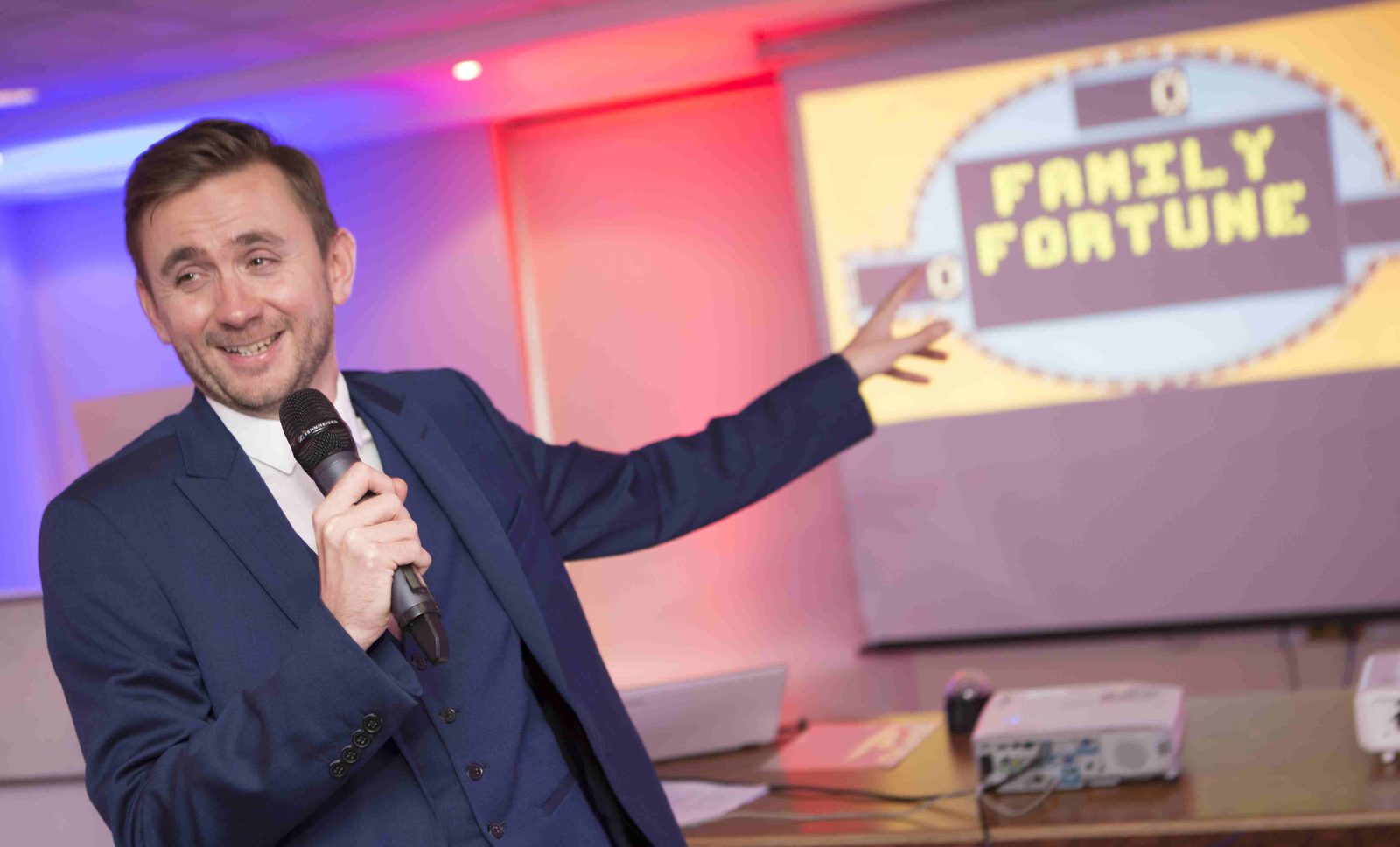
Hosted, interactive entertainment works best as the energy peak of a day, not the entire day. I run TV-style game show formats, Family Fortunes, The Generation Game, Play Your Cards Right, as the segment that turns a solid agenda into something people actually talk about afterwards.
Placement matters. Straight after lunch, when energy naturally dips, is often the strongest slot, because a hosted, interactive segment does the work of re-energising the room that a straight presentation can’t. I build the format around your team specifically, in-jokes included, rather than dropping in a generic script that could belong to any company.
The show drops straight into your room and gets going quickly, wherever the segment sits in the day. That matters for scheduling, because it means the hosted segment doesn’t need its own separate slot eating into the rest of your agenda.

Planning the logistics without losing the plot
Start with the goal, then work backwards to venue, timing and headcount, not the other way round. I ask what the day actually needs to achieve before suggesting a format, the same discipline I’d bring to planning a corporate entertainment booking of any kind.
Confirm numbers early. A day built for 40 falls apart at 90 without adjustment, and the reverse wastes a big-room energy plan on a small group. Build in a genuine break, not a token five minutes, because a day with no real pause loses people well before the close, however good the content is.
Give yourself more lead time than feels necessary, particularly if a hosted segment or an external venue is involved. The best days I’ve worked on had a proper briefing conversation weeks in advance, not a rushed call the week before, and that preparation is what actually shows up in how smoothly the day runs.
The single biggest mistake in corporate team building days
Treating the day as one long block instead of a series of paced segments. The most common failure pattern is a flat agenda: talk, talk, activity, lunch, more talk, home. Nothing peaks, nothing releases tension, and the day feels long regardless of how good any individual segment was.
The fix isn’t more content, it’s better shape. A day with a clear low point (a proper break), a clear peak (the activity that gets talked about afterwards), and a clear close lands better than a day crammed with back-to-back sessions, even if the crammed version technically covers more ground. I’ve seen this play out at conferences too: a room that’s been sat through six straight presentations responds completely differently to a hosted segment than a room that’s had one genuine break beforehand.
What does a hosted team building day segment actually cost?
I won’t quote a figure here, because it depends on group size, format and how much of the day you want covered, and I’d rather talk it through properly than throw out a number that doesn’t fit your event. What I can say is that a hosted segment doesn’t need to be the most expensive part of the day to be the part people remember.
Venue, catering and travel usually account for most of a team building day’s budget before the activity is even chosen. A well-placed hosted segment, positioned at the day’s natural energy dip, often delivers more lasting impact per pound than an expensive venue upgrade. If you want a proper conversation about what would fit your day and your budget, get in touch through eventhost.info rather than assuming a bigger spend automatically means a better day.
Quick answers: corporate team building days
How long should a corporate team building day run? Half a day for a single focused goal, a full day for more variety or when travel justifies the longer slot. Match the length to what the day needs to achieve, not the venue booking.
What time of day works best for the main activity? Straight after lunch is often strongest, when energy naturally dips and a hosted, interactive segment does real work re-lifting the room.
Does the whole team need to attend for it to count? No. A well-run day for the people who can attend beats a poorly attended one forced to fit everyone’s diary. Keep the format flexible enough to fold in stragglers rather than rescheduling around 100% attendance.
Is a corporate team building day worth the disruption to a working day? Usually, if it’s paced properly. UK employee engagement sits at roughly one in four, and a genuinely well-structured day is one of the more direct levers available for shifting that, far more than another slide deck. For the broader landscape of activities that fit inside a day like this, see the full team building activities guide.