
- Home
- Blog
- Event Host Blog
- All hands meeting: how to run one your whole company actually listens to
All hands meeting: how to run one your whole company actually listens to
 By Kevin Durham, event host and MC
19 October 2026 · updated 10 November 2026
8 min read

In short
- An all hands meeting brings the whole company together, usually led by the leadership team, to share where the business is and take questions.
- Keep it to 45 minutes or an hour, broken into short segments.
- Cover three or four things people can act on. Not every department’s update.
- Q&A only works if asking feels safe: collect questions in advance, allow anonymous ones and give the chair to someone who isn’t answering them.
- A professional host keeps leaders to time, holds the energy and makes remote staff feel part of the room.
An all hands meeting is the one moment in the quarter when everyone in the company hears the same thing at the same time. That makes it valuable and easy to waste. Most go wrong in the same few ways: the slides run long, the Q&A is silent, and the people watching from home have drifted to their inbox by minute ten.
UK teams start from a low base. Gallup’s latest figures put UK engagement at just 10% of employees, against 20% globally. An hour with the leadership team won’t fix that on its own. A bad one confirms everything people already suspect.
I’m a corporate event host, so this guide is about the room, not the slide deck.
What is an all hands meeting?
An all hands meeting is a meeting for the whole company, where the leadership team shares results, plans and news with every employee at once and takes their questions. It can be in person, online or hybrid, and usually runs monthly, quarterly or around a big moment such as a results day.
The name comes from the sea. On a ship, “all hands” means the whole crew, as in “all hands on deck”. You’ll see it written as all hands, all-hands and all-hands meeting. They mean the same thing.
Done well, it builds clarity and togetherness, surfaces the issues that matter and celebrates progress. The same guide warns that if the leadership team isn’t aligned, you should hold off, and I agree: two directors contradicting each other on stage does more damage than no meeting.
Is an all hands meeting the same as a town hall?
Most companies use the two terms interchangeably, but there’s a useful difference in emphasis. An all hands meeting leans towards leaders sharing information. A town hall leans towards questions and discussion.
The town hall name borrows from the New England meeting of the 17th century. In business it now also describes informal company gatherings held to share results or personnel changes, which is exactly what most all-hands meetings are.
If your people have questions bubbling (after a merger, a change of strategy, a bad quarter), give the Q&A real time, whatever you call the meeting.
How long should an all hands meeting be?
Most all hands meetings should run 45 minutes to an hour. That’s the limit WeWork suggests too, and it’s about as long as a room full of colleagues will give you before the phones come out.
Shape matters more than length. Research on lecture audiences found attention lapses come more often as a talk goes on, and that interactive moments such as clicker questions cut them, even in the talk that followed. An hour of one person reading slides loses people. An hour broken into short segments, with a change of voice or something for the audience to do between them, holds them.
Time of day matters too. The midafternoon dip in alertness is real, and it can happen without lunch, so a 2pm slot is fighting biology before anyone speaks. At full-day conferences, keeping the room alert after lunch is one of the main parts of my job. If you can, hold the all hands in the morning. If it has to be after lunch, plan an early lift rather than a long opening speech.
What should an all hands meeting cover?
An all hands meeting should cover the few things everyone in the company needs to know, feel or do next: three or four topics, not a tour of every department. If an update only matters to one team, it belongs in that team’s meeting or an email.
Topics that earn their place:
- Where the business is: results, targets and how people’s work has moved them.
- What’s changing and why, said plainly and early, before the rumour mill gets there.
- Recognition: a specific win by a specific team, told as a story rather than read as a list.
- The question everyone is actually asking. If the office is talking about the move, address the move.
- Q&A, with protected time at the end.
For an hour, that might mean a welcome and the headline, a business update of 10 to 15 minutes, one featured team story, recognition, then a full 15 minutes of Q&A before a short close.
What a professional host changes at an all hands meeting
Most all-hands meetings are hosted by the CEO or the head of internal comms, who end up as main speaker, timekeeper and Q&A chair at once. Clients who have used a senior colleague as MC tell me the same thing: it got awkward, because that person was trying to present the event instead of taking part in it.
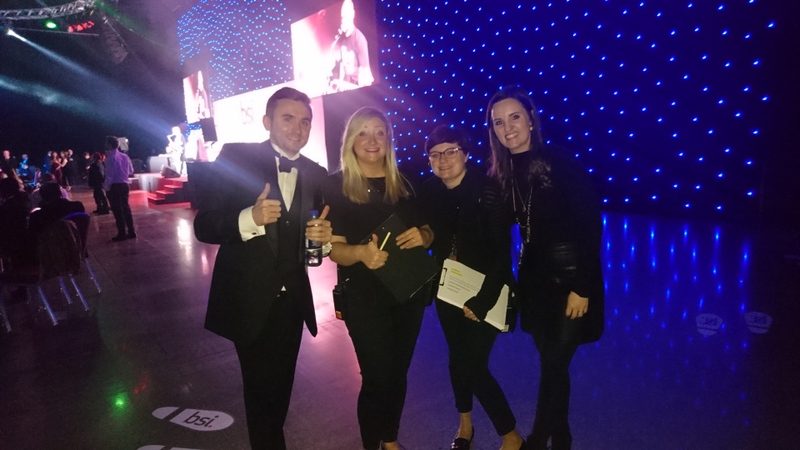
A host takes the running of the meeting off the leaders, so they can do the part only they can do. In practice that means:
- Briefing each speaker personally where I can, so they know their slot and their time.
- Keeping speakers to time without embarrassing them. A director who runs eight minutes over has taken those minutes from the Q&A, and the room knows it.
- Holding the links between segments, so there’s never a dead minute while someone hunts for a clicker.
- Chairing the Q&A as a neutral voice.
- Making the remote audience feel addressed, not overheard.
That last one matters more than most leaders think. Microsoft’s research found 43% of remote workers don’t feel included in meetings, and only 27% of leaders said their company had developed hybrid meeting etiquette. My TV background earns its keep here. I’ve spent years working to a camera and a timed rundown, so I talk to the people on the stream as well as the people in the seats.
None of it is complicated. It needs someone whose only job that hour is the meeting, holding it together so the leaders don’t have to. That’s most of what I do as a corporate event host, and the work starts well before the day, with a briefing for every speaker. I’ve written more on how to MC a corporate event if you want the full picture.
How do you make an all hands meeting fun without making it cringe?
You make an all hands meeting fun by giving people something quick, optional and about them to do together, not by forcing a team-building exercise into the middle of a results update. Five minutes of play at the right moment lifts the whole hour. Twenty minutes of compulsory fun sinks it.
Fun all hands meeting ideas that work:
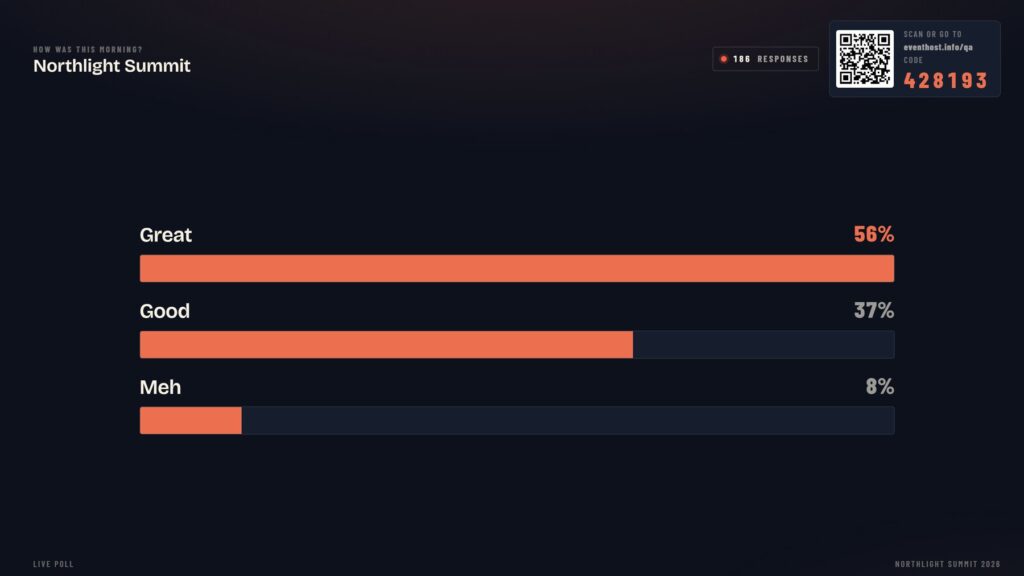
- Open with a live vote on everyone’s phone. In Common Ground, a game I built for my own events, everyone answers a question about the company and scores for picking what the majority picked. There are no right answers, only popular ones, so nobody is shown up, and the percentages are the punchline.
- Close with a five-question quiz on what was just announced. It sounds like a gimmick, but in a well-known 2006 study, people who were tested on a passage recalled 61% a week later, against 40% for those who only restudied it. The study was on students, not staff, but the principle carries: ask people to recall the headline and they are far more likely to keep it.
- Turn recognition into a guessing game. Tables guess which team a success story belongs to before the reveal.
I run these on my own software, with questions written for that company and that room. The point isn’t the screen. It’s the whole room doing the same thing at the same moment. There’s more on keeping a crowd involved in my guide to audience engagement.
Running a Q&A people actually use
The silent Q&A is the failure everyone remembers. It rarely means people have no questions. It means asking one in front of the whole company, with your boss’s boss on stage, feels risky.
The CIPD defines employee voice as the way people communicate their views to their employer and influence what affects them at work. Real two-way communication, it adds, means managers listening and acting on feedback. The Q&A is the most public test of that.
What helps:
- Collect questions in advance and allow anonymous ones, so the difficult question gets asked.
- Have a neutral chair choose and read the questions. When a leader picks which questions to answer, the room notices the ones that were skipped.
- Start with a real, slightly uncomfortable question. It tells everyone the session is honest.
- Take remote questions early, not in the last minute.
- If a question can’t be answered today, say when it will be, then follow up.
Brief your managers too. Gallup estimates managers account for at least 70% of the variance in engagement across business units, so give them the answers before the meeting and they can carry them back to their teams.
The all hands meeting invitation and follow-up
The invitation is the first part of the meeting anyone sees, so make it do some work. A good all hands meeting invitation includes:
- The date, start time and length, plus the joining link for anyone remote.
- What the meeting is for, in one sentence.
- How to send a question in advance, and a line saying anonymous questions are welcome.
- Whether it will be recorded.
If your next all hands is the big one (a kick-off, a results day, a staff day with the whole company in one room), that’s where a host makes the biggest difference. Call me on 07596 851647 and tell me what went wrong at the last one.