In short
- A corporate master of ceremonies is the person who runs a business event from start to finish, keeping the room, the timing and the energy under control.
- It is not the same as a keynote speaker, a presenter or a booked act. The MC owns the whole evening, not one part of it.
- You need one when the event has a running order that matters and an audience you cannot afford to lose.
- The value is continuity and calm: someone experienced holding it together, so your team does not have to.
- I combine the control of an MC with entertainment built for the room, so the night is run and enjoyable at once.
The phrase “master of ceremonies” sounds formal, almost old-fashioned, which is why plenty of event managers are not sure whether they need one or whether a confident colleague will do. A corporate master of ceremonies is simply the professional who runs your event, and the difference between having one and improvising is usually obvious by the first coffee break. Here is what the role covers and when it is worth booking.
What does a corporate master of ceremonies do?
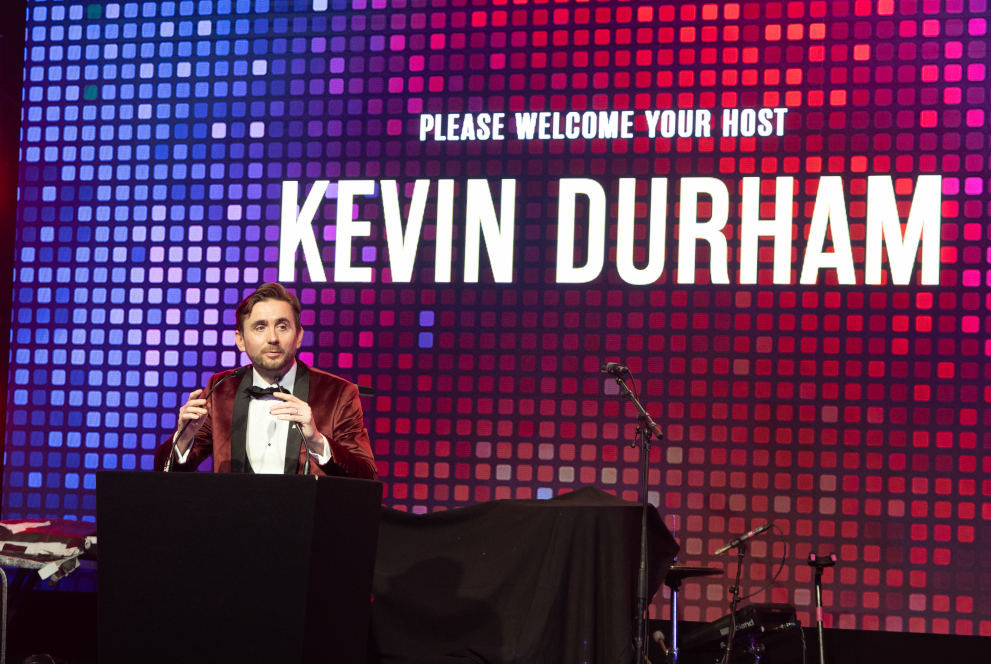
A corporate master of ceremonies runs the whole event so nobody in the audience has to think about how it is being held together. They open proceedings, introduce speakers and award winners, manage the timing, keep the energy up between segments, and deal with the moment something goes wrong. One person, the whole evening.
The visible work is the microphone. The real work is control. A good MC is reading the room after lunch when attention dips, watching the clock so the day does not overrun, and quietly solving problems the audience never sees. That calm is the product you are actually buying.
That afternoon dip is not imagined, either. The post-lunch dip in alertness is a documented effect, which is exactly why a corporate master of ceremonies plans deliberate energy peaks and recovery moments into the running order rather than hoping the room stays with them.
How is a corporate master of ceremonies different from a speaker or an act?
A corporate master of ceremonies owns the running of the whole event, while a speaker or an act owns one slot inside it. A keynote speaker delivers their talk and sits down. A booked entertainer performs their piece and leaves. The MC is there from the first welcome to the final thank-you, connecting everything in between.
That is why swapping the roles rarely works. A brilliant speaker is not automatically a good host, and a senior colleague pushed into hosting often ends up trying to perform instead of enjoying the event as a guest. The result is awkward, and the room feels it. There is more on this distinction in my guide to host vs MC.
When do you need a corporate master of ceremonies?
You need a corporate master of ceremonies when the evening has a structure that has to hold and an audience whose attention you cannot take for granted. Award ceremonies, conferences, gala dinners, product launches and large staff events all qualify, because each has moving parts that must connect smoothly and timing that decides whether the night feels produced or ragged.
The honest test is simple. If losing the room’s attention would undermine the whole event, you need a professional holding it. Most managers who book me have already learned this the hard way, from a previous night that felt flat with nobody actively keeping it alive between the scheduled items.
Here is a short film on what an experienced host brings across different kinds of event.
Why does continuity matter so much at a business event?
Continuity matters because a business event is a series of transitions, and the transitions are where energy leaks away. The gap between a speaker sitting down and the next item starting, the lull after dinner, the pause while a video is cued: each is a small chance for the room to drift, and they add up.
A corporate master of ceremonies exists to own those gaps. Keeping a room engaged is not a soft extra either, given how strongly engagement tracks with better outcomes in Gallup’s research. A night that keeps its energy sends people home talking about the event rather than the awkward bits.
It also protects the memory of the event. People recall an occasion mainly by its peak and its close, the peak-end rule, so the host managing those moments is deciding how the whole thing is remembered.
Can a corporate master of ceremonies also entertain?
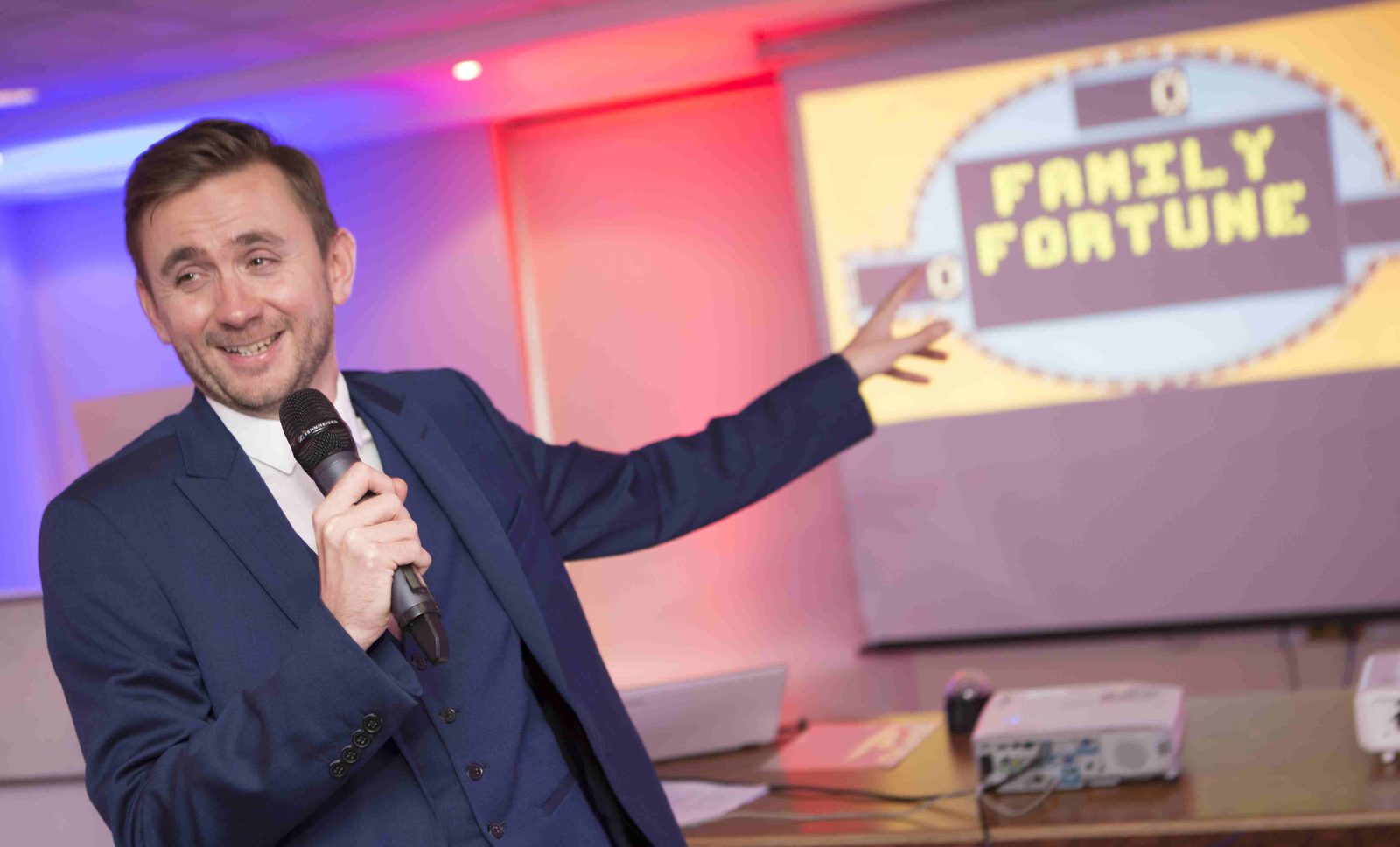
Yes, and for many events that combination is the point. The traditional image of an MC is a formal announcer, but a modern corporate master of ceremonies can carry genuine entertainment while still running the room with control. That is my own approach: the discipline of an MC with game-show entertainment written for the specific crowd.
Late in 2025 a client wanted an awards night that was not a standard awards night, so I interleaved the award presentations with game-show rounds, because ceremonies drag for everyone who is not winning. Everyone stayed to the final award. You can see how that works on my corporate entertainment page, and the conference host page covers the more straightforward end.
One person, the whole evening
The recurring theme from event managers who book me is a wish for simplicity: one person to run the whole evening rather than coordinate an MC, a separate act and whoever is keeping an eye on the clock. When those jobs are split, the seams show, usually at the transitions where energy leaks away.
A single experienced host removes the seams. The briefing, the timing, the introductions, the entertainment and the problem-solving all sit with the same person, so there is no handover to fumble and no gap where nobody is holding the room. That is the quiet advantage of a corporate master of ceremonies who can also carry the night: the evening feels produced because one accountable person planned and ran it from start to finish.
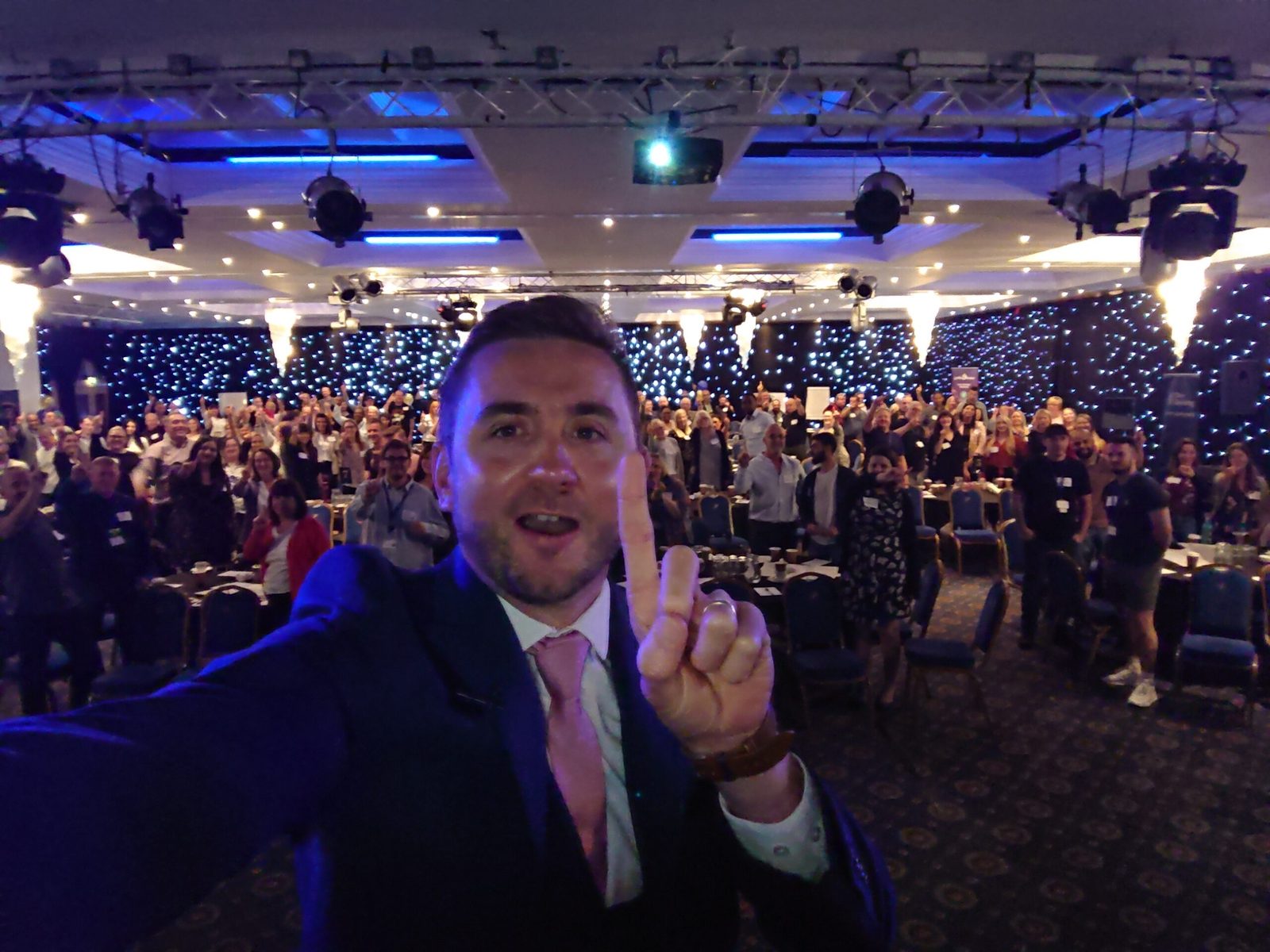
Quick answers: corporate master of ceremonies
What is a corporate master of ceremonies? The professional who runs a business event from start to finish: opening, introductions, timing, energy and problem-solving, all handled by one accountable person. There is a fuller definition on my master of ceremonies page.
Is an MC the same as a host? In practice, yes. Master of ceremonies is the traditional term and host is the modern one, but both describe the person running your evening.
Can I just use a senior colleague? You can, but it often backfires. Hosting is a performance skill, and asking a guest to run the room usually means they cannot enjoy the event and the audience senses the strain.
Do I need one for a small event? If the event has a running order that matters and guests whose attention you value, an experienced host earns their place even at a small scale. If you want help deciding, see how to MC a corporate event.
If you are planning an awards night, conference or launch and want one person to run the whole evening with control and energy, call 07596 851647 and tell me about your event.