
In short
- The strongest corporate event ideas start with an objective, celebrate, motivate, launch, connect or reward, then pick the format that serves it.
- Awards nights, conferences, product launches, away days, family fun days and interactive game-show evenings each do a different job.
- The format matters less than whether one person keeps the room together and the energy up between segments.
- I host all of these across the UK, and the game-show evening is the one you will not easily find elsewhere.
- Use the quick answers near the end to match a format to your goal in about a minute.
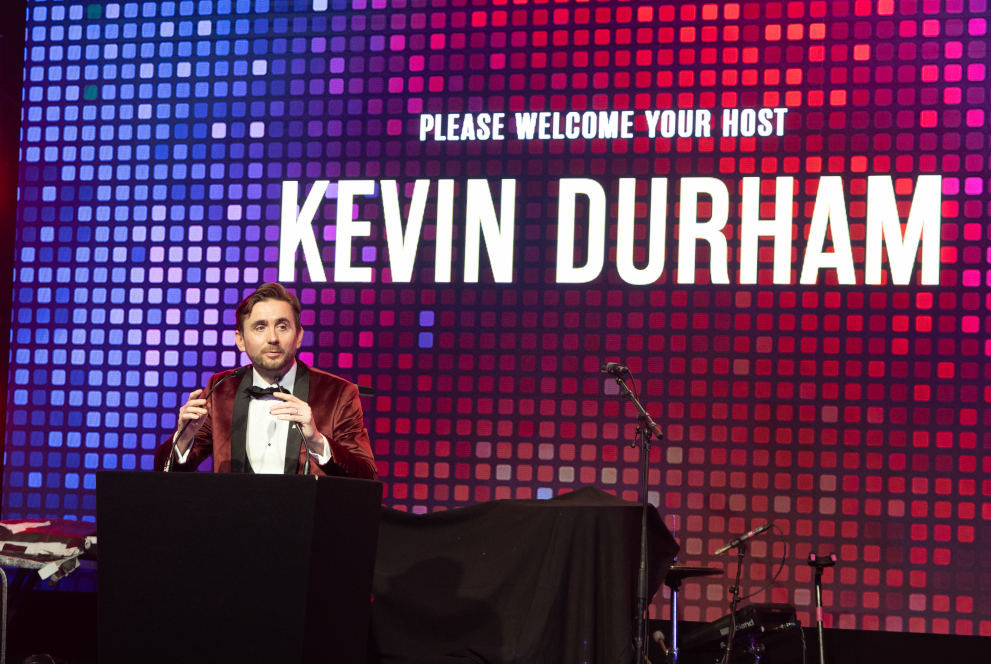
Most corporate event ideas fail at the same point: someone chooses the format before they have decided what the night is for. I have hosted awards evenings, conferences, launches and festivals for twenty years, and the pattern is consistent. Once you know whether you are trying to celebrate a year, motivate a team, launch a thing or simply get people talking, the right format almost picks itself. Below is how I think about the main options, what each is good for, and the one detail that decides whether it lands.
How do you match corporate event ideas to your objective?
Start with the verb, not the venue. Nearly every brief I take reduces to one of five objectives: celebrate, motivate, launch, connect or reward. An awards night celebrates and rewards. A conference informs and motivates. A launch reveals. An away day or family fun day connects. Interactive game-show entertainment can serve almost any of them, which is why I use it so often.
The reason this matters is that a format chosen for its own sake tends to drift. A conference with no clear purpose becomes a day of slides. An awards night with no thought for the people not winning becomes an hour of politely waiting. When you fix the objective first, every decision after it, the running order, the host, the energy, has something to answer to. It is worth remembering that the format is only a vehicle: CIPD guidance on engagement stresses that motivation comes from a mix of good practices working together, not a single grand gesture. If you want the fuller menu of formats we run, the event types page lays them out.
Awards nights: how do you keep the whole room in?
You keep the room in by producing the evening for the people who are not winning. Your winners will remember getting on stage. Everyone else remembers whether the night stayed alive. Most awards evenings forget the second group, and by the tenth category half the room is talking among themselves.
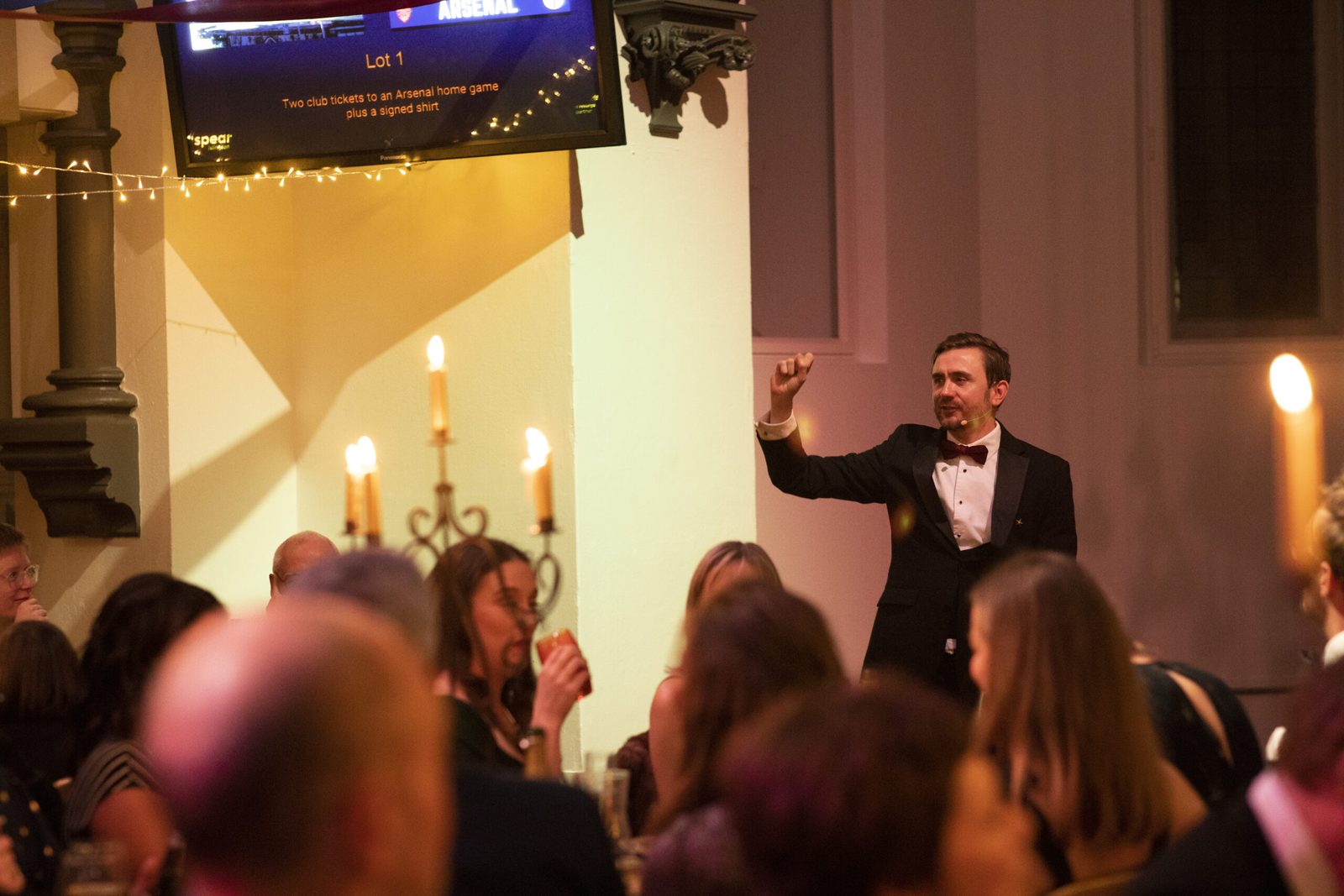
An awards night is the sharpest of the corporate event ideas here because the mistakes are so visible: a name mispronounced, a winner left standing at the wrong moment, a finalist list that changed at the last minute. I prep with a full nominee briefing, pronunciation checks on every name and a run-through with your team, so the night runs to time even when a sponsor video fails on cue, which I have covered live more than once. Recognition done properly is not just a nice evening either. Gallup’s research finds well-recognised employees are markedly less likely to have left two years on, so the awards budget is doing real work when the room feels it.
Why does a conference need a proper host, not a narrator?
Because a full day is energy management as much as presenting, and a narrator only reads the running order aloud. The real job starts after lunch, when the room dips, a speaker runs over, and the Q&A threatens to go quiet or, worse, to go on. A host who builds deliberate energy peaks and recovery moments into the day is the difference between a conference people sit through and one they stay engaged in.
I brief each speaker personally where I can, keep the transitions tight, and make Q&A feel like a conversation rather than an interrogation. I have done this for finance, retail and technology brands, and the through-line is that the day feels produced rather than merely scheduled. For hybrid and streamed events the point is sharper still: I have spent years working to a camera and a timed rundown, so a remote audience is held to the same standard as the room. There is more on that distinction on the conference host page.
Product launches: what makes a reveal actually land?
A reveal lands when the room feels the shift from before to after, and that is a matter of pacing, not pyrotechnics. The product is the star, but a launch with no host tends to sag in the gaps: the wait for the demo to load, the handover between the founder and the technical lead, the moment the stakeholders need a reason to lean in.
My job at a launch is to carry your message, protect the pacing and handle the media moment without stepping on the product. Get the build-up wrong and the reveal arrives to a flat room. Get it right and the applause is real rather than dutiful.
Away days, family fun days and the connection problem
Some corporate event ideas exist purely to get people talking, and that is a harder brief than it sounds. Away days and family fun days are about connection, which is exactly what hybrid working has made scarce. Harvard Business Review‘s work on offsites makes the point plainly: remote and hybrid patterns have made it significantly harder for people to build the informal relationships that good work depends on, and a well-run day off site is one of the few reliable ways to rebuild them.
An away day with a host keeps the day from collapsing into either forced fun or an overrun agenda. A family fun day, with crowds that can run into the thousands, needs someone who can hold a wide, distracted audience and make people feel personally addressed at distance. I have managed family festival crowds past 10,000, with multiple stages and weather that would not cooperate, and the core skill is the same: keep the energy visibly high and never let a dead moment open up. These are the company event ideas that pay off long after the day itself.
Why do interactive game-show evenings work so well?
They work because everyone in the room gets to play, not just a lucky few on stage. An interactive game-show evening is the corporate event idea I am asked for most, and it is the one that flexes furthest: I write every round for the actual crowd in front of me, from an older corporate audience to a rowdy team night.
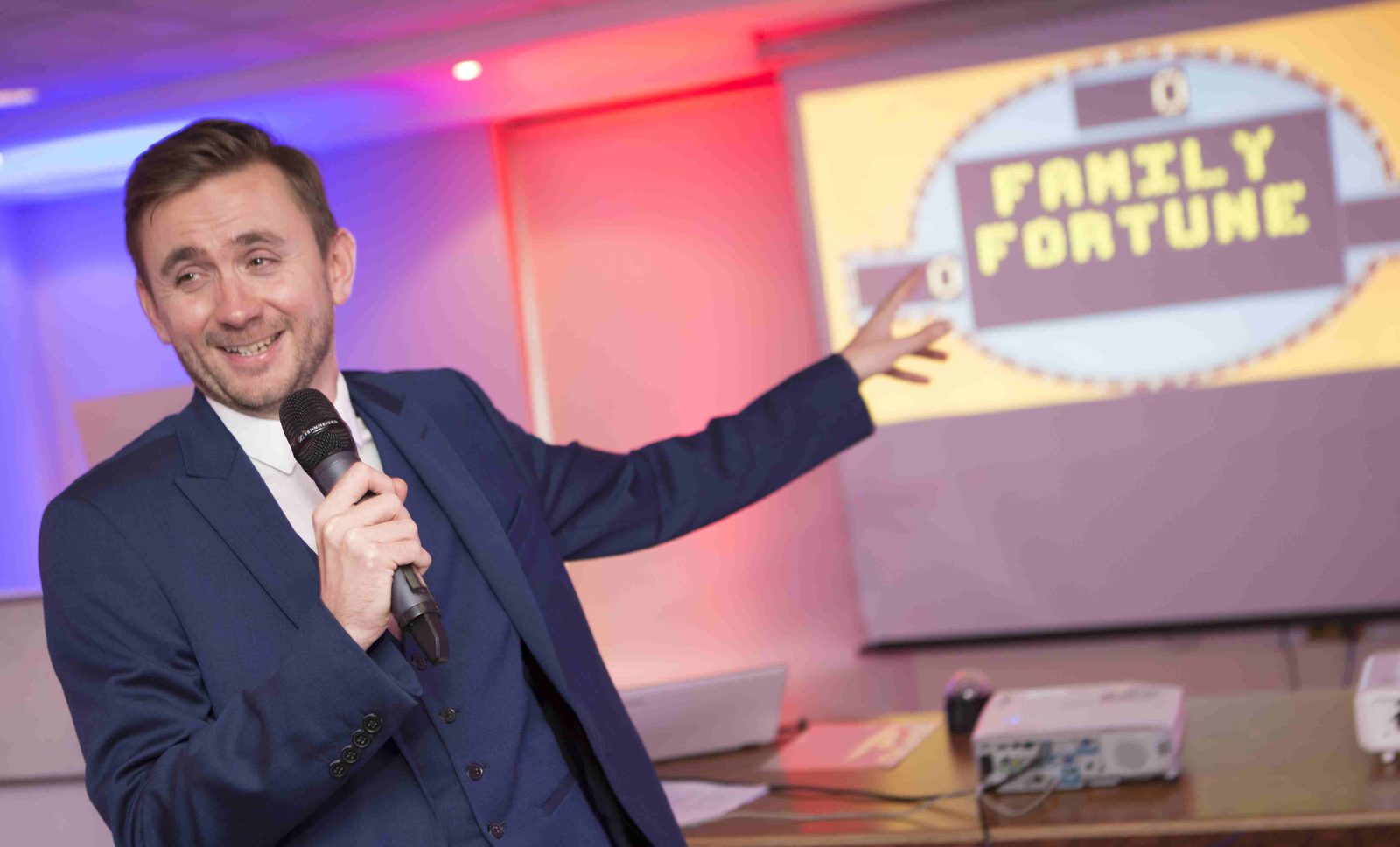
My signature move is to split the whole room into two teams and rotate each round, so as many people as possible get a go and it stays snappy. Family Fortunes questions get written for your specific room. The Generation Game gets the games that suit your audience, one family night ran a modified egg-and-spoon race judged on the silliness of the walk rather than who won. Play Your Cards Right runs table by table so nearly every table plays. There are two modes: a fixed TV format with a few people on stage, or a flexible whole-room version where people can play or sit back and enjoy the show.
My biggest win with this was an awards night rebuilt as a hybrid, award presentations interleaved with game-show rounds, because standard ceremonies drag for everyone not winning. Everyone stayed to the end. Here is a clip from one of my events to show how a round actually plays in the room.
If you want the specific formats, the corporate games page goes deeper. And if you are weighing the entertainment against booked acts, my separate post on entertainment ideas compares the options rather than repeating them.
Corporate event ideas for a smaller company budget
You do not need a festival to run a good work event. Some of the best company event ideas scale right down: a compact awards dinner that recognises a handful of people properly, a half-day conference with one strong host rather than three mediocre segments, or a game-show evening after a working day. The format costs less than the mistake of a flat night.
The principle holds at every size. One professional running the whole evening beats coordinating a separate MC and act, and it removes the awkward handover that clients tell me undid their last attempt. The smaller the event, the more a single confident host earns their place, because there is nowhere for a dull stretch to hide. Whatever the scale of your corporate event ideas UK-wide, the fix is usually the same: one host, the whole evening. You can see the showpiece format on the corporate entertainment page.
Quick answers: corporate event ideas
Which corporate event format is best for rewarding staff? An awards night, built so the people not winning still enjoy the room, or an awards-and-game-show hybrid that keeps everyone in to the last category.
What are good work event ideas for building team connection? Away days and family fun days, ideally with a host who keeps the day moving, because unstructured connection tends to stall without someone driving it.
What corporate event formats suit a smaller company? A compact awards dinner, a half-day hosted conference, or an interactive game-show evening. Each scales down without losing its point.
Which corporate event idea is hardest to find elsewhere? The whole-room interactive game show, written for your specific audience and run in either a fixed TV format or a flexible whole-room mode.
Pick the objective first, then the format, and the night tends to look after itself. If you would rather talk it through against your actual brief, tell me what went wrong at the last one and call 07596 851647.