
In short
- Employee recognition event ideas do not need to be a full awards ceremony. A well-run quarterly or informal event does more for morale than one big annual night.
- Gallup’s research with Workhuman found well-recognised employees are 45% less likely to leave within two years, one of the strongest retention effects in workplace research.
- How to recognise staff achievements matters more than the format: specific, timely recognition beats generic praise, whatever the event looks like.
- A recognition event and an awards ceremony are not the same thing. Recognition can be lighter, more frequent, and less formal.
- Informal staff recognition ideas, a team shout-out, a small event, a genuine thank you in front of peers, often land harder than a trophy once a year.
Most searches for employee recognition event ideas assume the answer is a bigger, more formal awards night. Sometimes it is. Often it is not. Here is what the research says about why recognition works, and a range of formats from the lightest possible gesture up to a proper evening, so you can pick the right scale for what your team actually needs.
The mistake most companies make is treating recognition as an annual event rather than an ongoing practice with an occasional bigger moment attached. Both matter, but they solve different problems, and confusing them is how a business ends up with one expensive night a year and very little recognition in between.
How to recognise staff achievements properly
How you recognise staff achievements matters more than what format you choose. Specific, timely, genuine recognition consistently outperforms generic praise, whatever event or gesture delivers it. “Great work this quarter, everyone” said to a room does far less than naming what someone actually did and why it mattered.
Gallup’s research describes effective recognition as low cost and high impact, precisely because the mechanism is not about spend. It is about being seen. Recognition that names a specific behaviour or result, delivered close to when it happened, does more for morale than an expensive but generic gesture months later.
What employee recognition event ideas work well as a format?
A good staff recognition event format matches its scale to what is actually being recognised. A single outstanding project deserves a specific, timely moment, not a slot in an annual awards show six months later. A full year of consistent excellent work across a department might genuinely warrant a bigger event.
Formats worth considering, roughly smallest to largest:
- A five-minute recognition slot built into a regular team meeting, naming specific wins.
- A quarterly lunch or informal gathering where a handful of people are recognised in front of peers.
- A dedicated recognition event, smaller and less formal than a full awards ceremony, focused on genuine appreciation rather than competition between categories.
- A full awards ceremony, reserved for annual, company-wide recognition where the scale of the occasion matches the scale of what is being celebrated.
Most organisations only ever run the smallest and the largest of these, the quick meeting mention and the annual do, and skip the middle. That gap is usually where recognition goes quiet for months at a time, which is precisely the pattern the retention research below warns against.
What are good employee appreciation event ideas?
Good employee appreciation event ideas give people a genuine moment of being seen, not just a generic perk. A pizza lunch is nice. A pizza lunch where someone stands up and explains specifically why the team’s work mattered this quarter is appreciation.
The research backs this distinction clearly. Gallup and Workhuman found that well-recognised employees are 45% less likely to have left their job two years later, one of the stronger retention effects found in workplace research. That is not a small effect from a minor gesture. It reflects how much unmet recognition actually costs a business in turnover, quietly, long before anyone resigns.
NPR’s coverage of the same research puts it plainly: praise that is specific and genuine measurably changes whether people stay. Appreciation events work best when they are built around that insight rather than treated as a box-ticking calendar item.
Are there good informal staff recognition ideas that do not need a big event?
Yes. Informal staff recognition ideas can be more effective than a formal event, because they can happen closer to the moment they are earned rather than being saved up for a scheduled occasion. Gallup’s retention research found a large share of employees are actively looking for a new role at any given time, and unmet recognition is one of the quieter reasons people start looking, well before it shows up as an exit interview complaint.
Low-effort options that still land:
- A genuine, specific thank you delivered in front of the person’s peers, not just privately.
- A short note or message naming exactly what someone did well, sent close to when it happened.
- A peer-nomination system, where colleagues flag good work for a quick shout-out rather than waiting for a manager to notice.
- A small, unscheduled treat tied to a specific achievement, rather than a generic monthly perk everyone gets regardless of performance.
- A brief mention in a company-wide update or newsletter, which costs almost nothing and still puts someone’s name in front of people beyond their immediate team.
The common thread is timeliness. Recognition that arrives close to the achievement carries far more weight than the same words delivered months later at a scheduled event.
Is a recognition event the same as an awards ceremony?
A recognition event and an awards ceremony are related but not the same thing. An awards ceremony implies competition: categories, nominees, a winner. A recognition event can be much lighter than that, simply making sure specific good work gets acknowledged, without anyone needing to lose to a colleague for the moment to happen.
That distinction matters for planning. A full awards ceremony takes real organisation: nominee lists, categories, a host who can manage the room and keep the energy up through however many awards are being given out. A lighter recognition event needs much less machinery and can happen far more often, which matters given how much timeliness affects whether recognition actually lands.
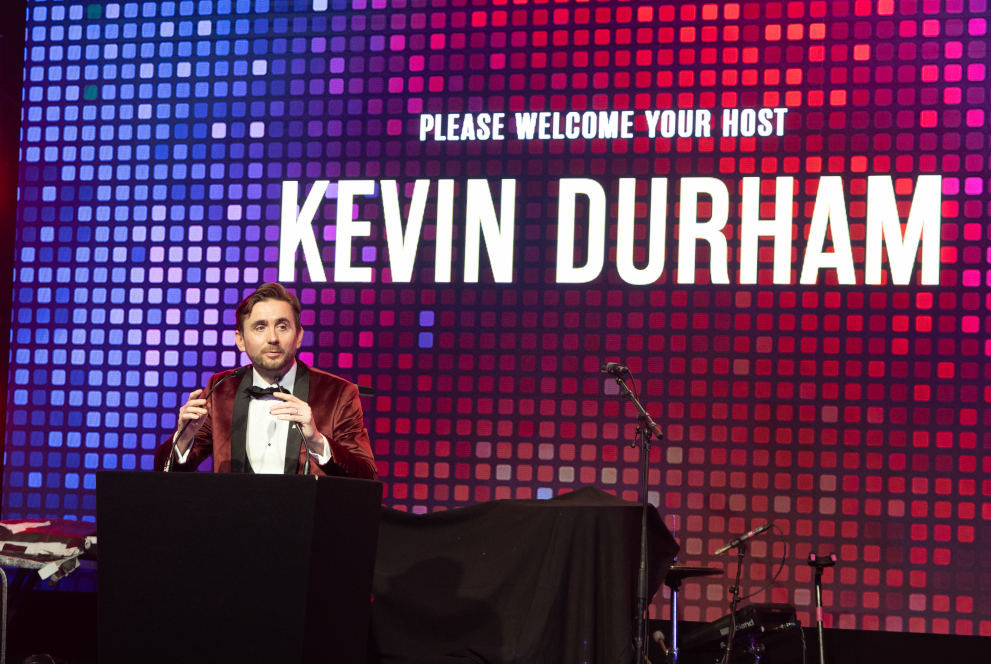
For an event that does need real production, whether that is expanding an existing informal recognition slot into a proper evening, or running your first formal ceremony, an experienced awards host makes the difference between a night that drags between categories and one that keeps the room’s energy up throughout. That distinction shows up most clearly in the gaps: the minutes between one award and the next are where a room either stays warm or cools off, and a good host is the one actively managing that.
Quick answers: employee recognition event ideas
Do employee recognition events need to be formal? No. A quarterly lunch with a five-minute recognition slot often does more for morale than a single annual formal event, mainly because it happens more often and closer to when the achievement occurred.
What makes recognition actually land? Specificity and timing. Naming exactly what someone did well, delivered close to when it happened, consistently beats generic praise or a delayed annual mention.
What is the difference between a recognition event and an awards ceremony? An awards ceremony involves competition between nominees for a limited number of awards. A recognition event can simply acknowledge good work without anyone needing to “win” against a colleague.
Does employee recognition actually affect retention? Yes. Gallup’s research with Workhuman found well-recognised employees are 45% less likely to leave within two years, one of the more significant retention effects identified in workplace research.
If your recognition moment has grown into something bigger, a host who can run a proper awards evening will keep the room’s energy up from the first announcement to the last. Take a look at corporate entertainment options built for exactly that.