
In short
- A corporate game show turns a passive audience into teams with something at stake, which is why it lands where a straight act does not.
- The best formats are written for your specific crowd, not pulled off a shelf.
- Design for participation: split the room into teams and rotate, so nearly everyone plays rather than three volunteers.
- Two modes cover most events: a fixed TV format with a few on stage, or a flexible format that pulls in the whole room.
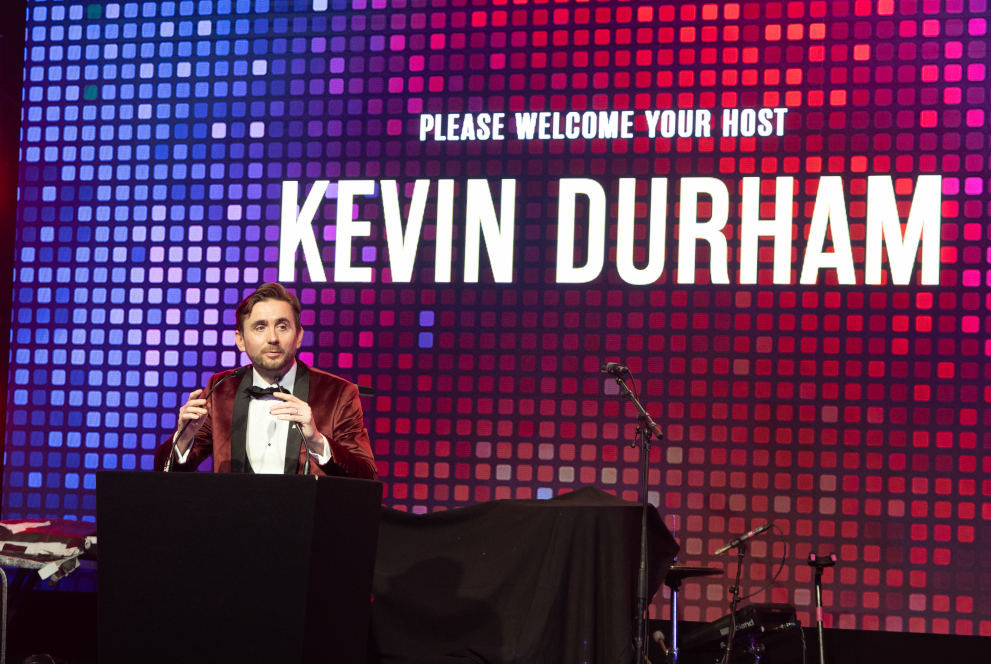
- I write every game for the people actually there, from Family Fortunes to Play Your Cards Right.
A corporate game show is the most reliable way I know to turn a flat room into a loud one, because it stops people watching and gets them playing. But the format alone is not the magic. A game show pulled off a shelf and run the same way everywhere is just a quiz with buzzers. Here are the ideas that actually work, and how to run them so they land with your crowd.
What corporate game show formats work best?
The corporate game show formats that work best are the ones everyone already knows, rebuilt for a live room. Familiar formats need no explaining, so the energy starts immediately. The staples I run:
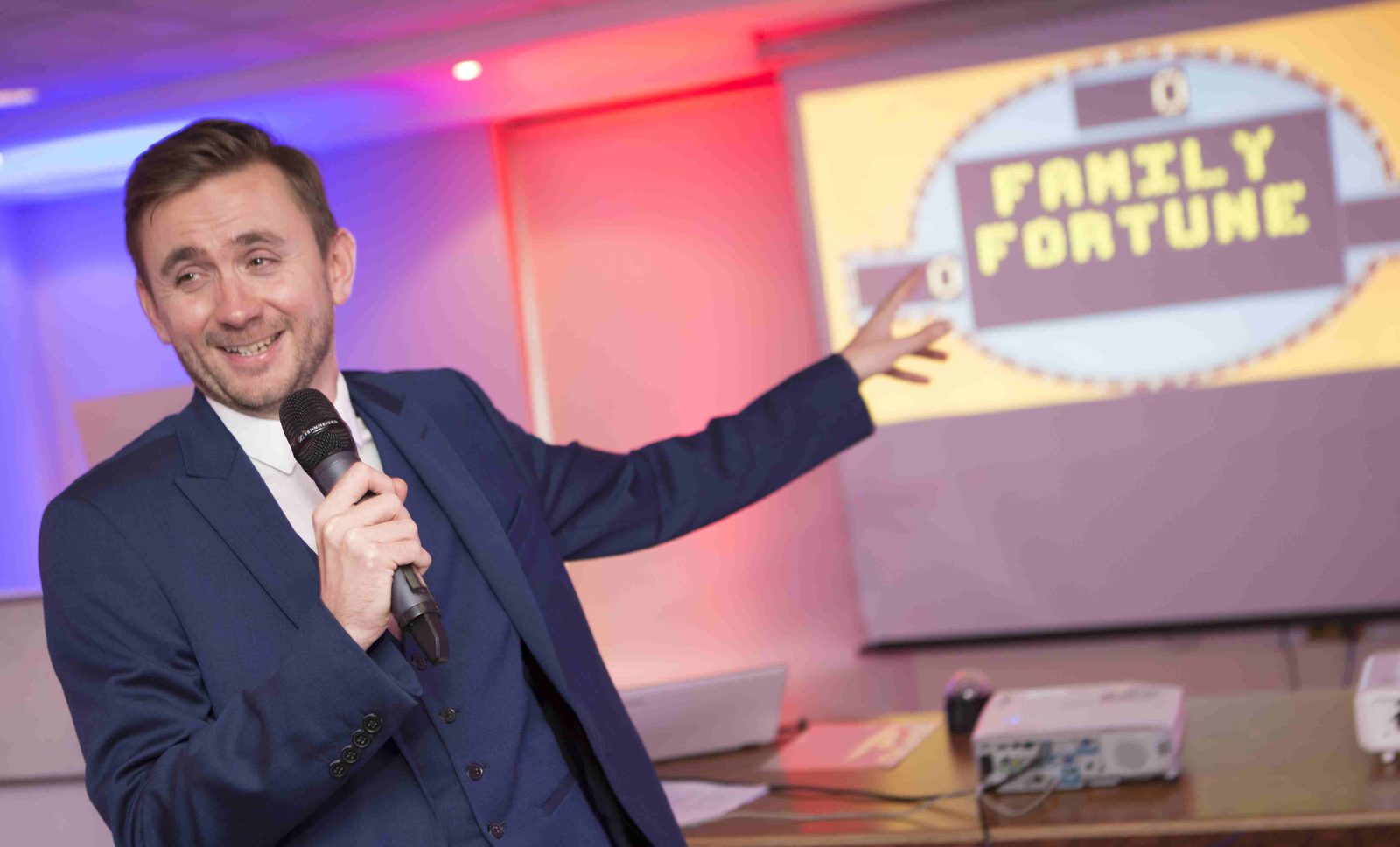
- Family Fortunes, with the survey questions written for that specific audience.
- Play Your Cards Right, run at the tables so nearly every table plays.
- The Generation Game, with the games chosen to suit the crowd in front of me.
The point is not novelty. It is that people relax into a format they recognise, and the customisation is where it becomes theirs rather than generic.
How do you get the whole room playing?
You get the whole room playing by designing for participation rather than spectacle. The classic mistake pulls three volunteers on stage while ninety people watch. The fix is structure that includes everyone by default.
My favourite move is splitting the entire room into two teams that rotate each round, so as many people as possible actually play and it stays snappy. People engage and remember far more when they take part, the effect behind active learning research, so a game built for inclusion lands harder than one built for a stage.

Why should a corporate game show be written for your crowd?
A corporate game show should be written for your crowd because the same format behaves completely differently depending on who is playing. A board of senior directors, a warehouse team and a room of graduates each need different questions, pace and tone. Customisation is the heart of it.
When I write a Family Fortunes round, the survey questions are built around that audience: their industry in-jokes, their office legends, the things only they would find funny. That is what turns a recognisable format into a night that feels made for them.
Fixed or flexible: which format suits your event?
Two modes cover most events, and the right one depends on your room. A fixed television format keeps a few people on stage throughout, which suits an audience happy to watch and cheer. A flexible format pulls in as much of the room as possible, which suits a crowd that wants to be in it.
Either way, guests choose their level: play hard or sit back and enjoy the show. Neither is better in the abstract; the skill is picking the mode that fits your people and your space, which is a conversation worth having before the day.

What does a good game show do for the rest of the event?
A good corporate game show lifts everything around it, not just its own slot. A room that has been laughing and competing together listens better to whatever comes next, and the shared experience carries back to work. Engagement is not a soft nicety, it tracks with real business outcomes.
It also shapes what people remember. We judge an event mainly by its high point and its ending, the peak-end rule, and a well-run game show is often the peak. You can see the formats in detail on my game show hire page, the wider approach on corporate entertainment, and more options under corporate party entertainment.
Here is one more short clip of a round in full flow.
Booking a corporate game show
When I take a game show booking, there is no roster and no separate act to coordinate. You get me, a proper conversation about your audience, and rounds written from scratch for the people who will be in the room. The kit fades into the background; the show is the people and the host.
That is the difference between hiring a format and hiring a night built for your crowd. A booking off a shelf gives you competent buzzers and generic questions. A show written for your audience gives you the in-jokes, the pace and the moments that only make sense to your team, which is what they will still be quoting on Monday.
Quick answers: corporate game show
What is a corporate game show? An interactive entertainment format based on familiar TV games, rebuilt for a live business audience and written for the specific crowd, so people play rather than watch.
How do you involve a big room? Split the room into teams and rotate who plays, and run rounds at the tables, so participation is the default rather than a request for volunteers.
Should the questions be customised? Yes. The customisation is what makes it land. Generic questions give you a quiz; questions written for that audience give you their night.
Fixed or flexible format? Fixed suits a crowd happy to watch a few on stage; flexible suits a crowd that wants to be in it. Match the mode to your people, ideally decided in the briefing.
If you want a game show written for your room rather than pulled off a shelf, tell me about your crowd and we will build the rounds around them.