In short
- The best corporate party entertainment involves as many people as possible, not three brave volunteers while everyone else watches.
- Interactive game shows work because they turn a passive audience into teams with something at stake.
- The format has to be written for your crowd. The same game flexes from a formal dinner to a rowdy summer party.
- A background act plus a separate host means seams. One person who entertains and runs the room keeps the night flowing.
- My signature is game-show entertainment built around the actual people in the room, in a fixed or flexible format.
A corporate party is meant to be the easy one: no awards to hand out, no keynote to sit through, just a good night. Yet plenty of them still fall flat, usually because the entertainment was something people watched rather than something they did. Here is how to choose corporate party entertainment that gets the whole room involved and sends people home talking about it.
What makes corporate party entertainment actually land?
Corporate party entertainment lands when the room is doing something together rather than watching a few people perform. The moment an audience becomes participants, the energy changes: colleagues who barely speak start competing, cheering and laughing at each other, and the night stops being a show and becomes their show.
That sense of belonging is not a nice extra. People engage far more when they are part of the night, and engagement tracks closely with better outcomes across organisations in Gallup’s research. A party where everyone played is remembered very differently from one where most people stood at the edge.
How do you get a whole room involved, not just volunteers?
You get a whole room involved by designing the entertainment so participation is the default, not a request for three brave souls. The classic mistake is a format that pulls a couple of people on stage while the other ninety watch and check their phones. The fix is structure that includes everyone by design.
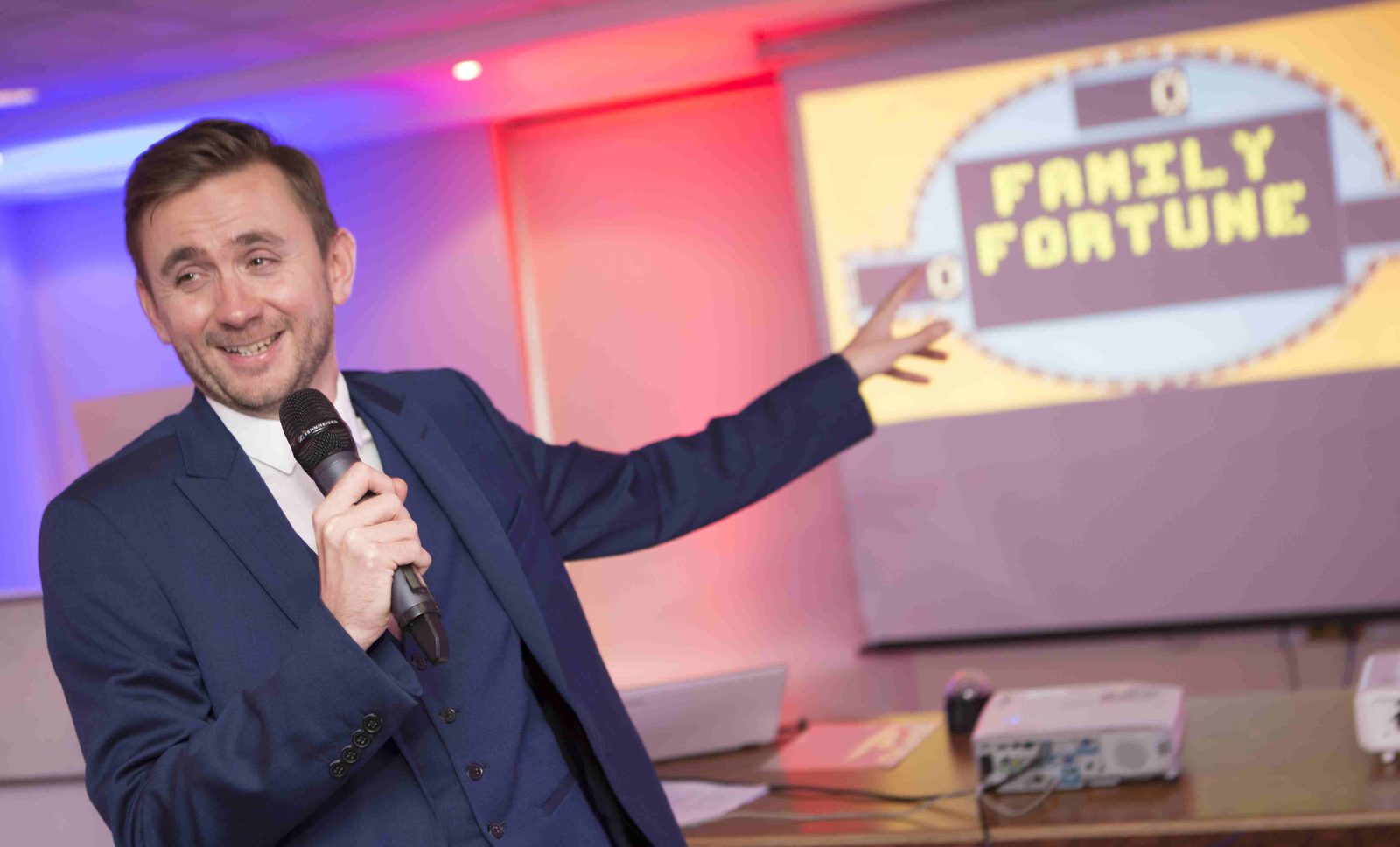
My favourite move with a Family Fortunes round is splitting the entire room into two teams that rotate each round, so as many people as possible actually get to play and it stays snappy. Play Your Cards Right can run at the tables so nearly every table joins in. The point is the same: build the game around inclusion, not spectacle.
There is solid evidence behind that instinct. People engage with and remember an experience far more when they take part rather than watch, the same effect that makes active learning outperform passive formats. A party built for participation is not just louder, it lands harder.
Why should corporate party entertainment be written for your crowd?
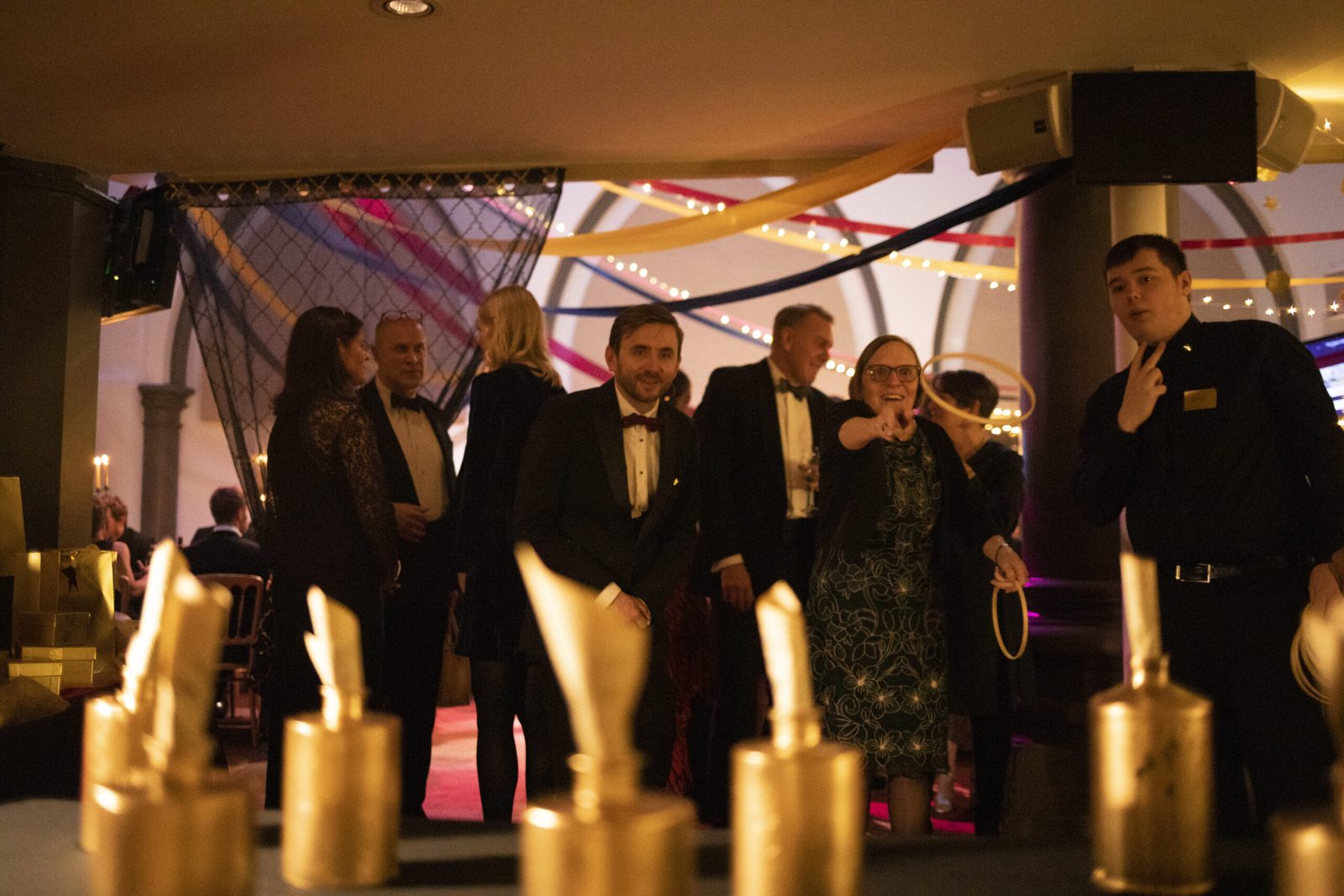
Corporate party entertainment should be written for your crowd because the same format has to behave completely differently depending on who is in the room. A formal dinner for senior stakeholders needs a lighter, wittier touch. A summer party for a young, energetic team can take much more. A family day is different again.
Customisation is the heart of it. When I run a game show, the survey questions, the running gags and the choice of games are all shaped for that specific audience rather than delivered from a fixed script. One family event even ran a modified egg-and-spoon race judged on the silliness of the walk rather than who won, because that was the right call for that crowd.
Here is a short clip of a game-show round at a corporate night.
What flattens a corporate party, and how do you avoid it?
What flattens a corporate party is a night stitched together from separate parts with nobody owning the flow. A background band, a buffet and a DJ can all be fine individually, and still add up to an evening with no shape, because no one is actively lifting the energy or marking the moments.
The avoidable version has one person holding the night together: entertaining the room, reading when the energy dips, and giving the evening a spine. That is the difference between guests drifting to the bar early and a room that stays in it until the end.
That spine matters for what people take away, because we remember a night mainly by its peak and its ending, a pattern known as the peak-end rule. A party that builds to a real high point and finishes on it is remembered as a great night, even if the middle was simply good.
Two ways to run the entertainment
There are two modes that cover most corporate parties, and the right one depends on your room. A fixed television format keeps a few people on stage throughout, which suits an audience that is happy to watch and cheer. A flexible format pulls in as much of the room as possible, which suits a crowd that wants to be in it rather than watch it.
Either way, the audience can choose their level: play hard, or sit back and enjoy the show. The formats are the same ones people know from television, rebuilt for a live room, and you can see the range on my game show hire and corporate entertainment pages, with more options under entertainment ideas.

Here is another clip of a whole room getting involved.
Quick answers: corporate party entertainment
What is the best corporate party entertainment? For most parties, interactive entertainment that involves the whole room, such as a game-show format run in teams, because participation is what makes the night memorable rather than a performance people watch.
How do you include a big group? Use formats built for inclusion: split the room into teams, run games at the tables, and rotate who plays, so the maximum number of people take part rather than a handful of volunteers.
Should the entertainment be tailored? Yes. The same format needs different content and energy for a formal dinner versus a summer party, so insist on entertainment written for your specific crowd.
Do I need a separate host and act? Usually not. One person who entertains and runs the room removes the seams and keeps the night flowing. See what a full evening looks like on my event entertainment page.
If you want a party your team actually plays rather than politely watches, tell me about your event and the kind of crowd you are expecting.