
In short
- After dinner entertainment is what fills the slot once the plates are cleared: the part of the evening people actually remember or quietly endure.
- It is not the same as an after dinner speaker. A speaker performs to the room; entertainment gets the room performing.
- After a big meal a corporate audience is warm, full and social, which suits interactive formats far better than another person talking at them.
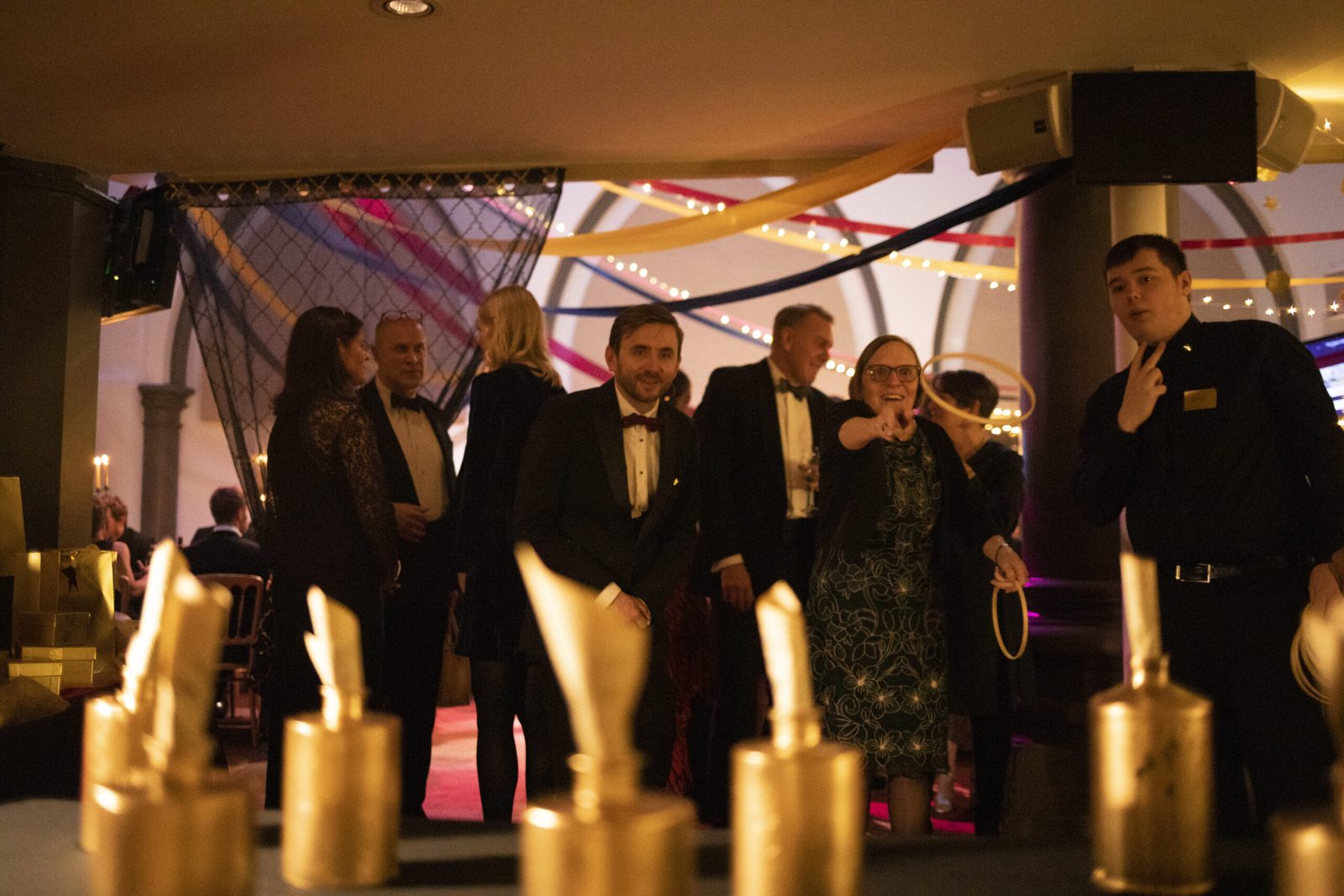
- I run game-show style entertainment built around the actual people in the room, so most of the tables are playing rather than watching.
- The evening lives or dies on who is holding it together between courses and acts, which is the case for one host running the whole thing.
After dinner entertainment is the moment your event stops being a meal and becomes a night people talk about on Monday. Get it right and the room lifts. Get it wrong and you have a well-fed audience checking their phones by nine o’clock.
I host corporate dinners, award evenings and galas, and the after dinner slot is where I earn my keep. This is a working host’s take on after dinner entertainment: what it is, how it differs from booking a speaker, the formats that suit a full room, and what to nail down before you book anyone.

What is after dinner entertainment?
After dinner entertainment is whatever you programme into the evening once the meal is done, to carry the energy through to the end of the night. In practice that covers a wide range: a speaker, a comedian, a band, an interactive game show, or a host who runs the whole back half of the event.
The slot matters more than most organisers expect. Dinner has a natural arc that peaks around the main course and then flattens, and without something deliberate to follow it, the room drifts into private conversations and early exits. Entertainment is how you take a satisfied crowd and give them a reason to stay engaged together rather than splinter into tables.
The best after dinner entertainment fits the specific evening. A formal award dinner, a team celebration and a client hospitality night all want different things, and treating them the same is the quickest way to misjudge the room.
After dinner entertainment vs an after dinner speaker
The difference is simple: an after dinner speaker performs to the room, while after dinner entertainment can get the room performing. Both have their place, but they do very different jobs, and confusing the two is a common booking mistake.
A good after dinner speaker is worth having when you want a name, a story, or a message that rewards sitting and listening. The risk is that it asks a full, sociable room to go quiet and passive again right when its energy wants to go the other way.
Interactive entertainment runs with that energy instead of against it. Rather than one person talking for forty minutes, you get the whole room laughing, competing and involved, which tends to suit the mood after a meal far better. If your priority is a night that feels like a party rather than a lecture, entertainment usually wins.
What kind of after dinner entertainment works for a corporate crowd?
The after dinner entertainment that works best on a corporate crowd is interactive, inclusive, and shaped around the people in the room. After a big meal, a warm and social audience wants to be part of the fun, not sat back down to watch from a distance.
Formats that consistently land:
- Live game shows. Familiar TV formats, rebuilt for your company, so the questions and rounds are about your people rather than generic trivia.
- Table-based competition. Rounds that run across the tables mean most of the room is playing at once, not just a few volunteers on stage.
- A hosted awards-and-games blend. For evenings that already have awards, interleaving the categories with entertainment keeps the people who are not winning fully in the night.
The thread running through all of it is participation. The more of the room that gets to play, the more the evening belongs to everyone, and the less it depends on any one act being brilliant.
Interactive formats I run after dinner
When I run the after dinner slot, it is usually a game show built around the crowd, using formats people already know so nobody has to learn rules at ten at night. I write the content for that specific audience, which is what turns a generic quiz into a room full of people shouting answers at each other.
My signature move is to split the whole room into teams and rotate through rounds, so as many people as possible actually get to play rather than watch a handful on stage. The same game show formats flex from a reserved senior audience to a rowdy team night, because the format stays and the pitch changes.
Because I host as well as entertain, I also carry the bits around the entertainment: the welcome, the awards if there are any, the timing between courses. One person holding the whole evening removes the awkward handover you get when an MC introduces a separate act and then disappears.
How do you keep a well-fed room awake?
You keep a well-fed room awake by giving it something to do, quickly, before the meal’s comedown sets in. A warm, full audience does not want to concentrate, but it very much wants to be entertained, and the trick is to meet that mood rather than fight it.
In my experience the danger window opens soon after the plates are cleared. If nothing lifts the room in that stretch, tables turn inward and the evening quietly fragments. A short, high-energy start to the entertainment resets everyone’s attention to the front and buys you the rest of the night.
Pace does the rest. Keep rounds short, keep people moving between watching and playing, and never let one segment outstay its welcome. Energy after dinner is a resource you spend carefully, not a tap you can leave running.
What can go wrong with after dinner entertainment?
The usual failures with after dinner entertainment are misjudging the room, running too long, and leaving nobody in charge of the join between segments. Any one of them can flatten an evening that had everything else in place.
Misjudging the room is the big one. Entertainment pitched too broad for a senior client dinner feels forced, and something too dry for a team celebration feels flat. The content has to match the specific crowd, which is why a proper briefing beats an off-the-shelf act every time.
The other quiet killer is structure. If the entertainment, the speeches and the awards are all treated as separate items with dead air between them, the room cools in the gaps. That is the case for one host running the arc of the evening rather than three disconnected bookings.
Booking after dinner entertainment: what to ask
Before you book after dinner entertainment, ask who the audience really is, how the evening is structured, and who is holding it together between the set pieces. Those three answers tell you far more than a list of acts.
A few questions worth putting to anyone you are considering:
- Will the content be built around our people and our evening, or is it the same set every time?
- How much of the room actually gets to take part?
- Who runs the transitions: the welcome, the awards, the timing between courses?
- Have you handled our kind of event, and can we see it on film?
If your evening is a full sit-down occasion, it is worth reading how I approach the whole thing on the gala dinner guide, and how the corporate entertainment side works when the brief is a proper party. If a live game show is what you are picturing, that is covered on the game show hire page.
Tell me about your dinner, the audience and the shape of the night, and I will tell you honestly what would land and what would not.