In short
- A panel discussion is a moderated conversation where a small group, usually three to five people, explore a topic in front of a live audience.
- The moderator runs the room and keeps it moving; the panellists bring the expertise and the opinions.
- Formats range from a straight audience Q&A to a fireside chat to a debate-style face-off, each suited to a different goal.
- A panel works when you want range and honest disagreement quickly; it fails when it drifts into five polite monologues.
- A strong moderator is the difference between a panel that crackles and one that sags after lunch, which is exactly why the person in the middle matters more than the line-up.
I have hosted enough conference days to know that the panel is usually the session people either remember or quietly endure. A panel discussion looks like the easiest format going: sit some clever people down, point a microphone at them, let them talk. In my experience it is the hardest format to make genuinely good, because the thing that carries it is not the panel, it is the person running it. So here is what a panel discussion actually is, the formats worth knowing, who does what, and where they tend to fall over.
What is a panel discussion?
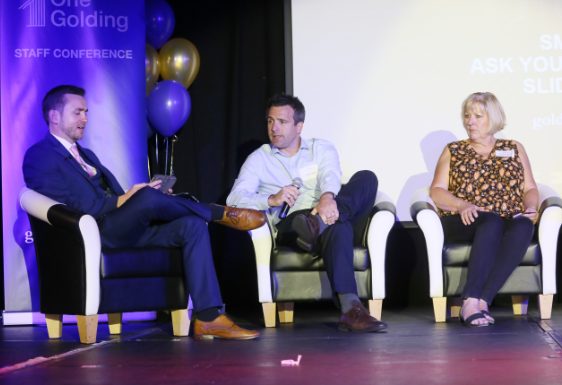
A panel discussion is a structured, moderated conversation in which a small group of people, usually three to five, explore a topic in front of an audience. One person moderates, asking questions and keeping the flow, while the others respond, build on each other and sometimes disagree. It is a live format, so it carries a little risk and a lot of the energy that a scripted talk cannot.
You will find panels at business, academic and scientific conferences, at industry events, on television and at conventions, according to the reference entry on the format. The common thread is plural viewpoints in real time, with a moderator whose job is to guide the discussion and, often, to draw in audience questions towards the end.
What does “panel discussion” mean in practice?
In practice, “panel discussion” simply means a group conversation staged for an audience, and the two words do different jobs. The panel is the people, the group assembled because of what they know. The discussion is the format, the fact that they are talking with each other rather than delivering separate presentations.
That distinction matters more than it sounds. A panel discussion meaning is often confused with a panel of judges or a Q&A with one speaker, and neither is the same thing. What defines this format is that several informed voices are in the room at once, reacting to one another, so the audience hears a subject argued from more than one angle instead of a single prepared line.
What are the common panel discussion formats?
There is no single panel discussion format; there are several, and choosing the right one is half the battle. The differences come down to how much the panellists talk to each other, how involved the audience is, and whether you are chasing consensus or friction.
The main types of panel discussion I see on the circuit:
- Moderated Q&A panel. The classic. A moderator works through prepared questions, then opens the floor. Reliable, and the safest default for a mixed audience.
- Fireside chat. Really a one-on-one interview in front of a crowd, warmer and more personal, ideal for a single senior figure with a story to tell.
- Debate-style panel. Panellists are deliberately positioned on opposing sides of a question. High energy, but it needs firm handling.
- Roundtable. A more even, discursive format where everyone contributes roughly equally and the moderator steers lightly.
- Town hall or audience-led panel. The audience drives most of the questions, with the panel responding live. Excellent for engagement, harder to keep on time.
Pick the format to match the outcome you want. A launch reveal, a technical deep-dive and an after-dinner slot all call for different handling.
Moderator or panellist: who does what?
The moderator runs the conversation and the panellists supply the content, and blurring that line is where most panels go wrong. A moderator’s job is not to show what they know. It is to serve the audience: ask sharp questions, keep everyone to time, and make sure the quiet expert is heard as much as the loud one.
Good moderating is mostly preparation and restraint. Toastmasters International advises moderators to stay neutral, avoid signalling approval after individual answers, prepare up to ten concise questions in advance, and watch the clock so there is time for the audience. Harvard Business Review puts the same principle more bluntly, noting that your goal is a great experience for the room and that you should not be afraid to politely cut off an answer that is turning into a monologue.
Panellists, meanwhile, are there to be specific: real examples, honest opinions, the thing they would only say out loud in front of peers. The moderator’s craft is creating the conditions where that actually happens. If you want the full method, I have written a companion guide on moderating a panel.
Panel discussion vs debate: what is the difference?
The core difference in panel discussion vs debate is the goal: a panel explores a topic from several angles with no winner, while a debate pits two sides against each other to win an argument. A debate has fixed positions, rebuttals and usually a verdict. A panel is looser and more collaborative, even when the views clash.
That said, the two blur at the edges. A debate-style panel borrows the tension of a debate without the formal scoring, which can be the best of both: real disagreement, but still a conversation. The reason to know the difference is intent. If you want the audience to weigh two clear positions, run something closer to a debate. If you want range, nuance and a few unexpected points of agreement, run a panel.

When a panel is the right choice
A panel earns its place when a single voice cannot do the topic justice. If the subject is genuinely contested, or the value is in comparing how different organisations approach the same problem, three or four practitioners will always beat one keynote reading a script. It is also the format that lets an audience hear the disagreements they suspect exist but rarely get to watch play out.
A panel is the wrong choice when you actually need one clear message delivered cleanly, or when the line-up is really four people who all think the same thing. A panel with no tension is just a slow keynote split between too many people. Before you book five chairs, ask what the audience gains from hearing these voices together rather than one of them properly.
What good panels get right, and where they fail
The best panels I have hosted share one trait: someone was actively holding the room together, not just announcing whose turn it was to speak. On a full conference day the panel usually lands in the danger zones, straight after lunch or late in the afternoon, when a flat session drains the whole room. That is energy management as much as questioning, and it is why I treat the panel as a performance to be shaped, not a slot to be filled.
The failures are predictable. One panellist dominates while another says nothing. The questions are so broad that every answer is a shrug. The Q&A turns awkward because nobody planned how to open it. Speakers run over and the last, best question never gets asked. Each of these is a moderating failure, not a panellist failure, and each is avoidable with a proper briefing beforehand. When I interviewed Deborah Meaden on stage at the Linnworks conference, the value was not in the chair, it was in the prep that let the conversation go somewhere real. That is the same discipline I bring to hosting a full conference host day, and it is worth understanding the line between a facilitator or host before you decide who runs your session.
Quick answers: panel discussion
How many people should be on a panel? Three to five panellists plus a moderator is the sweet spot. Fewer feels thin, more and some voices never get airtime.
How long should a panel discussion last? Usually 30 to 45 minutes, including audience Q&A. Beyond an hour, attention drops sharply unless the format is unusually lively.
Does a panel discussion need a moderator? Yes. Without one, the conversation loses direction and the strongest personality takes over. The moderator is what turns a group chat into a session worth watching.
What makes a panel discussion good? A tight topic, panellists who genuinely disagree, and a moderator who prepares hard and talks little. Get those three right and the format almost runs itself.
A panel is only as good as the person steering it, and that is decided in the briefing, not on the night. If you have a conference or an event with a panel that has to land, tell me what the last one got wrong and I will tell you how I would run it. You can get in touch or call 07596 851647, and if you are still weighing up who runs the room, it is worth reading what an event host actually does across a full day.