
In short
- To present an award well, you make the moment about the winner, not about you, and you make the mechanics invisible.
- The core is short: name the award, say a genuine line about why it matters, build to the winner, then hold the stage while they arrive.
- The winner’s walk-up is where most presentations wobble. Keep talking, keep it warm, and never leave someone climbing stairs in silence.
- Always have a plan for the winner who is not in the room, because at some point they will not be.
- The best presentations come from preparation: correct names, correct pronunciations, and knowing the running order cold.
Learning how to present an award is learning how to run someone else’s big moment without getting in the way of it. Done well, it looks effortless. Done badly, it is one of the most visibly awkward things that can happen on a stage.
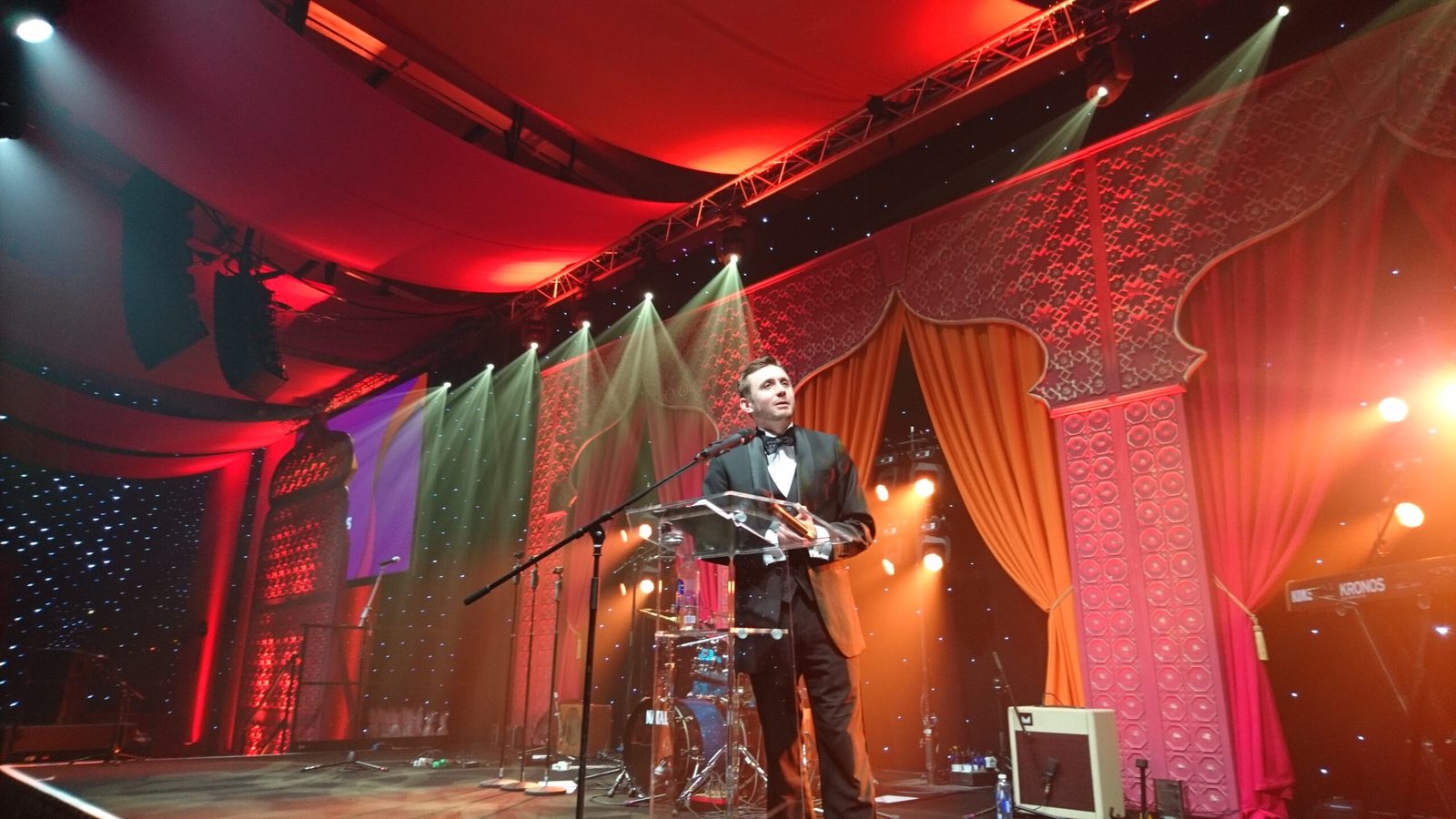
I host award evenings for a living, and the presentation of each award is where the whole night is won or lost in small increments. This is a working host’s guide to how to present an award: what to say, how to handle the walk-up, what to do when the winner is missing, and who should be holding the microphone in the first place.

What does it take to present an award well?
To present an award well takes preparation, warmth, and the discipline to keep the focus on the winner. The audience should leave remembering the person who won, not the person who handed it over.
Award ceremonies are where hosting mistakes are most visible. The wrong name called, a winner left standing at the wrong moment, a joke that lands badly in a room full of people who all know each other: these are the errors an audience never forgets. The margin for error is smaller here than almost anywhere else in events.
That is why the work happens before the night. A proper nominee briefing, pronunciation checks on every name, and a run-through with the organising team are what let the moment itself feel relaxed. Confidence on stage is just preparation showing.
What should you say when you present an award?
When you present an award, say what the award is, why it matters, and enough about the winner to make the room lean in, then land on their name. Short, genuine, and building to the reveal.
A reliable shape is: name the award and what it recognises, add a real line about why this category matters or how strong the field was, then build towards the winner and finish on their name. The name is the trigger for the applause, so it belongs at the peak, not buried in the middle of a sentence.
Keep the language specific and sincere. Empty superlatives wash over a room, but a concrete detail about what the award stands for gives the win weight. You are not filling time, you are making a real achievement feel real to everyone watching.
How do you handle the winner’s walk-up?
You handle the winner’s walk-up by keeping the room warm while they cross the floor, so nobody is climbing the stairs to silence. This gap is short but exposed, and it is where a lot of presentations quietly fall apart.
The walk from a table to the stage can take fifteen or twenty seconds, which is a long time in front of a crowd. A good host fills it naturally: a warm line about the winner, a nod to the applause, a small moment of acknowledgement as they arrive. The energy should carry them all the way to the microphone.
Then you get out of the way. Hand over the award, let them have their moment, and be ready to gently steer things back if a speech runs long. Presenting an award is as much about managing the seconds around the handover as the words before it.
What if the winner isn’t there?
If the winner is not there, you acknowledge it cleanly, keep the dignity of the award intact, and move on without a fuss. This will happen, so you plan for it rather than reacting live.
The tone matters. A missing winner is not a punchline, and turning it into one deflates the award and can embarrass the organisers. Accept it warmly, note that the award will be passed on, and give the achievement the same respect it would have had in person. The room takes its cue from you.
In my experience the events that handle this smoothly are the ones that expected it. I have covered last-minute changes to finalist lists, a sponsor video that failed to play, and rooms that ran badly over time, and the common factor is always preparation. Knowing the running order cold is what lets you absorb a surprise without the audience feeling the bump.
Presenting an award as part of the wider evening
An award presentation never happens in isolation. It sits inside the flow of the whole ceremony, and how it lands depends on what came before it and what follows.
The pacing across the night is what keeps each presentation feeling special. If the ceremony has sagged for twenty minutes, even a well-handled award arrives to a flat room. If the energy has been kept up, the same moment lands with real warmth. Every presentation borrows from the momentum of the evening around it.
This is why I treat a ceremony as one continuous piece rather than a string of separate awards. The transitions between categories, the timing, the small lifts of energy in between: those are what let each winner walk into a room that is genuinely ready to celebrate them.
Common mistakes when you present an award
The common mistakes when you present an award are making it about yourself, mispronouncing the winner’s name, and letting the pace sag. Each one pulls focus from where it belongs.
Making it about yourself is the frequent one. The presentation is the winner’s moment, and a host who lingers, over-jokes, or turns it into their own set has misread the job. Your warmth should point at them, not back at you.
Getting a name wrong is the unforgivable one, and it is entirely avoidable. Names get checked and practised in advance, every time, no exceptions. The other slow killer is pace: a ceremony that drags between awards loses the room long before the final category, which is why keeping the energy up across the whole night matters as much as any single presentation. There is more on that in the guide to hosting awards that do not drag.
Who should present an award at a corporate event?
Who should present an award depends on the moment: a senior leader or sponsor for weight and meaning, and a professional host to run the mechanics around them. The two roles are different, and the best ceremonies use both well.
A sponsor or an executive presenting a specific category brings genuine significance, and that is worth protecting. What they usually should not be asked to do is run the whole evening, because hosting a full ceremony to time, covering the surprises, and keeping the energy alive between categories is a separate skill set. That is the job of an award ceremony host.
The neat solution is to let guest presenters own their moment while a host carries everything around it. If you want the awards themselves to stay lively rather than becoming a long list of names, that tips into entertaining awards, where the presentations and the entertainment are built to work together.
Tell me about your ceremony, the categories and who is presenting, and I will help you make every winner’s moment land the way it should.