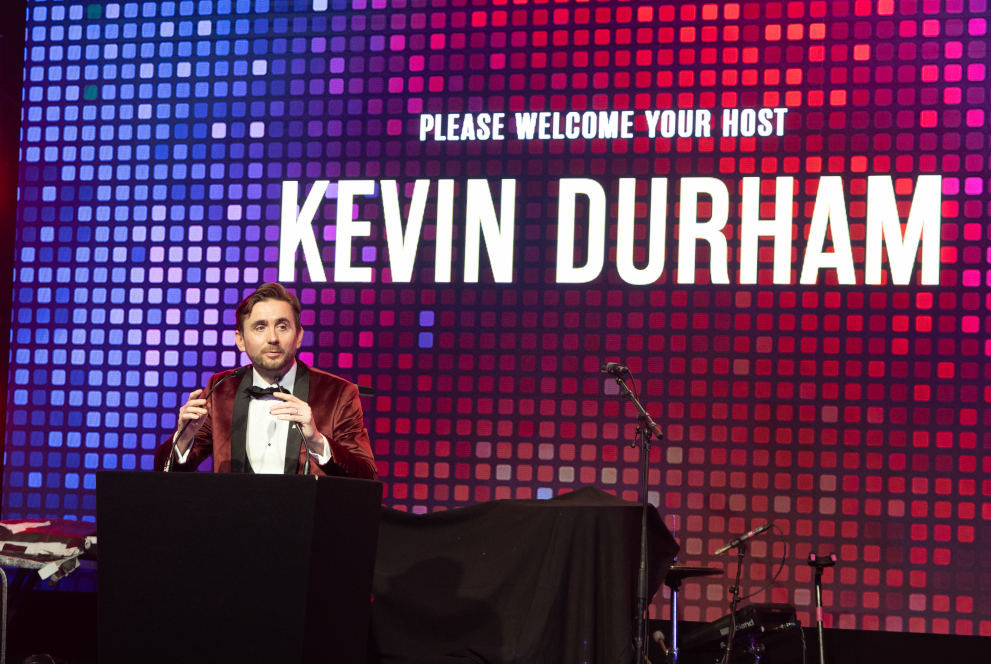

- How to plan an awards ceremony well requires more lead time than most organisers allow: 12 weeks minimum for a formal corporate event, 16 or more if you are booking specific talent or a larger venue.
- The three elements that determine whether an awards night succeeds are the host, the run of show, and the briefing quality. Everything else is atmosphere.
- Awards ceremonies fail in predictable ways. Wrong name called. A programme that runs 40 minutes over. A winner who has no idea they won and is seated at the back. All of these are preventable with the right preparation.
- The awards ceremony is the one event format where the mistakes happen in public, in front of everyone the organisation has invited. Getting it right matters more than most briefs acknowledge.
If you are planning an awards ceremony for the first time, the volume of things to coordinate can feel like it has no clear starting point. If you have organised one before and it did not quite land the way you expected, you may already have a good idea of what went wrong.
This guide covers how to plan an awards ceremony from the ground up: the timeline, the run of show, the host briefing, the winner management, and the things that go wrong most often at UK corporate awards nights, and how to avoid them.
How to plan an awards ceremony: where to start
Before you can plan the logistics, you need two things: a clear objective and a realistic budget. Veo Events put it directly: beginning the planning process early allows ample time to address all the details and ensure a smooth event.
The objective sounds obvious but is often skipped. “We want to celebrate our people” is a purpose, not an objective. The objective answers a more specific question: what should attendees feel when they leave? What does the organisation want the awards evening to communicate about its values, its culture, and its direction? The answers to these questions should drive the tone, the categories, and the programme design.
The budget question determines everything else. Venue, catering, entertainment, production, and talent all compete for the same envelope. The element that is most often underbudgeted in UK corporate awards evenings is the professional who runs the night. Blackberry Events recommend allocating a contingency buffer of around 10 to 15 per cent of your total budget for unforeseen expenses. The award ceremony host is not a supplementary expense to the venue and catering costs. They are the person on whom the quality of the entire evening depends.
Once you have an objective and a budget, the planning sequence becomes much clearer.
The awards ceremony planning timeline
The timeline below is for a formal corporate awards evening with 100 or more attendees. For events drawing guests from multiple organisations, the HAC recommends booking the venue and date six to twelve months out, with detailed planning beginning eight to ten weeks before the event. Smaller or less formal events can compress some of these stages, but the sequence is the same.
16 weeks out:
- Confirm objective and guest list size
- Set the budget
- Identify venue options and visit shortlisted venues
- Define award categories and nomination process
12 weeks out:
- Book the venue
- Book the host
- Open nominations if the process is an open one
- Brief the event production team on AV requirements
8 weeks out:
- Close nominations
- Begin judging or selection process
- First draft of the run of show
6 weeks out:
- Briefing call with the host: objectives, audience, tone, and programme overview
- First version of the script and speaker introductions
- Confirm winner list if determined early (many ceremonies keep this sealed until the night)
4 weeks out:
- Updated run of show with confirmed timings
- Finalist list to the host for pronunciation checks
- Confirm entertainment, AV, and catering sequencing
2 weeks out:
- Final run of show
- Full winner list to event management team (sealed, not shared with host yet if presenting live)
- Rehearsal schedule for the day
Day before:
- Final run of show circulated
- AV walkthrough
- On-site briefing with host, AV team, and key event management contacts
What should your awards ceremony run of show include?
The run of show is the single most important document in the awards ceremony planning process. White Event Production describe it as a detailed timeline outlining all tasks and deadlines, with milestones covering every phase of the evening. A good one makes the evening run smoothly. A vague one transfers all the risk to the people on stage.
A run of show for an awards ceremony should include:
- Segment title and type: drinks reception, dinner, award category, entertainment, speech, close
- Start time and duration for every segment, with cumulative time shown alongside
- Every name that will be read aloud, spelled phonetically for any name that is not straightforwardly pronounced
- Presenter details: who is presenting each award, where they are seated, and whether they are reading from a prepared card or improvising
- Winner management: who knows the winners, how that information gets to the host, and when
- Transitions: what happens between each segment, including any AV elements, music cues, or stage changes
- Hard stops: catering milestones, a venue curfew, or any element with a fixed time that cannot move
The run of show does not need to be a polished document. A working spreadsheet shared with the event team and the host is sufficient and often easier to update as the programme evolves.
Birmingham’s guide to awards ceremony planning offers a useful example: their Campus Services Awards ran welcome remarks, starter and entertainment, main course, award presentations, dessert and raffle, and closing remarks across four hours, with each segment named, timed, and sequenced. What the run of show cannot be is vague. “Award segment, 45 minutes” is not a run of show. It is a guess with an optimistic time attached. Award ceremonies routinely run over because the time per category has not been calculated in advance. If you have 10 categories and 45 minutes of programme time, you have four and a half minutes per category for the introduction, the nominees, the winner announcement, the acceptance speech, and the transition to the next category. That is tight. Know the number before the night.
How do you choose and brief your awards ceremony host?
The host is the highest-leverage decision in the awards ceremony planning process. Veo Events recommend looking for hosts comfortable speaking to crowds, with experience in live events and the ability to improvise: a useful baseline, but at a corporate awards level, specific awards ceremony experience matters more than general stage confidence. The right person makes a good ceremony feel exceptional. The wrong person makes a good ceremony feel flat.
When selecting a host, experience at the specific format matters more than general presenting ability. An awards ceremony is not a conference. The management of winner moments, the handling of acceptance speeches, the emotional register of a room that has just seen a much-loved colleague recognised for the first time, these require specific experience, not general stage confidence.
Ask candidates:
- How many awards evenings have you hosted?
- What happens if a winner is not in the room?
- What do you do if an acceptance speech runs significantly over time?
- How do you handle a finalist list that changes close to the event?
I have encountered all four of these scenarios at award ceremonies I have hosted. The answers should be specific and based on experience, not theoretical.
The briefing call with your host should cover:
- The event’s objective and what success looks like
- Audience profile: who is in the room, their relationship to the organisation, and the tone they expect
- The full run of show, even if it is still in draft
- Any topics, individuals, or subject areas the host should not reference
- Who the host’s day-of contact is on the organising team
Send the run of show at least two weeks before the event, not the week of. The host needs enough lead time to ask questions, do speaker research, and prepare introductions that are specific to the evening rather than read from a biography.
How should you handle winner announcements?
Winner management is where awards ceremonies most visibly go wrong, and most of the risk is preventable.
The common failures:
Wrong name called. This happens when the host reads from a card that has not been double-checked, when the information the host has differs from the information the presenter has, or when last-minute changes to the winner list were not communicated to everyone involved. The solution is a single source of truth: one person holds the winner list, and all information flows from them.
Winner not present. If there is any possibility that a nominee cannot attend, decide the protocol in advance. Is a representative allowed to collect on their behalf? Does the organisation acknowledge their absence from the stage? Having a clear protocol before the night means the host can manage this moment gracefully rather than improvising.
Acceptance speech overrun. An award ceremony programme that runs 40 minutes over almost always does so because acceptance speeches were not managed. The host has to be empowered to manage this. That means agreeing in advance: at what point does a speech become a problem, and what is the host’s signal to the speaker? A music cue, a light change, a direct intervention. Whatever the method, it needs to be agreed before the first category is announced.
Mispronounced names. This is the most preventable failure and the most common. Provide phonetic spellings for every non-obvious name on the finalist and winner list. The host should be doing this themselves as part of preparation, but the organising team should not assume it has been done.
What makes a good awards ceremony atmosphere?
The atmosphere of an awards ceremony is determined by three things: the room, the timing, and the energy of the person at the front of it.
The room. An awards ceremony in a room that is too large for the guest list feels under-attended. A ceremony in a room that is slightly smaller than ideal feels full and warm. If you have flexibility on venue size, err toward the room that will feel full. The emotional temperature of an awards night rises when the space feels inhabited.
The timing. The programme sequence matters. Awards categories should build in significance, with the most senior or most emotionally charged categories toward the end of the evening. If entertainment is included, it works better as a transition than as a headline event, maintaining energy between award rounds rather than competing with them for attention.
The host. An experienced host reads the room throughout the evening and adjusts pace, warmth, and energy in response to what they find. This is not something that can be scripted. It is built from experience at the format and calibrated in real time on the night.
The ceremonies that feel flat are almost always the ones where no one was actively holding the energy between segments. The dinner finished. The awards started. There was no thread connecting the two. An experienced event host is that thread.
How to plan an awards ceremony when things go wrong
At every awards ceremony I have hosted, something has not gone to the plan. The finalist list changed an hour before the ceremony. A sponsor video failed to play and the audience needed covering for the two minutes while the AV team resolved the issue. A programme that was built around 35-minute award segments ran 55 minutes through the first section, requiring live decisions about which elements could be tightened without anyone knowing.
None of these situations are exceptional. They are typical of live events at scale. The question is not whether something will go wrong but whether the team has prepared for the range of things that might.
Practical preparation for contingencies:
- Set a hard stop for the ceremony itself, separate from the venue’s technical curfew. Know what you will cut if the programme runs over.
- Give the host decision-making authority on pace management. An award ceremony host who has to ask permission to tighten an acceptance speech cannot make a real-time decision.
- Have a named contact for the host to reach at any point during the evening. Not a general event management number. One person, with their phone on.
- Keep one person responsible for the winner list throughout the evening. Changes, corrections, and additions flow through them to the host.
- Brief the AV team on recovery protocols for technical failures. What does the host do if a video fails mid-segment? What does the host do if the microphone drops? These scenarios take 20 minutes to agree in advance and 20 seconds to resolve on the night.
What should be on your awards ceremony checklist?
A practical checklist for the final two weeks of awards ceremony planning:
Programme:
- Final run of show circulated to all parties
- Award categories and timing confirmed
- Winner list confirmed and held securely
- Finalist list to host with phonetic spellings
Host:
- Briefing call completed
- Full run of show provided
- Speaker and winner research underway
- Day-of contact confirmed
Winners:
- Protocol agreed for absent winners
- Acceptance speech guidance communicated to recipients if applicable
- Collection protocol agreed for company awards
Venue and production:
- AV walkthrough scheduled for day before or morning of
- Music cue list to AV team
- Technical failure protocols agreed
- Catering and kitchen timings shared with the host and AV team
Day of:
- Final run of show circulated by 10am
- Host arrives for venue walkthrough at least two hours before guests
- One named organiser as single point of contact for host throughout the evening
If you are planning an awards ceremony and would like to discuss briefing a host for the evening, get in touch directly.