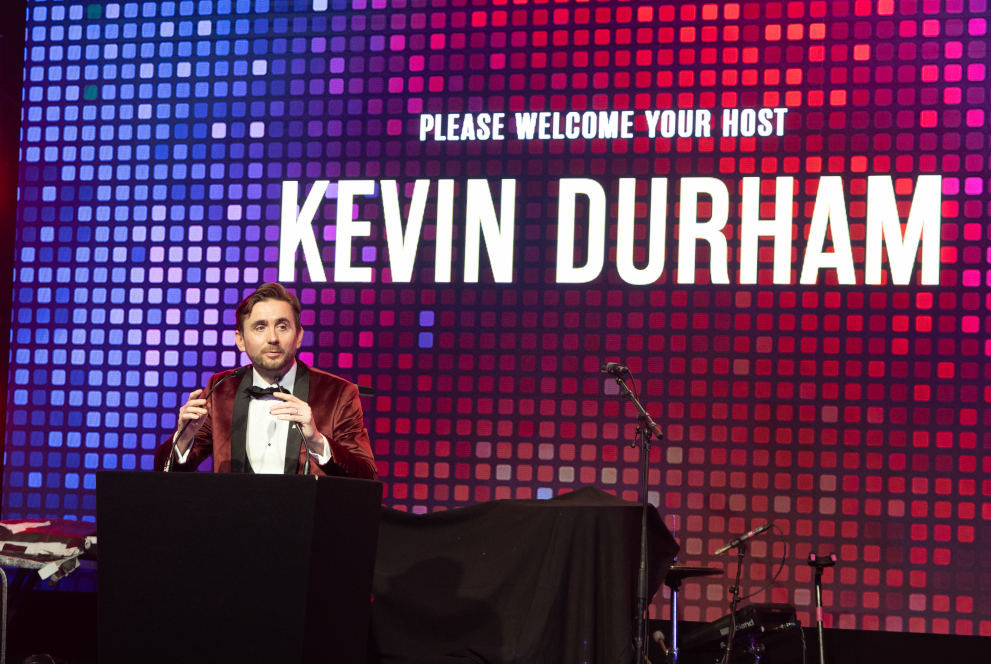

In short
- How to emcee an awards ceremony well comes down to preparation: brief every nominee, check every name, and plan the pacing before you touch the mic.
- The night is won or lost on how you treat the people who do not win, not just the winners.
- Something will go wrong live, a sponsor video that will not play or a finalist list that changes on the afternoon, and your job is to cover it without the audience noticing.
- My fix for the “award nights drag” problem is interleaving game-show rounds between presentations, so nobody switches off.
- Land the final award with the energy still high, not limping over the line.
I have hosted award evenings where the trophies were beautiful, the winners were deserving, and the room was half asleep by the third category. Learning how to emcee an awards ceremony properly is less about the announcements and more about everything around them: the prep nobody sees, the pacing nobody notices when it works, and the recovery when something breaks live. After twenty years on the mic, here is how I actually run the night.
How to emcee an awards ceremony: the prep that decides the night
The night is won in the briefing, not on the stage. Before an award ceremony I want a full brief on every nominee: who they are, what they were shortlisted for, how the category was judged, and which names in the room matter to them. I run the script through with the organising team so there are no surprises in the running order, and I flag anything that reads awkwardly on the page before it gets read aloud to a few hundred people.
If you do nothing else, brief your host properly. Almost every awards disaster I have seen came from a host who was handed the script an hour before doors and asked to wing the rest.
Why does briefing on every nominee matter?
Because the difference between a warm introduction and a flat one is whether you actually know who is sitting in front of you. When I can add one true sentence about why a nominee made the shortlist, the whole table feels recognised, win or lose. A generic “and the nominees are” read straight off a slide tells the room you did not prepare, and an audience can feel that within seconds.
It also protects you when the categories are close. If the judging was tight, a nominee who does not win still leaves feeling their work was seen, and that is entirely down to how you framed them on the way in.
How do you get every name right on the night?
You check every name out loud, in advance, with someone who knows how it is said. Pronunciation is the fastest way to lose a room’s trust: call a winner the wrong thing in their big moment and that table remembers it long after the trophy is on a shelf. Workplace research is blunt about the cost, a mangled name leaves people feeling less valued, while getting names right signals respect and belonging.
Lists also change late. I have had a finalist list rewritten on the afternoon of an event. Because I had already noted the phonetic spelling of every possible name and built the script to swap a line cleanly, the change never reached the audience. That is the whole point of the prep: not to be rigid, but to be flexible without it showing.
How to emcee an awards ceremony without it dragging?
You break the pattern before the pattern breaks the room. A standard ceremony is the same beat repeated twenty times: category, nominees, envelope, applause, photo, repeat. It is a lovely structure for the people winning and a slow one for everyone else. Modern attention is short, too: attention research tracking focus at work found the average uninterrupted stretch has fallen to under a minute, and a long awards evening is fighting that the whole way.
My signature fix is to interleave game-show rounds between award presentations. Late in 2025 a client wanted an awards night that was not a standard awards night, so I built it as a hybrid: awards, then a round, then more awards. I split the whole room into two teams and rotated each round so nearly everyone got to play. It became the entertaining awards night case study, because the thing the client noticed was simple: everyone stayed to the end.
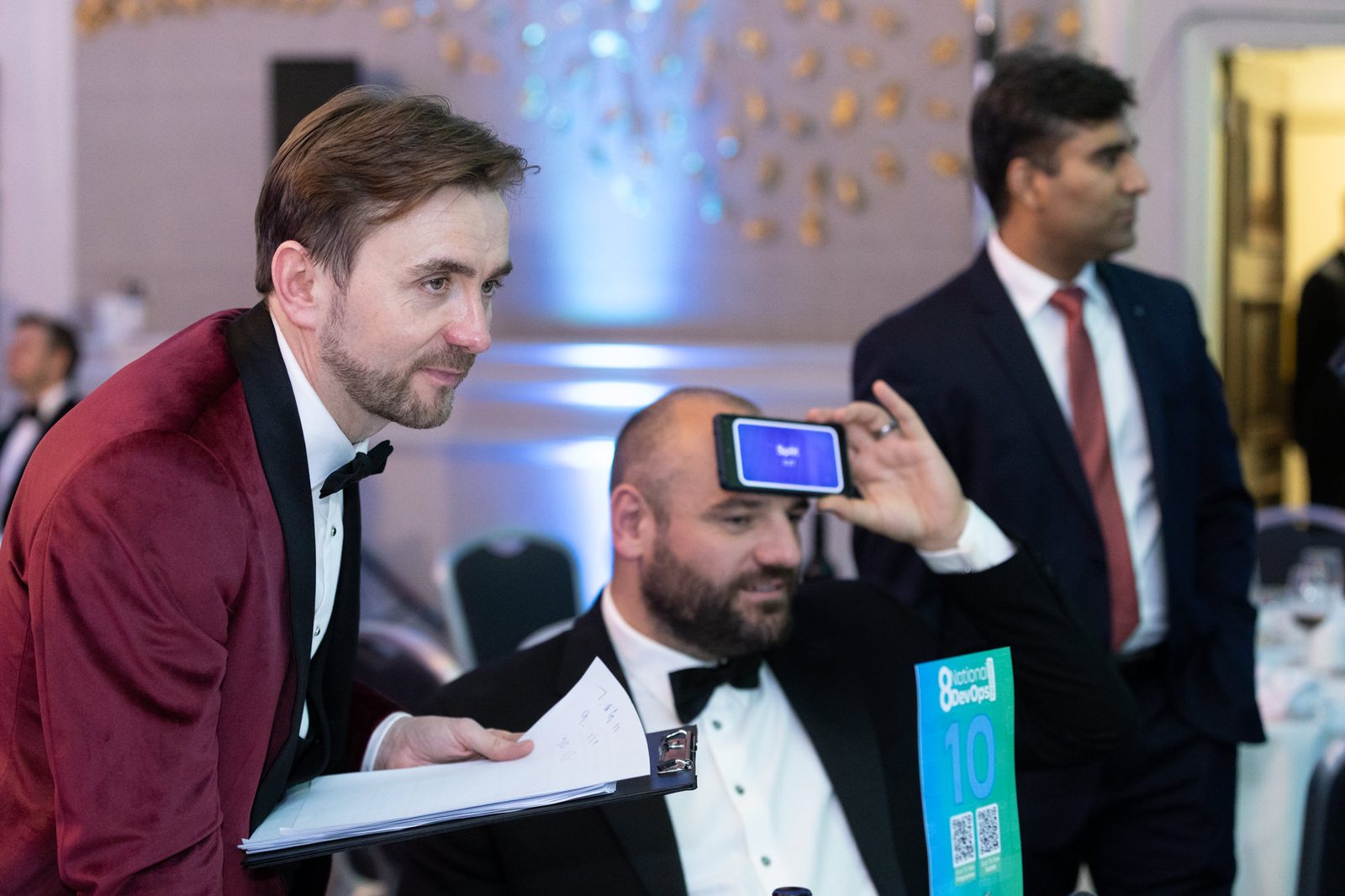
Here is a clip from one of my events showing how a game-show round resets the energy in the middle of a ceremony.
What do you do when the sponsor video fails live?
You keep talking, calmly, until it works or until you have moved on, and you never let the audience see you scramble. I have stood on stage while a sponsor reel refused to play on cue. Instead of standing there watching a spinning wheel with the room, I talked about the sponsor directly, gave them the moment the film was meant to give them, and quietly handed it back to the AV team to sort behind me.
The sponsor still got their spotlight, and most of the room never knew there was a fault until I told the story afterwards. Years of working to a live rundown and a camera mean an empty thirty seconds does not rattle me, and that composure is a large part of what you are really hiring a host to bring.
The wider lesson for anyone hosting an awards ceremony is to assume something will fail and to decide in advance who fixes what. I want the AV team to know that when a film stalls I will hold the room while they reset, rather than both of us freezing and looking at the screen. A pre-agreed signal for “keep going” and “we are ready” turns a potential dead patch into a moment the audience never registers.
How do you keep the people who don’t win engaged?
You host for the whole room, not just the shortlist. Your winners will remember getting on stage; everyone else remembers whether the room stayed alive. That is the line I keep coming back to when I plan an evening, because on any given night the large majority of the audience will go home without a trophy.
Keeping them in it is a mix of pace, warmth and a few moments where their table gets to do something rather than just clap. This is exactly where the game-show rounds earn their place. It is also why I treat the gaps between categories as the real work of hosting an awards ceremony, not the announcements themselves.
If you want a practical awards-night hosting tip that costs nothing, it is this: keep the applause moving. Do not let a winner walk the long way to the stage in silence, and do not let the room settle into a lull while photos are taken. I fill those seconds on purpose, with a line about the category or a quick word with the nearest table, so the energy never dips low enough to need rebuilding.
Landing the final award with the energy intact
The last award is the one people walk out remembering, and it is usually the one most at risk. By the final category a long ceremony has often run over, the bar is calling, and the room is tired. I plan the back half of the night to protect that moment: tightening the links, cutting my own material if we are behind, and lifting the energy deliberately in the ten minutes before the headline award.
I have pulled a room that ran badly over back on to time to reach the final award with the applause still meaning something. That recovery is not luck. It is a running order you have rehearsed enough to compress in real time without the audience feeling rushed.
Quick answers: how to emcee an awards ceremony
How far ahead should you brief the host? As early as you have a draft running order and a nominee list. A proper briefing conversation a week or two out beats a rushed handover on the day, every time.
What is the most common awards-night mistake? Treating it as a reading exercise. The script is the easy part; the pacing, the recovery and the room management are where a night is actually won.
Do you need scripted jokes for an awards ceremony? You need material written for that specific room, tested in advance, and never at a winner’s expense. Good emcee jokes for an awards ceremony land because they are about the people present, not pulled off a generic list.
How do you stop an award ceremony dragging? Break the repetition. Interleave something interactive, keep the links tight, and plan the energy for the people not winning as carefully as the moments for those who are.
If you are planning an award evening and want it to feel like a show rather than a list, that is the kind of award host work I do. Tell me what went wrong at the last one and we can talk it through, or call 07596 851647.