
- Home
- Blog
- Event Host Blog
- Corporate entertainment for an international audience: games that work across languages
Corporate entertainment for an international audience: games that work across languages
 By Kevin Durham, event host and MC
23 November 2026 · updated 11 November 2026
7 min read
In short
- Corporate entertainment for an international audience works when the fun sits in pictures, numbers, music or movement, not in puns, rhymes, idioms or British television.
- Research on slowing speech for second-language listeners is mixed, so do not rely on pace alone: put the question on screen and keep it short.
- Choose formats where tables share the work, so a guest who is half-following has colleagues beside them.
- Ask any entertainer which rounds lean on English wordplay and what they will rewrite.
- Hire a professional when the room is large, mixed and matters to the business.
Corporate entertainment for an international audience is hosted games or a show built so that guests with different first languages can all take part, which means leaning on what people can see, count, hear and do. The test for any round is simple: does it still work if half the room catches only every other word? Here is how I would answer that for a multinational team at an offsite in the UK or Europe.
What works as corporate entertainment for an international audience?
Rounds work for an international audience when the fun rests on something every guest can see, count or hear: a picture, a number, a tune or a movement. They fail where the fun is in the words. This is general advice, sorted by how much language each round needs.
| Round type | Travels when | Watch for |
|---|---|---|
| Picture questions | The image needs no caption: a landmark, your product, your own office | Faces known only in Britain |
| Number games | Numbers are shown as digits on the screen | Spoken rhymes, written dates |
| Music | Tunes without lyrics, or songs the whole group knows | British chart nostalgia |
| Vote with the room | Short question, four options on screen | Idioms in the options |
| Coin, cards, movement | The rules are shown, not explained | Almost nothing |
| Puns, riddles, word lists | Rarely | Everything |
Why do word-based rounds fail in a mixed-language room?
Word-based rounds fail because a guest who follows the main point can still miss the joke. The CEFR scale describes level B1 as being able to understand the main points of clear standard input on familiar matters, and B2 as understanding the main ideas of complex text. Neither descriptor promises that a pun, a rhyme or a half-heard idiom will land. That is my reading, not theirs.
Speaking slowly is the usual advice, but the evidence is thinner than it sounds. A 2019 Interspeech paper by Novak and colleagues says the results of slowing speech are conflicting. In their own test, ESL listeners preferred slower playback, but the researchers found no evidence it changed comprehension.
So do not lean on pace alone. Put the question on the screen as well as saying it, keep it short, and show the options. A guest can read at their own speed.
Which of my games suit an international audience?
The games that suit an international audience are the ones where the screen, a number or a movement carries the round. I run sixteen games on my own software, and fourteen of them can be played three ways: as a show at the front, at the tables, or on the app. These are the ones I would put forward.
- Common Ground: the question and four answers appear on the big screen and on every phone, guests vote and score for matching the room. I write the questions to be read at a glance.
- Play Your Cards Right: higher or lower on a row of giant cards, played table by table. The cards do the talking.
- Quiz Show: categories, buzzers and picture rounds, with the questions written around your company.
- Heads or Tails: one coin, the whole room on its feet, one winner. No screen is needed, and almost no language.
Heads Up is the one I would talk through first. It runs on words, so it leans on language more than the rest. Tell me the mix and I will say whether it belongs.

How do you write pictures, numbers and music for corporate entertainment for an international audience?
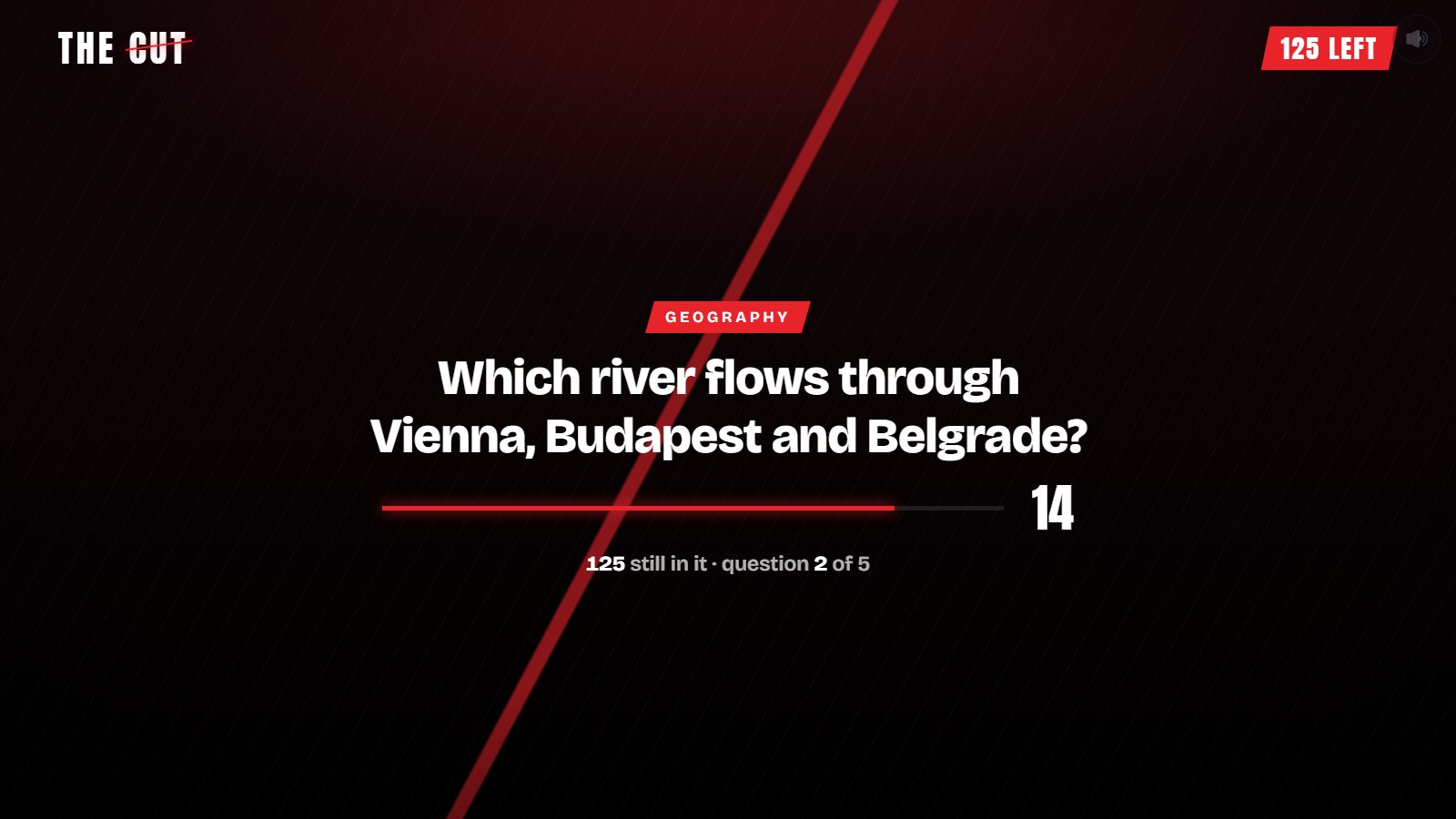
Write them from material the whole group shares: your products, your offices, the place you are visiting and your own year. Pictures from your company need no explaining. A famous painting or a river through three European capitals is the kind of question a mixed room can usually share. Famous British faces are not.
Numbers need care too, because writing them is a language. A numeric date such as 03/04 is ambiguous: Italy and Germany read day first, the United States month first. The same goes for 1,000, which the UK reads as one thousand but which Germany, Italy and the Netherlands write with a decimal comma, where 1,000 means one. Write “3 April” and “one thousand” on the screen.
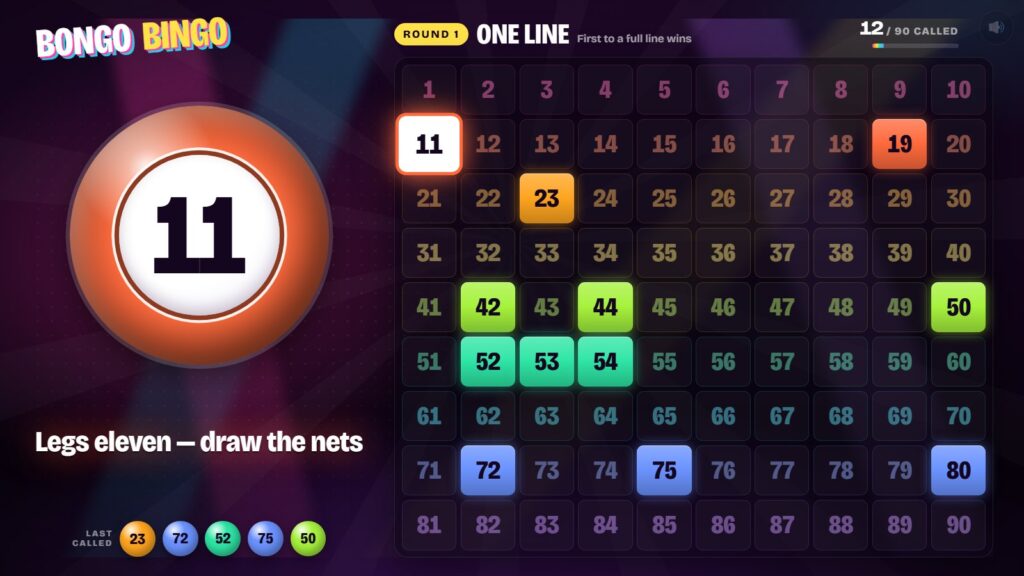
Bingo shows the other trap. British callers have traditionally used rhyming nicknames, known as bingo lingo, such as “Legs eleven”. The number is the part that travels, so keep it huge on the screen and keep the call short, or write it about your own group.
Humour, teasing and who is on the screen
How far humour should go depends on the person on the screen: as far as they would be happy to go. A 2019 review in Frontiers in Psychology says humour is culturally tinted even though it exists in every culture. Erin Meyer’s Culture Map describes how feedback styles differ: Americans tend to wrap criticism in praise, while French, Dutch, Israeli and German colleagues often skip the praise.
For a game show, that means teasing a colleague can read as friendly in one head office and sharp in another. My rule is the one on my personalised page: tell me who is happy to be featured and who is not, and I write to that line. With a mixed group I would ask that question more carefully, and ask someone from each office.
My work abroad, honestly
My pages describe two galas, and I will not stretch them. In Spain I hosted a gala dinner for the travel industry at the Higueron Resort in Fuengirola that raised money for a children’s hospital charity. In Monaco I hosted the fundraising portion of a gala at the Yacht Club de Monaco that closed at just over €1,000,000. My Spain and Monaco pages give the detail.
Those were fundraising evenings, not game shows, and my entertainment packages are new for 2026, built on customised software. What carries over is adapting pace and reference points to the room in front of me. I am based in Kent, regularly fly from Stansted, Gatwick and Heathrow, and have regular clients in Birmingham and Manchester, so a UK or European offsite is straightforward to reach.
When is it worth hiring a professional for an international room?
It is worth hiring a professional when the room is large, the first languages are mixed and the evening matters to the business. A host can choose the rounds, write the questions from your material and change style on the night if a different crowd turns up. A senior colleague trying to run a game and enjoy the party at once is the usual alternative, and it gets awkward.
Doing it yourself is fine for a small dinner where everyone shares a language. For hosting in general, about 30 guests is my bare minimum, because below that it feels more like a big round-table meeting. My game show hire page lists the formats, and my guide to choosing an entertainer covers the wider questions.
Five questions to ask before booking
Ask five questions, because the answers separate a stock pack from a show written for your room:
- Which of your rounds depend on English wordplay, and what will you rewrite?
- Will questions and options be on screen as well as spoken?
- Is there a table version as well as a show and a phone version?
- Who writes the pictures and music, and from what material of ours?
- If a different crowd turns up from the one on the brief, what changes?
Have ready the date, venue, headcount, the mix of first languages, the working language, the running order and anything to avoid. Fees are bespoke and quoted for each event. Call 07596 851647 or email hello@eventhost.info, and I will say which rounds suit the room. See also my main page as an event host.