
In short
- The best corporate entertainer for most business events is one who can also host, so the entertainment and the running order come from the same person.
- Match the act to the audience, not the showreel. The same format has to flex from a boardroom crowd to a rowdy staff party.
- A standalone act performs a slot and leaves. A host-entertainer owns the whole night, including the moment something slips.
- Ask who turns up, what is customised for your room, and who runs the evening between the entertainment.
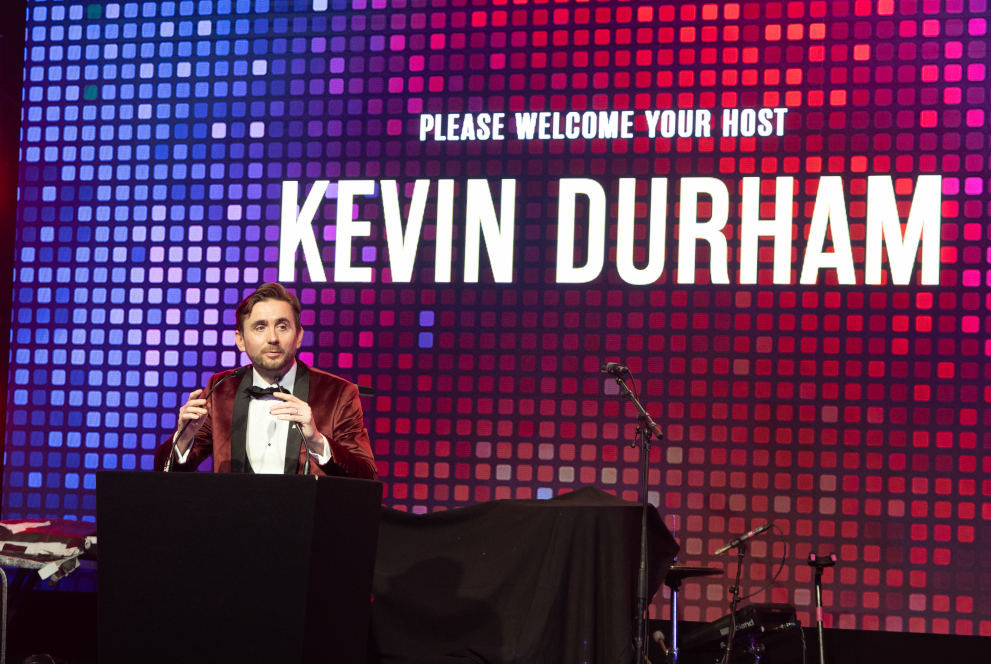
- My signature is game-show entertainment written for the specific people in front of me, not pulled off a shelf.
Choosing a corporate entertainer sounds like a taste decision, but it is really a fit decision. The funniest act in the country will still land flat in the wrong room, and a brilliant performer who disappears after their slot leaves you with a night that sags either side of them. Here is how to choose one that lifts the whole evening rather than just filling twenty minutes of it.
What does a corporate entertainer actually do?
A corporate entertainer provides the performance element of a business event: the part designed to make people laugh, play along and remember the night. That can be a comedian, a speciality act, a game-show format, or a host who folds entertainment into the running order. The label covers a wide range, which is exactly why the choice matters.
The important distinction is not the genre, it is the scope. Some entertainers do one thing brilliantly and only that. Others carry the whole evening. Knowing which you actually need is the first decision, and most event managers work it out only after a night where the entertainment and the hosting pulled in different directions.
How do you choose a corporate entertainer that fits your audience?
You choose by starting with the room, not the act. Who is in the audience, how well do they know each other, how formal is the evening, and what do you want them talking about the next morning. A crowd of senior stakeholders at an awards dinner needs a different touch from a warehouse team at a summer party, and a good corporate entertainer flexes to both.
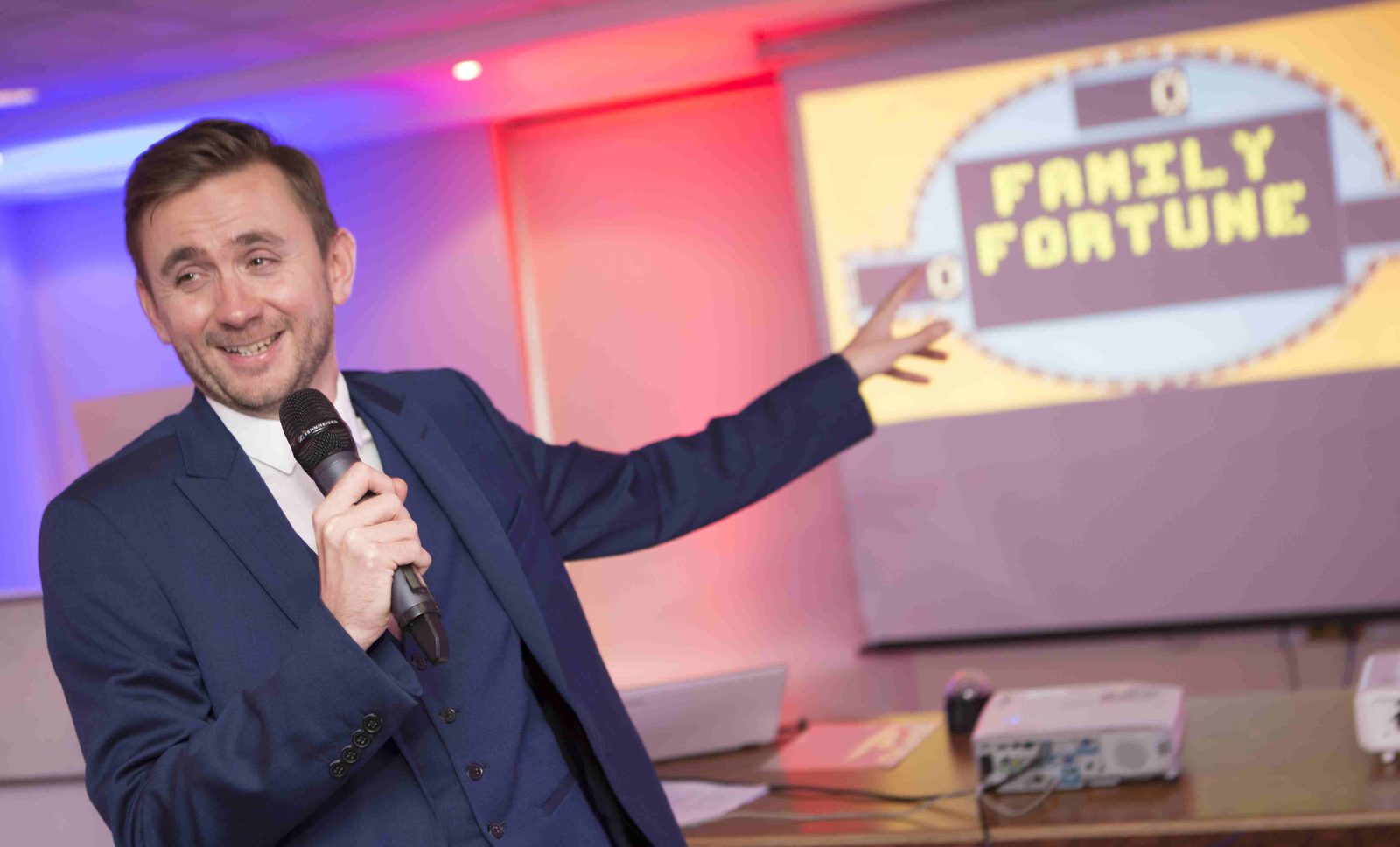
Customisation is the heart of it. The same format should be rewritten for the crowd in front of it rather than delivered identically every time. When I run a Family Fortunes round, I write the survey questions for that specific audience, and my favourite move is splitting the whole room into two teams that rotate each round, so nearly everyone gets to play instead of watching three volunteers.
There is a good reason to design for participation rather than spectacle. People retain and enjoy far more when they are actively involved rather than passively watching, an effect demonstrated across active learning research. An entertainer who turns your audience into players is doing more than filling time, they are making the night stick.
Should you book an act or a host who entertains?
For most single-evening events, book the host who entertains, because continuity is what makes those nights work. A booked act performs their piece and leaves. A host-entertainer opens the room, keeps the energy up between segments, handles the sponsor reel that fails, and still delivers the entertainment as part of one seamless evening rather than a bolt-on.
That continuity is the difference between a night that flows and a night stitched together from separate suppliers. It also removes the handover confusion that creeps in when an MC and a separate act are each waiting for the other to take the room.
Here is a short clip of a corporate game-show round so you can see how the room responds.
Why does a corporate entertainer lift engagement rather than just fill time?
A good corporate entertainer earns attention that the rest of the evening then benefits from. People engage far more when they belong to the night rather than sit through it, and engagement is not a soft nicety: Gallup’s meta-analysis links higher engagement to measurably better outcomes across organisations. A room that has been laughing together listens better to whatever comes next.
Your guests also walk in braced for another dull session. Executives now spend nearly 23 hours a week in meetings, so the bar for “another corporate evening” is low. An entertainer who resets that expectation in the first few minutes changes the whole tone of the night.
It also shapes what people remember afterwards. We judge an experience mainly by its high point and its ending, the peak-end rule, so an entertainer who builds a genuine peak and lands a strong finish is worth more than one who simply keeps things ticking over.
What questions should you ask before you book?
Ask the same short list of whoever you are considering:
- Will I get the exact person I am speaking to, on the night?
- What will be customised for our audience, and what is delivered off the shelf?
- Who runs the room between the entertainment, and manages the timing?
- What happens when something slips: a late start, a failed video, an overrunning speaker?
A specialist host answers all four the same way: you get me, the show is built for your room, I run the whole evening, and there is no separate act to coordinate. If you want the wider picture, my corporate entertainment page explains how one host covers the night, and the game show hire page shows the formats in detail.
The game-show difference
The clearest reason to choose a specialist over a generic act is a show nobody else is running. My signature is game-show entertainment shaped for the specific crowd, not a format pulled off a shelf. The formats flex hard: Family Fortunes with the survey questions written for that audience, The Generation Game with the games picked to suit the room, and Play Your Cards Right run at the tables so nearly every table plays.
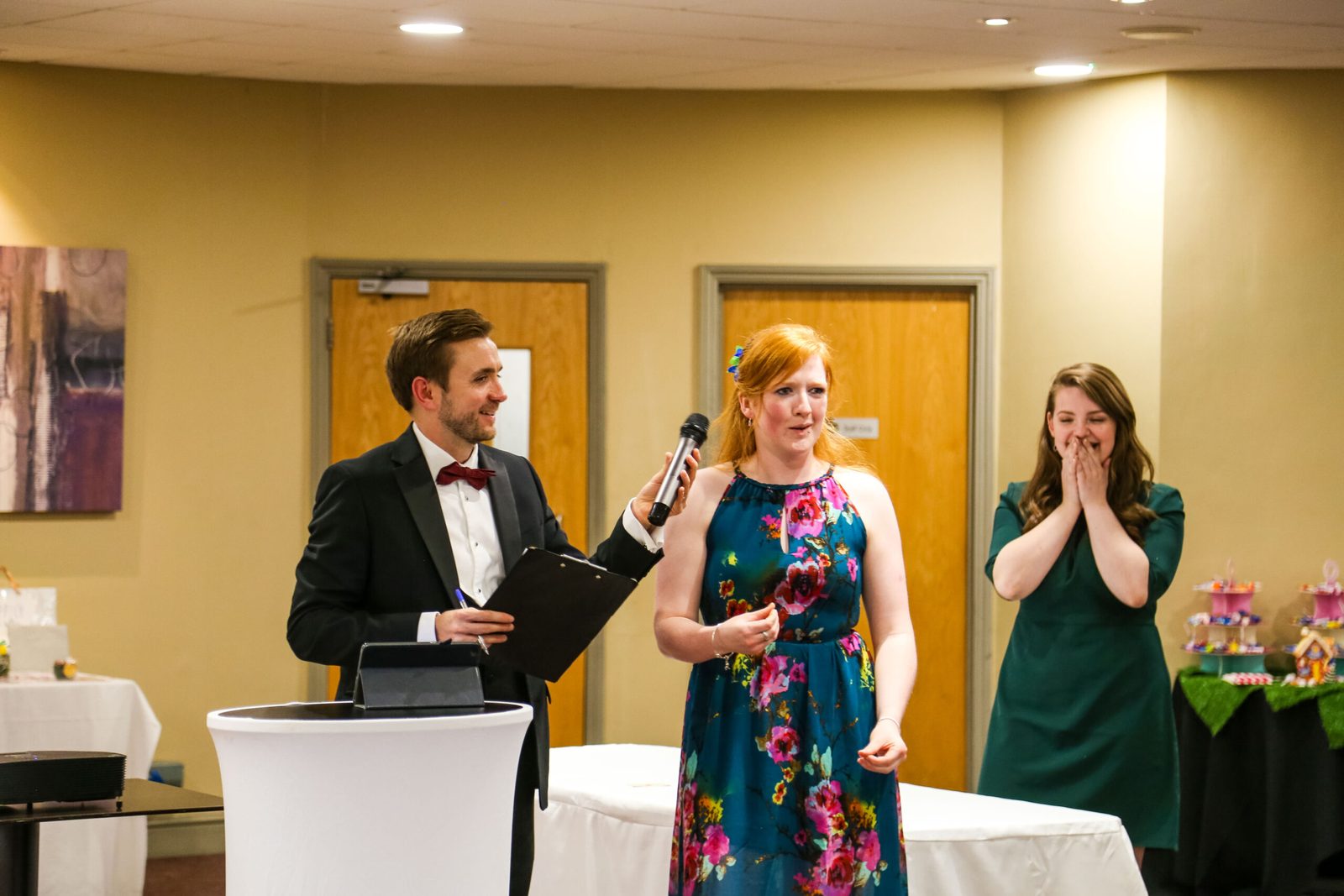
Two modes cover most events. A fixed television format keeps a few people on stage throughout, while a flexible format pulls in as much of the room as possible, with the rest free to play along or sit back and enjoy the show. Either way, the entertainment belongs to your audience rather than happening at them, which is what people remember the next morning.
Here is another short clip of the interactive style.
Quick answers: choosing a corporate entertainer
What is a corporate entertainer? Someone who provides the performance element of a business event, from a comedian or speciality act to a host who builds interactive entertainment into the running order. There is a fuller definition on my corporate entertainer explainer.
Act or host, which is better value? For most single-evening events, a host who entertains, because you remove the coordination and get one person accountable for the whole night rather than a slot inside it.
How do I make sure it lands with my audience? Insist on customisation. Ask exactly what will be written or adapted for your crowd, and treat “we do the same set everywhere” as a warning sign.
What should I confirm before booking? The named person, what is bespoke, who runs the room between segments, and how they handle things going wrong.
If you want event entertainment that fits your room rather than a slot dropped into the evening, tell me what went flat at the last one and we will build something around your people.