
- Home
- Blog
- Event Host Blog
- Christmas party running order: a timed plan from doors to carriages
Christmas party running order: a timed plan from doors to carriages
 By Kevin Durham, event host and MC
4 November 2026 · updated 1 November 2026
7 min read
In short
- A seated christmas party running order runs about four and a half hours: doors at 18:30, dancing from 21:30, carriages at 23:00. These are my working timings, not a standard.
- Dinner is the longest block. A venue-side guide puts three courses at 90 to 120 minutes, and the mic stays quiet while plates are going down.
- The room sags straight after the main course, and again at the handover to dancing. Plan for both.
- Buffet-and-games, standing receptions and daytime lunches need their own shape, not a shortened dinner.
- When the night runs late, protect the dancing start and the leaving time, and cut from the middle.
A christmas party running order is the timed sequence of everything between the doors opening and the last taxi leaving: drinks, seating, courses, speeches, entertainment, dancing. I am Kevin Durham, a professional event host and MC, and every time below is my working practice unless a source is linked.
Publishing it in early November is deliberate. The running order starts with the kitchen, not the stage, so now is when to ask the venue for its service times.
What is a good christmas party running order for a seated dinner?
A good christmas party running order for a seated dinner runs from doors at 18:30 to carriages at 23:00, with the mic silent during food service, one active segment straight after the main course, and dancing from 21:30. This is for roughly 40 to 150 guests.
| Time | Block | Mins | Host’s job |
|---|---|---|---|
| 18:30 | Doors and drinks | 45 | Greet, stay off the mic, spot who is stuck at the edge |
| 19:15 | Call to tables | 10 | Move the room by voice; guests sit when told |
| 19:25 | Welcome | 5 | Senior person for two minutes, then exits, dietary, the plan |
| 19:30 | Starter | 30 | Mic off; check the kitchen’s pace |
| 20:00 | Table round (optional) | 10 | A quick game played from seats |
| 20:10 | Main course | 40 | Mic off; cue the next block |
| 20:50 | Awards, speeches or a game | 15 | The slump lives here: something active, fixed length |
| 21:05 | Dessert and coffee | 25 | Pre-cue the DJ, low, for the last ten minutes |
| 21:30 | Dancing opens | 75 | Launch it in ninety seconds, then step back |
| 22:45 | Last song and thanks | 15 | Transport, coats, one clear sentence |
| 23:00 | Carriages | 0 | Hold the exit |
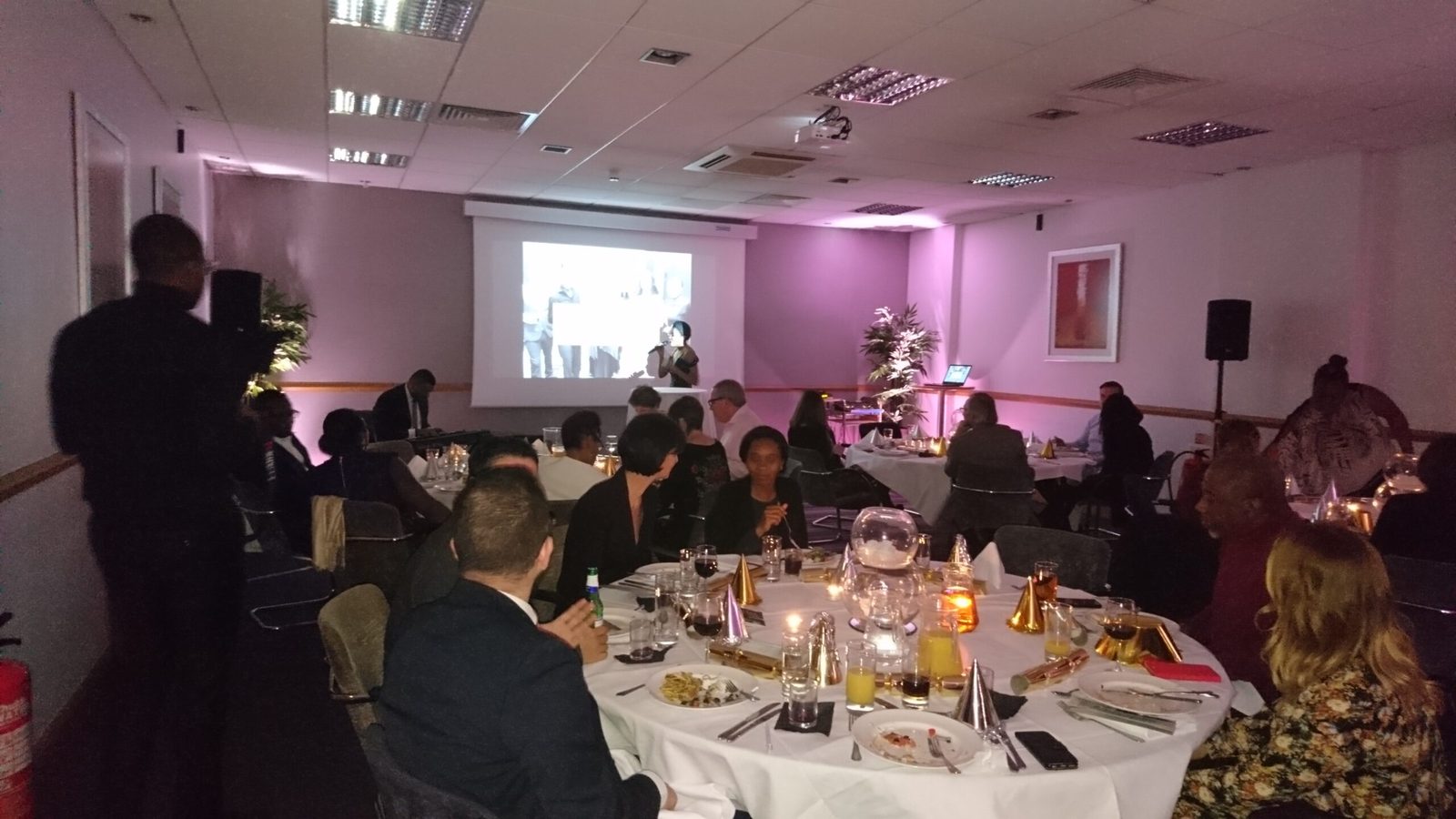
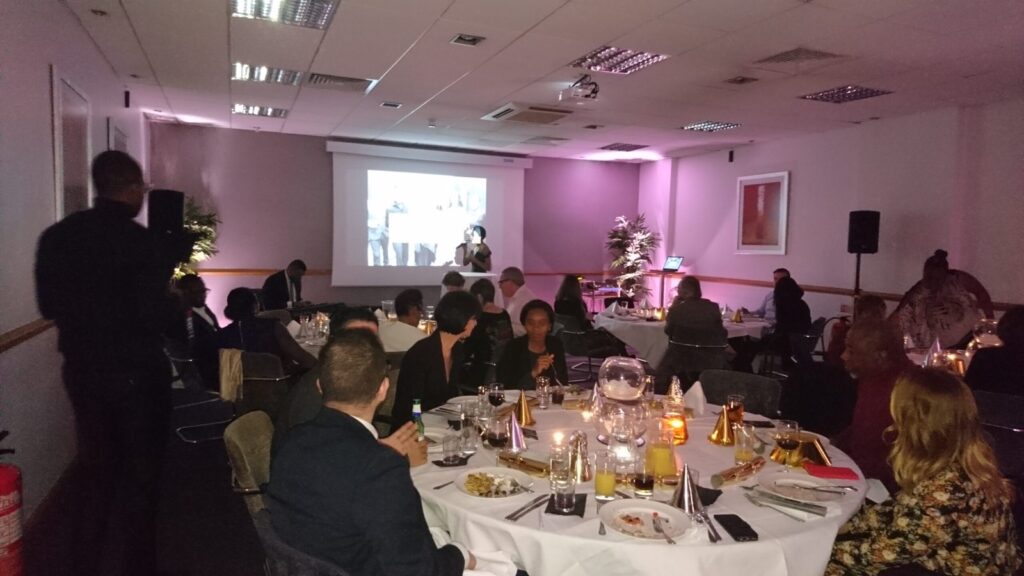
Now check it against the kitchen. One event agency’s guide gives 25 to 30 minutes for a starter, 35 to 45 for a main and 20 to 25 for dessert. My 30, 40 and 25 sit inside those ranges. The dinner block, 19:30 to 21:30, holds 95 minutes of food and 25 of activity, inside the 90 to 120 minutes that guide quotes for the courses. If your venue serves slower, push everything back rather than squeezing the courses.
The host’s job between the courses
The host owns the clock and speaks only at the pivots: the call to tables, the post-main segment and the dance-floor launch. In between, silence during service is a job in itself. A mic over the top of a plate being set down loses the room twice.
A seated dinner is a smaller version of what I do on a conference day, where I build deliberate energy peaks and recovery moments. The peaks here are short and the recoveries are the courses.
I have also pulled a room that ran badly over back to its final award with the energy intact. It can be done. It needs one person with the authority to make the timing calls. The awards-night version of this discipline, with named slack, is in my run of show.
Why does the room slump after the main course?
The room slumps after the main course because the heaviest plate has gone down, the seating has set and the next block is often the quietest one. Put the shortest, most active segment straight after the plates clear, and keep anything needing stillness until the dessert.
This is my working observation, not a study. The same venue-side guide describes the other weak point: the move from dinner to dancing slumping for 15 to 25 when it is not planned. My answer to both is the same. Make the pivot deliberate.
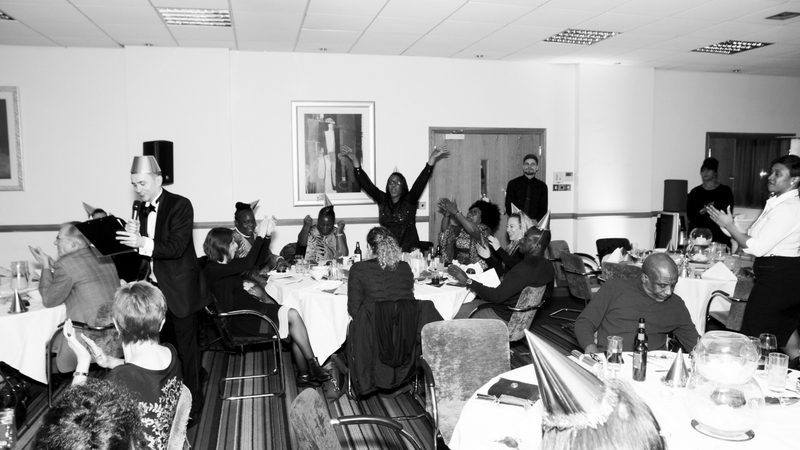
Keep awards short. A fifteen-minute block is the ceiling in one entertainment supplier’s plans, against the 60 to 90 a formal ceremony can carry.
Which christmas party running order suits your kind of night?
Four shapes cover most staff parties: the sit-down dinner above, a buffet with games, a standing reception and a daytime lunch. Most are smaller than a ballroom. In the 2025 market report, 41.8% of parties were for up to 20 guests and 38.8% for 21 to 50.
| Shape | Length | Spine of the night | Host’s moments |
|---|---|---|---|
| Sit-down dinner | 4.5 hours | Courses, then dancing | Call to tables, post-main, dance launch |
| Buffet and games | 3 hours | Buffet, two game rounds, music | Buffet call, each round, close |
| Standing reception | 2.5 hours | Drinks, one gathering, music | The single gathering |
| Daytime lunch | 2 hours | Lunch, short game, free time | Welcome, game, thanks |
Buffet and games. Doors at 18:00, buffet open at 18:45, the first round at 19:15 for about twenty minutes, the second at 20:15, music from 20:45 and out by 21:00. The buffet is the risk: a queue is dead time, so run the first round while it thins.
Standing reception. People cannot hear a mic across a standing crowd. Gather them once, around 45 to 60 minutes in, for ten minutes at most: thanks, one awards round or one game. Then release them.
Daytime lunch. Ninety minutes to two hours, as in my staff party guide. Lunch first, a twenty-minute game while coffee goes round, and the rest is theirs. The planning side is in the work Christmas party guide.
How do you fix a christmas party running order that runs late?
When a christmas party running order runs late, protect the two ends and cut from the middle: the dancing start and the leaving time stay fixed, the optional table round goes first, and the speeches shrink next. Decide at the first sign, not at the dessert.
Take the table above. The starter plates are not cleared until 20:15, fifteen minutes late. Drop the ten-minute table round and the main starts at 20:15, five minutes behind. Trim the awards from fifteen minutes to ten and dessert still starts at 21:05, so the dancing opens at 21:30 as planned.
Under ten minutes late, say nothing and absorb it. Between ten and twenty, cut the optional round and trim. Over twenty, tell the senior speaker before they stand that they have two minutes, not five. Do not hold the welcome for late arrivals. They will catch up at the bar.
Managing the leaving wave
The leaving wave is staggered, not a single moment: a first group goes after dessert, a second around 22:15 and the rest at the last song. Plan the exit for all three, and put anything everyone needs to hear before dessert ends.
Some early leavers are not unhappy, just done. A January 2025 poll for Acas found 19% of employees dislike any social activity with colleagues. Let them slip away without a fuss.
Two checks belong in the running order. First, transport. HMRC’s £150 per head exemption counts VAT and any transport provided to enable employees to attend, so ask payroll whether taxis home count before you promise them. Second, conduct. Acas lists work social events and drinking among higher-risk settings, and says employers must take all reasonable steps to prevent sexual harassment, including by third parties. Brief anyone you hire in writing, and ask the venue when last orders falls.
This is general information, not legal advice.
When is it worth hiring a host to run the night?
It is worth hiring a host when the night has more moving parts than one organiser can watch while also being a guest, which usually means a seated dinner, awards or more than sixty people. For thirty colleagues in one room, a printed running order and a senior person who keeps time is enough.
The evening runs smoothly because someone experienced is holding it together, and that matters most in the gaps between segments, where a generic act leaves the room alone. I start with a briefing call and build the running order with you before the night, never on it. A client from a Christmas party that mixed awards and a game is quoted on my reviews page: “We were very pleased in the way you managed it and the way you led the event itself.” The page shows a 5.0 average on Google. That night belonged to the team who organised it; my part was the clock.
You can see what I run on the Christmas entertainment page. Before you get in touch, have ready the date, the headcount, the venue’s service times, your draft running order and what went wrong last year.
Call me on 07596 851647 or email hello@eventhost.info, and I will mark up your running order as an event host would.