
- Home
- Blog
- Event Host Blog
- Event host vs event planner: which does your event need?
Event host vs event planner: which does your event need?
 By Kevin Durham, event host and MC
4 November 2026 · updated 1 November 2026
7 min read
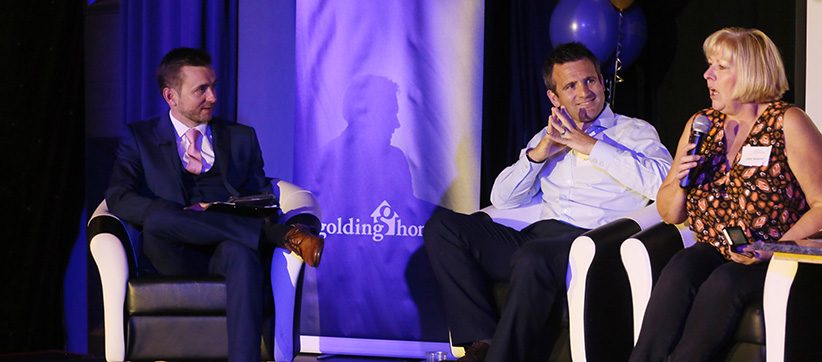
Event host vs event planner is a question of timing: an event planner builds the event beforehand, and an event host runs it in front of the audience on the night. I’m Kevin Durham, a professional event host and MC, so I am the host half of this comparison: I do not plan events, and I am not an agency. Here is how to tell which one you need.
In short
- An event planner designs and organises the event: budget, venue, suppliers, schedule, safety. The work is mostly done before the doors open.
- An event host runs the room: welcome, introductions, links, timing and the audience’s energy, from the first word to the last.
- Most events need a planner, or someone doing the planner’s job. Many need both. A host on their own works when your team has already built a sound event and the gap is the room.
- A host cannot fix a venue, an AV failure or a budget. A planner busy with logistics cannot also hold the front of the room.
Event host vs event planner: what is the difference?
An event planner builds the event: agreeing the purpose and budget, choosing the venue, booking suppliers and managing risk. An event host performs the event: running the programme in front of the audience on the day. The planner is accountable for what exists in the room. The host is accountable for how the room feels.
One events company describes the split as vision and logistics before the event against execution on the day, with the planner as architect. Wikipedia’s definition of event management lists site selection, permits and catering among the planner’s tasks, with entertainers as one item among many.
| Event planner | Event host | |
|---|---|---|
| Main job | Builds the event | Runs the room |
| Busiest | Weeks or months before | The day, plus a briefing beforehand |
| Typical tasks | Budget, venue, suppliers, schedule, safety | Welcome, introductions, links, timing, audience energy |
| Faces | Clients, venues, suppliers | The audience |
| If it goes wrong | Venue, supplier or logistics failure | A flat room, a dropped link, an overrun |
What does an event planner do that a host does not?
An event planner handles everything that has to exist before a host can do anything: the budget, the venue contract, the suppliers, the paperwork and the plan if something fails. The National Careers Service, read November 2026, says an events manager will agree the type of event, budget and timescales with the client, then book venues, entertainment and equipment, and hire and supervise contractors such as caterers and security.
The US Bureau of Labor Statistics, whose page was last modified in August 2026, lists a similar set: meeting the client, setting scope and cost, soliciting bids from venues and suppliers, and approving bills. It is a US source, but the duties travel.
None of that is hosting, and I do not do it. I provide the host. I do not provide the venue, the AV or the catering, and I am not a production company. Safety planning is not a host’s job either. The Health and Safety Executive’s event safety pages, as at November 2026, are addressed to organisers, contractors, volunteers, venue owners and supervisors. Hosts are not named.
What does an event host do that a planner does not?
An event host takes the finished plan and turns it into an evening that holds together in front of an audience. That means opening the event, introducing each speaker or award, keeping to the clock, filling gaps and reading the room. Wikipedia describes the MC’s role as keeping an event moving. The full job is in my piece on a host does.
The difference you feel on the night is attention. A planner is usually at the back managing the venue, the suppliers and the clock, because that is where problems arrive. They cannot also be at the front. The host is the one person whose only job is the audience.
Event host vs event planner: which does your event need?
You need an event planner if nobody on your team has the time, the experience or the authority to build the event, and you need an event host if the programme is a live one where the audience’s attention matters. Most events need the first. Many need both. A host alone is right only when the building is already done.
Use this as a decision rule:
- Is there a person who owns the budget, venue, suppliers and run of show? If not, you need a planner first. A host cannot take this on.
- Is there a programme in front of an audience? Speeches, awards, a conference day, a launch, a dinner with several parts. If yes, you need a host.
- Are both answers yes? Book both, and let them talk early.
- Is the planner also going to introduce the evening? Expect the room to get less attention than the logistics. Separate the roles.
An illustration, not a client story: a company has a 200-person awards dinner and an in-house events lead who has booked the venue, caterer and AV. She does not need a planner. She needs someone to stand at the front so she can stop being the compere and the organiser at once. A host fits.
Change one fact: the company has no events lead and a short deadline. Hiring a host first would be the wrong order.
Where it goes wrong when the host is expected to plan
When a host is expected to plan, the planning does not get done, because a host is booked to run the room and is not briefed or paid to manage suppliers. When a planner or colleague is expected to host, the room loses its person. Both versions fail in familiar ways.
- The host arrives to find a gap. No AV contact, an unconfirmed running order, nobody who can say yes to a change. A host can cover a sponsor video that fails to play, which I have done live, but cannot conjure a missing sound desk.
- The running order arrives late. The briefing is where a host does their best work, and a running order sent days before the event leaves the host reading it for the first time. My guide to briefing a host covers what to send and when.
- A senior colleague is made compere. Clients tell me this goes awkwardly, because that person tries to present when they should be enjoying the evening as a guest.
- A planner doubles as host. They get pulled away mid-introduction by a catering question, and the room feels it.
How a host and a planner work together
A host and a planner work well together when the planner owns the plan, the host owns the room, and one named person is the host’s contact on the day. The planner should send the host the working running order, speaker details and any hard stops, and the host should tell the planner early what they need changed.
In practice that is a briefing call, a draft running order, a final version the day before, and a clear answer to “who do I ask if something changes?” The host should arrive early, meet the AV lead, and agree how the planner will signal a problem. A host who knows the plan can adjust in front of the room without anyone noticing.
When is it worth hiring a professional event host?
It is worth hiring a professional event host when the programme has several moving parts, the audience matters and you do not want your own people working the night. A professional changes the room: someone briefed, experienced and focused only on the audience, who can recover when the plan wobbles.
DIY is the right call for a small team lunch or an informal gathering where the content is short and nobody needs managing. Hiring a host for that would be wasted money. It stops being right at awards, conferences, launches and larger dinners, where a flat room costs more than the booking.
If you are weighing it up, it helps to have these to hand when you get in touch:
- the date, venue and expected number of guests
- a draft running order, even if it is rough
- who the planner or organiser contact is
- what went wrong at the last one
I host corporate events and awards, and I work directly with the person organising. If your team is already planning and you want an event host to run the night, call 07596 851647 or email hello@eventhost.info, and tell me what the event needs.