

- Home
- Blog
- Event Host Blog
- How to fill dead air at events: what a host says and does
How to fill dead air at events: what a host says and does
 By Kevin Durham, event host and MC
6 November 2026 · updated 3 November 2026
7 min read
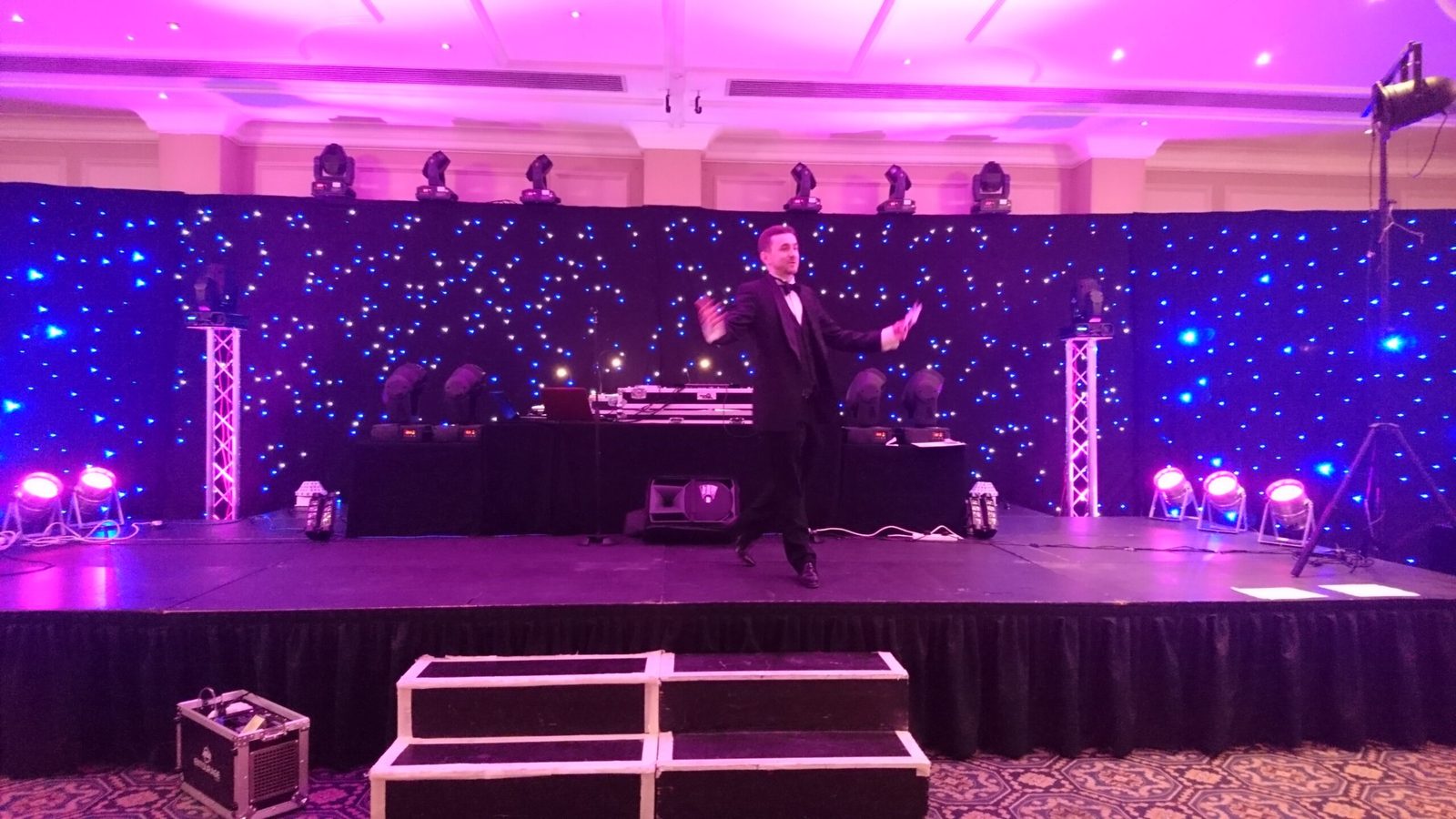
Dead air at events is an unplanned stretch where nothing is happening and nobody has said why: the course has not arrived, the winner is not in the room, the speaker is not at the lectern. Broadcasters use the same term for dead air, unintended silence that interrupts a programme, and they count it among the worst things that can happen.
I’m Kevin Durham, a professional event host and MC. This guide covers dinners, award ceremonies and parties, and the host’s toolkit for each gap. Projector and microphone faults are a separate subject, covered on conferencehost.uk.
In short
- Dead air is a gap that is unplanned and unexplained. A pause you choose is a different thing.
- Explain the gap and promise the next update, not the fix. Never give a time you cannot keep.
- Give the room a job: a question to a neighbour, a short game, a prize draw, a story.
- Silence is right when it is brief, or when the problem is the venue’s to solve.
- Agree your fillers and your cut-off in the briefing, not on the night.
What counts as dead air at events, and what is only a pause?
Dead air at events is a gap the room did not expect and nobody has explained. A pause is chosen. A Toastmasters writer calls a deliberate micro-pause no longer than a second, and says it pulls wandering listeners back.
The gap that hurts is the open-ended one. David Maister’s classic essay on waiting, republished on his site, says occupied time feels shorter than unoccupied time, and that uncertain and unexplained waits feel longer than known, explained ones. Those are two instructions for a host: occupy the room and explain the delay.
How long is the gap, and what do you do about it?
Match the response to the length of the gap, not to your nerves. Short gaps need a line, medium ones need a job for the room, and long ones need a changed running order. Decide your own cut-off in advance.
Broadcasters do this by machine: silence detectors can cue an emergency programme once silence passes a set limit, which Wikipedia puts at 30 seconds as an example. Yours is a number you pick at the briefing.
| Gap | Typical cause | The host’s move |
|---|---|---|
| Up to a minute | Changeover, a winner walking up | One line, then music. Do not over-talk. |
| One to five minutes | A late course, an envelope fetched | One explained sentence, then a question to the tables |
| Five to ten minutes | Kitchen behind, a speaker caught in traffic | A short game or a prize draw, with an update at the halfway mark |
| Twenty minutes or more | A speaker 20 minutes late, a room reset | Move an item forward, bring the break early, say so plainly |
What do you say when you do not know how long it will be?
Tell the truth in three parts: what has happened, what you know, and when you will update. Never promise a time for the fix. Promise a time for the next update, because that is one you control.
Lines that work:
- Dinner: “The kitchen is a few minutes behind. I will tell you at quarter past if that changes. Until then, turn to the person on your left.”
- Late winner: “We are waiting on one winner who is still making their way in. We will take the next category and come back to this one.”
- Speaker 20 minutes behind: “Our speaker is on the way and will be here shortly. We are going to use the time. Here is a question for your table.”
Maister’s point about explanations is why the first sentence matters. A host who says nothing leaves the room to invent its own reasons. Leave out “bear with us”, leave out jokes at the kitchen’s expense, and give the organiser the chance to nod before you name a cause.
Six fillers that need no kit
A good filler needs a room and a host, nothing else. Five come first, and they work at dinners, awards evenings and parties:
- A question for the table. Ask one open question and give thinking time. Cornell’s teaching centre describes think-pair-share: think alone, talk to a neighbour, then share, and it says to allow adequate time for each phase because cutting them short is tempting. Try “What is the best thing that has happened to you at work this year?”
- A quick game. A Toastmasters writer recommends Two Truths and a Lie as a ready filler: members share three statements, one false, and the others vote. Tables can do this in two minutes.
- A short quiz. Three questions about the company or the evening, answered by a show of hands. Write them for the room, not from the internet.
- A prize draw. Use the table numbers or ticket stubs you already have. It gives people a reason to look up, and it can run for exactly as long as you need.
- A story. One true, short story you have told before, ending where you can stop cleanly.
Music is the sixth, if the venue’s sound is available. GOV.UK says you generally need a licence from PPL PRS to play recorded music in public, so ask the venue what its licence covers before you plan a playlist around it.
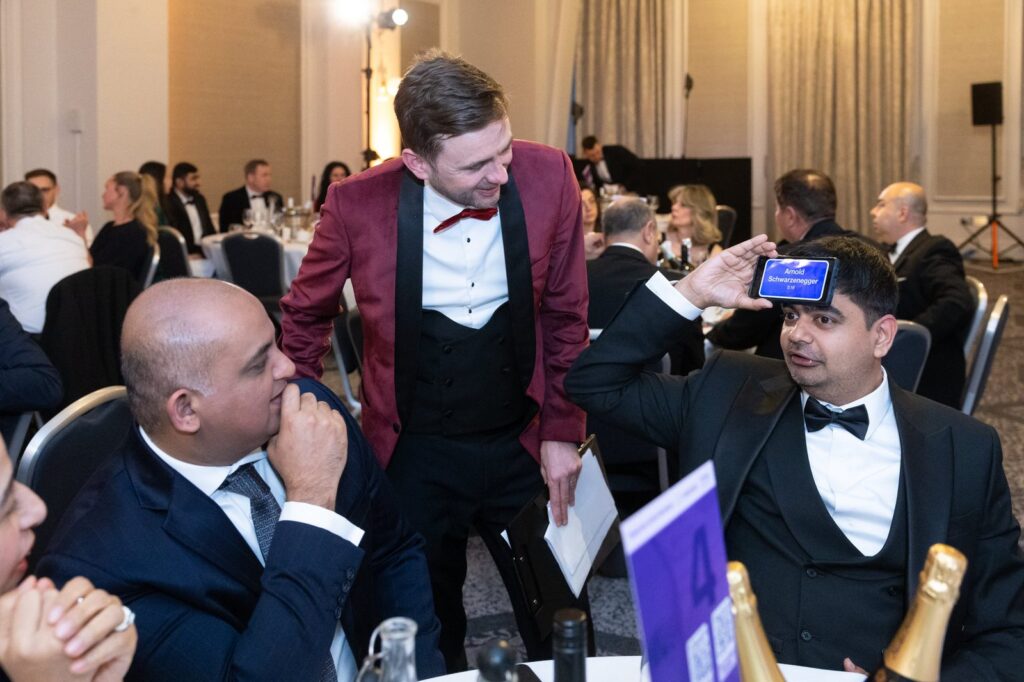
How do you fill dead air at events like a dinner, an award ceremony or a party?
The principle is the same, but the first move differs by event. At a dinner, work through the tables. At an award ceremony, protect the winners. At a party, keep people moving.
At a seated dinner with a late course, ask tables a question, run a draw, and update the room at the halfway mark. Stop filling the moment plates arrive.
At an award ceremony, a missing winner is a running-order problem, not a talking problem. Agree in the briefing that the next category goes first, and never fill by reading out a winner who is not present. My notes on the awards evening cover the running order, and the corporate MC script has a section on gaps.
At a party, nobody is anchored to a seat, so the gap is a chance. Pull the room into a short game before people drift to the bar or the door.
I have covered a sponsor video that failed to play, carrying the room until it was fixed. It was a small gap, and the answer was the same: explain, occupy, move on.
When should a host say nothing, or just tell the truth?
Say nothing when the gap is a second or two, or when someone is hurt, unwell or unsafe. Tell the truth in every other case. A host fills time for a stalled programme, not for an emergency.
If the cause is anything to do with safety, stop performing. Look to the organiser and the venue manager, and let them direct the room. Jokes at that moment make it worse.
A host must also be honest about their own nerves. A Toastmasters member quoted in the Irish Times in 2018 says to keep a glass of water close and have a plan B ready. A sip buys a breath. It also tells the room you are in no hurry.
One more rule: leave slack. The Toastmasters guide for emcees says to build in extra time and to know what you can cut if you start late. Agree that cut list in the briefing, along with who gives you the nod.
What the room says afterwards
One organiser of a full-day event put it plainly on my reviews page: “Some of the speakers were late, there was a video problem, there were all sorts of complications and we got delayed by an hour and a half. In all those small pauses Kevin had to go on stage and entertain the audience and keep it going, so as not to lose attention.” A hackathon client (Hackafone, Virtusa) added: “You kept people engaged, and those fillers especially, when there is a gap, you did an absolutely fantastic job keeping people engaged.”
Kind words, and the day was theirs. What I take from it is that pauses arrive in small pieces, and someone has to be ready for each one.
A Christmas awards party client wrote: “We really liked the intertwining of awards and the game.” Planning the game into the evening is one way to leave fewer holes to fill. The awards host page shows how. The reviews page shows a 5.0 average on Google.
When is it worth hiring a host to handle dead air at events?
Hire a professional when the gap would land on a room you cannot afford to lose: an award ceremony, a mixed client and staff dinner, or an evening with a late-running speaker. Do it yourself when the group is small, the timings are short and a trusted colleague can chat.
A professional host has the fillers ready, knows the cut-off and watches the room while you deal with the kitchen. I hold the evening together so nobody in the audience has to.
If you want a night where the pauses are planned for, corporate event host work starts with a briefing, set out in how to brief a host. Have ready your date, venue and room size, the running order, the times you are most worried about and what stalled last time. Call me on 07596 851647 or email hello@eventhost.info, and tell me which gap worries you most. The event host homepage has the rest.