
- Home
- Blog
- Event Host Blog
- Unsung hero award: how to find the right person and present it well
Unsung hero award: how to find the right person and present it well
 By Kevin Durham, event host and MC
30 October 2026 · updated 10 November 2026
8 min read

In short
- An unsung hero award is for the person whose work only becomes visible when it stops, which is why your normal nomination process will miss them.
- Write criteria that describe the work and its absence. Nottinghamshire Healthcare’s version says outright that the winner is unlikely to have been formally recognised before.
- Quiet people do not nominate themselves, and colleagues nominate whoever they have already seen praised.
- Ask teams a narrow question rather than inviting nominations: who do you go to when the thing breaks?
- If the winner hates attention, tell them in advance and never hand them a microphone they did not agree to.
Every awards programme has one category harder to judge than the rest. The unsung hero award is usually it, because the work it recognises has an awkward shape: nobody notices it while it is happening, and everybody notices the week it stops.
I host awards nights for a living, so I read this citation out loud more often than most people hear it. The weak ones fail the same way every time: ninety seconds praising a person’s attitude, without ever saying what the person actually does.

What is an unsung hero award?
An unsung hero award recognises someone whose contribution has real impact but little visibility, usually because it happens outside the spotlight, outside their job description, or both.
UK schemes word it that way. Nottinghamshire Healthcare’s clinical version recognises someone in a direct care role who goes beyond their job description to help the trust meet its objectives. The national tourism award recognises someone in a tourism business who excels and deserves applause for their commitment to the industry.
The best-known versions widen the net on purpose. The Pearson National Teaching Awards run an Unsung Hero category that is the only award in the programme open to nominations from parents, carers and pupils, aimed at people who work behind the scenes in a school: office staff, caretakers, playground helpers. For the 2024 BBC Sports Personality Unsung Hero award, nominees had to work or volunteer at a club in any capacity, whether that was coaching or coffee making.
Two things stay constant: someone else nominates, and the role is unglamorous.
Why does the work nobody sees go unrewarded?
Because preventing a problem leaves no evidence, while fixing one leaves a story.
The clearest demonstration sits outside the workplace. A 2009 study of US disaster policy found voters rewarded the incumbent party for relief not preparedness, while the same researchers estimated that $1 spent on preparedness was worth around $15 of future damage avoided. Different context, identical mechanism: the rescue gets the credit, the prevention gets nothing.
There is a second reason, about who ends up holding that work. Research published in the American Economic Review in 2017 found that tasks with low promotability, the ones everyone would rather someone else did, are not shared out evenly: women volunteered more often, were asked more often, and said yes more often. Reward only visible wins and you quietly reward whoever dodged the committee work.
So the category is not sentimental. It corrects a bias the rest of your categories have.
What criteria should an unsung hero award use?
Describe the work, the absence it would leave, and the fact that nobody has said thank you for it yet. Not the personality.
Nottinghamshire Healthcare’s non-clinical form is the most useful published example I have found, because it states the quiet part. Judges want evidence that the person made a significant difference and exceeded what would normally be expected. Then it adds that the winner is unlikely to have been formally recognised by the trust in the past. That line does more work than the rest of the form: it rules out whoever has already won twice.
Resist making the criteria measurable. An attendance award at an industrial laundry, studied across five plants, produced gaming around the eligibility rules and crowded out the motivation of employees who had always turned up on time. Score an unsung hero award on fewest absences and you will get the same result.
Two tests I would put in the criteria instead:
- The fortnight test. If this person were off for two weeks, who would feel it, and what would stop working?
- The phone test. Who do people ring when something breaks, if it is not officially their job?
How do you stop it going to the loudest person in the room?
Change who nominates, not just who judges.
A panel can only pick from the names in front of it. If every nomination arrives from the same four managers, the shortlist holds their four favourite people and the category becomes a popularity vote with a humble name on it. Widen the entry route the way the teaching awards do, and let anyone put a name forward.
Three rules that keep the shortlist honest:
- No self-nomination in this category, even if you allow it elsewhere. Where people do make their own case, my guide to writing an award nomination covers it.
- Score the evidence rather than the prose. The tourism form tells applicants to read the “judges will be looking for” guidance first, a polite way of saying a well-written nomination is not the same as a strong one.
- Give the panel a scoring grid, not a paragraph. Vague criteria get filled in with whoever the judges happen to know.
How do you gather nominations when the nominee will not come forward?
Ask a narrow question of the people who work alongside them, rather than a broad invitation to nominate someone.
“Nominate a colleague for our unsung hero award” gets you silence. “Who do you go to when the system goes down, and what did they do last time?” gets you a name and an example in the same sentence. Good schemes build that into the form. The Hotel Magazine Awards unsung hero entry asks three questions: the nominee’s career so far, what makes them stand out with specific examples, and the impact they have had on colleagues, guests or the business, with 800 to 900 words suggested.
Keep it a surprise, deliberately. The teaching awards ask nominators to keep their thank-you card general and not mention the award, so the nominee never knows. That one instruction matters: the person who hates attention is the one most likely to ask you to withdraw the nomination.
Then look where nominations are not coming from: night shifts, facilities, finance, the team that covers everyone else’s holidays.
Writing the citation for an unsung hero award
A citation here has one job: make invisible work visible in sixty to ninety seconds of spoken English.
That means one specific incident with a date or a season attached, what changed because of it, and a sentence on what the room would lose without this person. Name the job title in full, the way the person would say it. Leave the adjectives out. “Always goes the extra mile” is fine as a campaign line and useless as a citation, because every nominee in the pile goes the extra mile.
Give your host every fact in advance. My prep for an awards evening is a full nominee briefing, a pronunciation check on every name and a run-through with the organising team, and this is the category where that matters most. Mispronounce the name of someone the room has privately agreed is overdue a thank you and the moment is gone. There is more on the handover in my guide to how to present an award.
How do you present an unsung hero award to someone who hates attention?
Ask them first, and then design a shorter moment than you would for any other category.
Public praise is not a reward for everyone. Psychologists studying social anxiety describe a fear of positive evaluation, a dread of being judged favourably and publicly that makes a person feel conspicuous and in the spotlight, and they treat it as distinct from the familiar fear of being judged badly. Some of your strongest candidates have exactly that.
What works, in practice:
- Tell them that morning, or earlier. A surprise is a gift for some people and an ambush for others.
- Agree whether they speak. If the answer is no, the host needs to know, so nobody holds a microphone out to them on stage.
- Keep the citation about the work, not their modesty. Praising someone for being shy in front of 300 people is its own small cruelty.
- Have a colleague meet them at the steps and walk back with them.
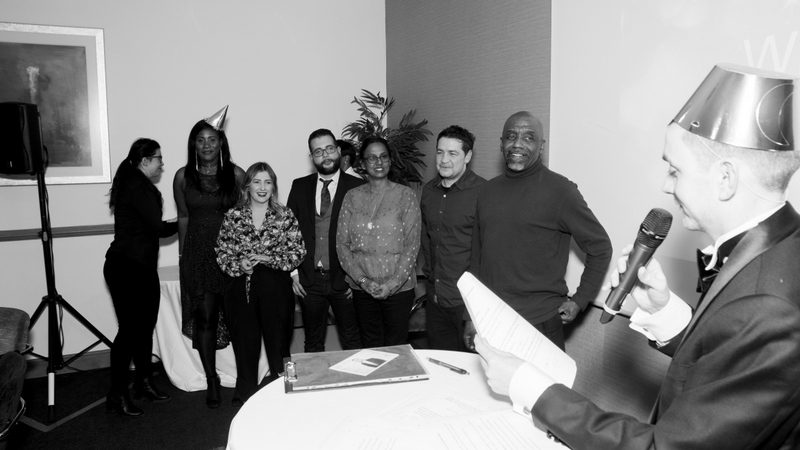
- Photographs afterwards, off stage.
- Plan for the empty chair. Quiet people skip awards dinners, so decide now who accepts.
Where the award sits in the running order
Not last, and not buried in a block of six other awards.
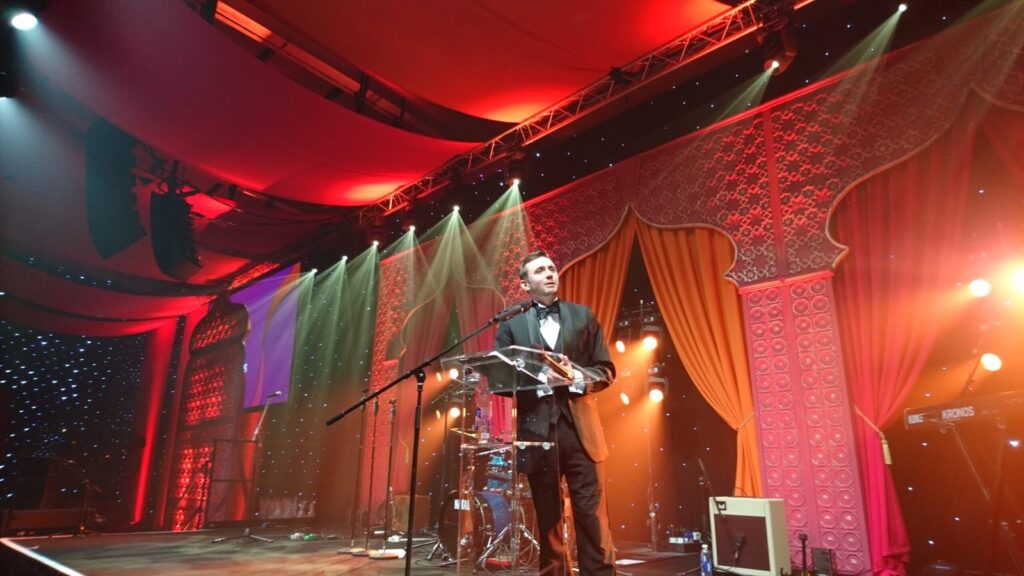
This one needs the room quiet and listening, a different gear from the one a ceremony usually runs in. Place it after a loud category rather than before one, and let the contrast land. It also needs protecting when a night overruns, and nights do overrun. I have had to pull a room that was running badly over back to the final award with the energy intact, and the category that suffers first is the one that depends on everybody paying attention.
If the evening is long, break up the formal run entirely. My case study on that is the awards hybrid: award presentations interleaved with game-show rounds, because a standard ceremony drags for everyone who is not winning. A quiet citation lands better in a room that has laughed in the last fifteen minutes.
Why the host matters for this category
This category needs two things at once: a room paying attention, and a presentation short and warm enough that the person at the centre of it is glad it happened.
That is a hosting job as much as a writing job. If you have an awards evening with this category on the list, call 07596 851647 and we can talk through how it should run, or read how I work as an award host first.