- Awards ceremony entertainment works best when it is built into the run of show, not bolted on between trophies as an afterthought.
- Energy dips at a predictable point: after the first three or four categories, once the novelty of winning has worn off for the room.
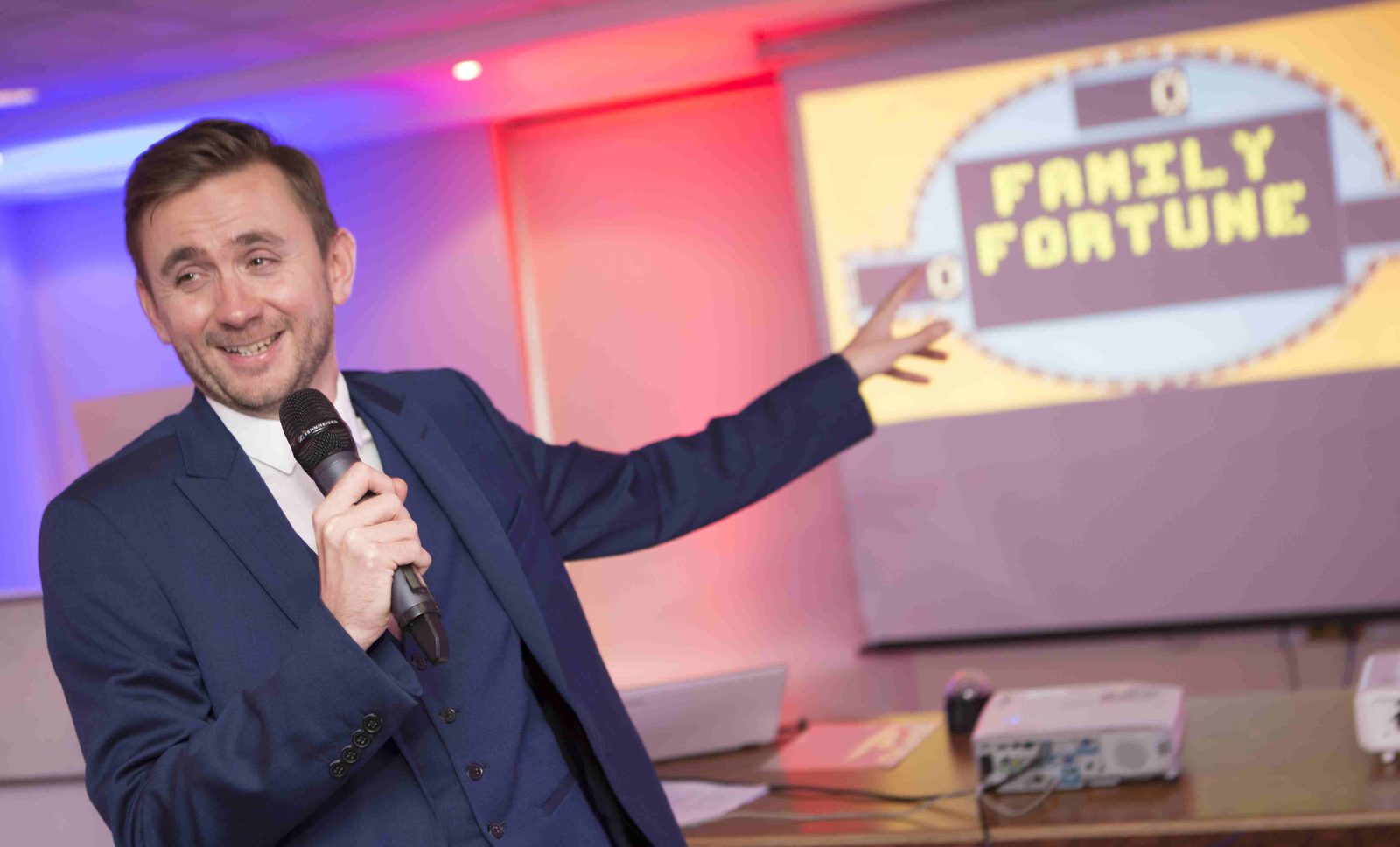
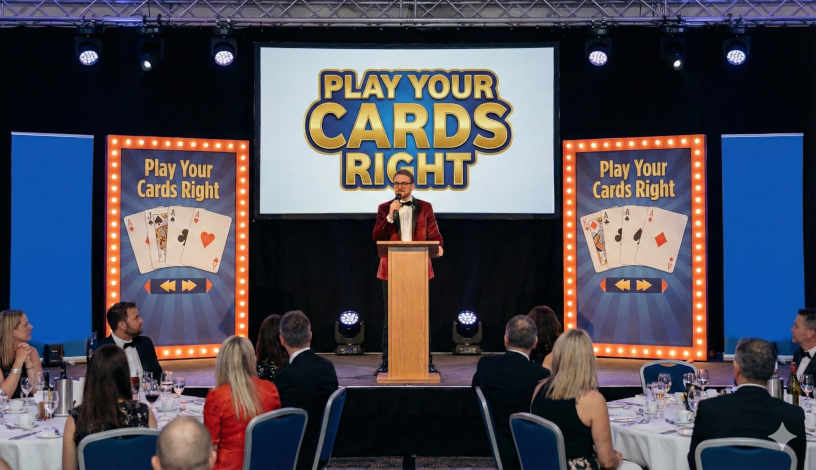
- Interactive, game-show style segments (Family Fortunes, The Generation Game, Play Your Cards Right) give guests something to do rather than just watch.
- The host is the connective tissue. One person managing both the hosting and the entertainment removes the handover gaps where energy leaks away.
- Spacing categories into smaller blocks, with something interactive between them, keeps the room with you until the last award is given out.
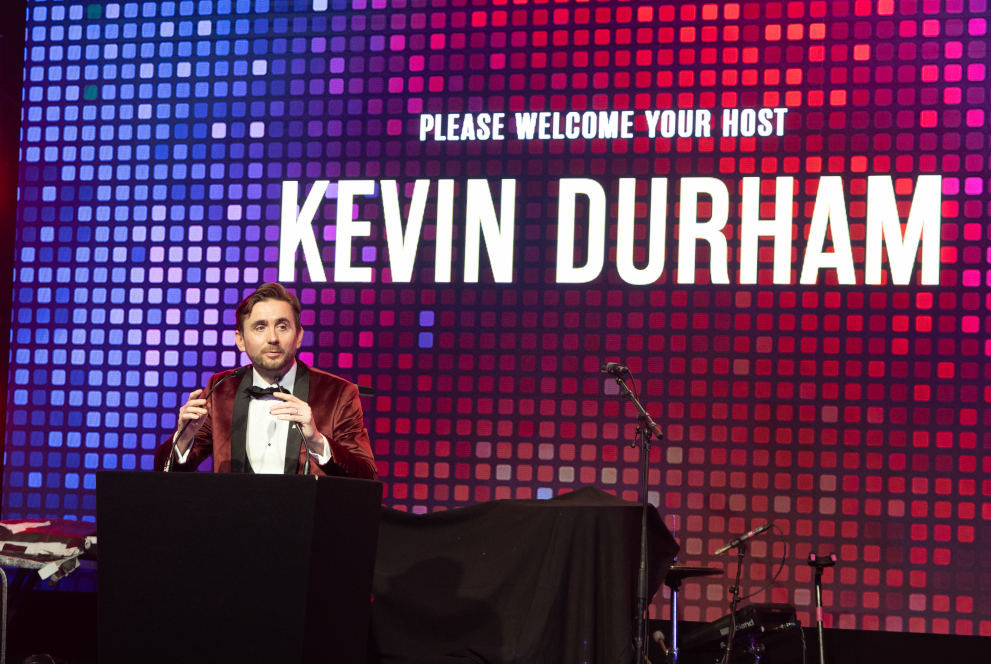
I have hosted enough award ceremonies to know exactly where the room switches off. It is rarely category one. It is somewhere around category four or five, once the room has settled into a rhythm of clapping, sitting, clapping, sitting. Awards ceremony entertainment is the single biggest lever available to an organiser for stopping that slide, and in my experience it works best when the host and the entertainment are the same person rather than two separate bookings handed off mid-evening.
Why does awards ceremony entertainment matter more than people admit?
It matters because attention is the scarcest resource in the room, and it runs out faster than most organisers expect. Research from the University of California tracked how long people sustain focus on a single task before switching, and found the average window has fallen to around 47 seconds in recent studies, down from two and a half minutes twenty years ago.
An award ceremony is not one task, it is dozens of small ones stacked back to back: name, walk, photo, applause, repeat. Without variation, guests habituate to the pattern quickly. Toastmasters International points to predictability as the main reason audiences tune out of any live presentation, not boredom with the content itself. Once a room can predict exactly what happens next, it stops paying attention to find out.
This is worth taking seriously at the planning stage, not fixing on the night. Award ceremony entertainment that gets bolted on as an afterthought, because the room felt flat during rehearsal, is almost always weaker than entertainment that was built into the run of show from the first draft. The categories, the speeches, and the interactive moments need to be sequenced together, with one person accountable for how the whole evening feels, not just how each segment performs on its own.
What entertainment works best for an award ceremony?
Interactive, low-effort, high-participation formats work best, because they ask something of the guest rather than asking them to keep watching. I build most award ceremony entertainment around game-show formats: Family Fortunes, The Generation Game, and Play Your Cards Right, played either from the stage with volunteers or table-to-stage so entire tables compete against each other.
These formats work for a specific reason. They are recognisable, so no one needs the rules explained, and they are quick to reset between rounds, so they slot into a five to ten minute gap without derailing the evening’s schedule. A live spinning wheel used to select a raffle winner during an interval is a simpler version of the same idea: guests lean forward because the outcome is not yet decided.
How do you combine an award ceremony host with entertainment?
You combine them by making one person responsible for the whole evening’s energy, not by hiring a host for the formal segments and a separate act for the gaps. I host and entertain, which means I already know the run of show, the sponsor commitments, and the sensitivities around every category before I pick up a microphone for a game round. There is no handover, no briefing gap, and no moment where the room can feel the change of ownership.
This is the exact approach I used for Combined Services Provider Ltd’s Christmas awards evening: twelve categories, broken into smaller blocks with Family Fortunes rounds and table-side games between them rather than one long unbroken run of announcements. You can read the full case study of how that evening was structured and what the organiser said about it afterwards.
The other advantage of one person doing both jobs is preparation. Before any award ceremony I host, I go through a detailed briefing on every nominee, pronunciation checks on every name, and a full run-through of the script with the organising team. That same preparation carries straight into the entertainment segments, because I already know which categories are sensitive, which sponsors need particular handling, and where the room is likely to need lifting. A separate entertainment act, booked independently of the host, simply does not have access to any of that.
What does an award ceremony game show actually look like on the night?
It looks like a short, contained round dropped into a natural gap, usually after dinner service or between two award blocks, running no longer than eight to ten minutes. I brief a handful of guests or run a table-versus-table format, keep the questions light and inclusive rather than niche, and hand straight back into the next award category while the energy is still high.
The gains are not just anecdotal. Gamified, interactive segments are consistently shown to lift recall and participation far above passive formats such as a speech or a video, because guests are doing something rather than only watching it happen to someone else on stage.
A real example of awards ceremony entertainment in action
The clearest proof point I have is still that Christmas awards evening. The organiser had genuinely worried a twelve-category ceremony would feel flat and samey by the halfway point, which is a completely reasonable worry given how most awards evenings are actually run. Breaking the programme into segments with interactive rounds between them, rather than working through all twelve trophies consecutively, changed the shape of the evening rather than just decorating it.
The feedback afterwards was that the energy in the room stayed high from the welcome through to the final trophy, with guests asking for more rounds rather than checking the time. That is the outcome awards ceremony entertainment should be judged against: not whether it was fun in isolation, but whether the room was still switched on for award twelve.
How do you keep guests engaged at an award ceremony dinner from start to finish?
You keep them engaged by mapping the whole evening for energy, not just for content. Map where the natural dips will fall (usually straight after the starter, and again after the eighth or ninth award) and put something interactive at exactly those points rather than spacing entertainment evenly through the night regardless of what is actually happening in the room.
Guests attending as planners themselves consistently point to hosting as the biggest lever on how an awards evening feels, ahead of the food, the venue, or the production values. A host who is actively managing pace, reading the room, and stepping into the gaps does more for guest engagement than any single entertainment booking added on top.
Building awards ceremony entertainment into your run of show
Practical structure I recommend when planning this:
- Break the awards into two or three blocks rather than one continuous run, with a natural pause between each block.
- Place one interactive segment (game show round, table competition, live vote) inside each pause, capped at ten minutes.
- Keep speeches to a strict time limit with the host visibly managing it, so the room never feels an award is dragging.
- Brief the host on every nominee and sponsor sensitivity in advance so the game-show segments and the formal announcements feel like one evening, not two bookings stitched together.
- Save one higher-energy interactive moment for the final third of the evening, when attention is naturally at its lowest.
This matches the wider direction event planners are already moving in. Corporate audiences are increasingly asking for interactivity rather than passive formats, and networking and engagement research from Cvent shows attendees who actively participate report meaningfully higher engagement with the rest of the event than those who simply sit and watch.
Get this right and no one notices the join
The best sign that awards ceremony entertainment has worked is that no one can tell you where the hosting stopped and the game show started. It should feel like one evening with a consistent host managing the pace, not a ceremony interrupted by an act. That is the standard I hold every awards evening to, whether it is four categories or forty.
If you are planning an award ceremony and want the entertainment built into the hosting rather than bolted on afterwards, look at how an award ceremony host role can be combined with interactive corporate entertainment formats from the outset, not added in as a rescue plan once the run of show is already fixed.