
In short
- A corporate awards ceremony works best when the presentations are broken up with entertainment, not read out as one long list.
- The guests who are not winning decide whether the night feels alive, so build the running order around them.
- My signature is an awards-plus-game-show hybrid: present a few awards, run a round, present a few more, keep everyone in it.
- Catering, pacing and a host who reads the room matter as much as the trophies.
- One host running the whole evening keeps the energy up between segments, so the room stays to the last award.
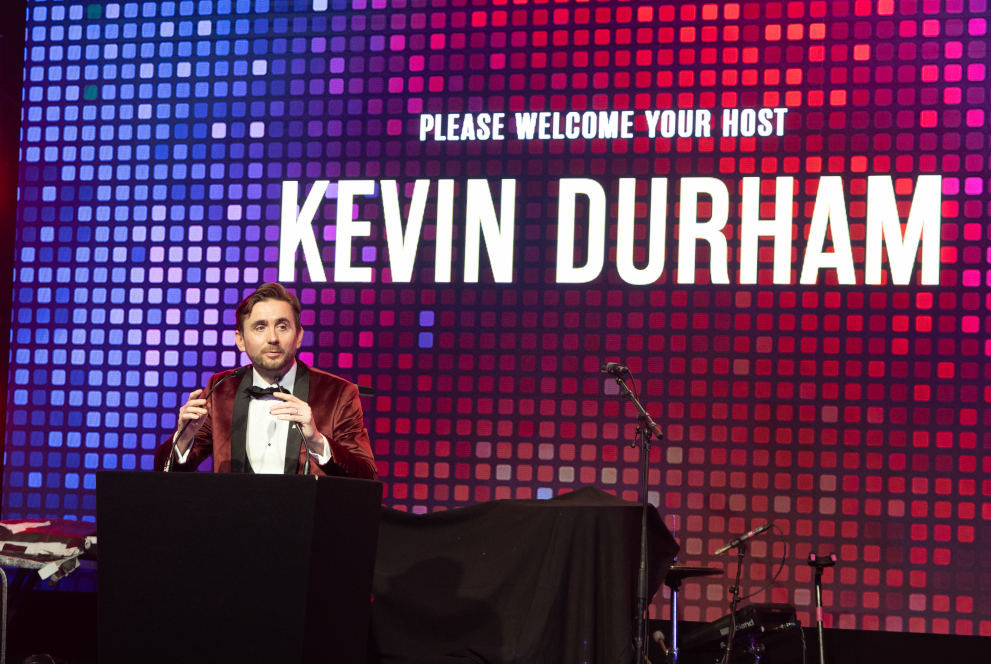
I have hosted a lot of awards evenings, and the pattern is always the same. The winners will remember getting on stage. Everyone else will remember whether the room stayed alive. A corporate awards ceremony that is just a two-hour reading of names is a night designed for a handful of people and endured by the rest, and by the time you reach the final category, half the room is on their phones. It does not have to be that way.
Why do corporate awards ceremonies drag?
They drag because a straight list of categories only rewards the people being named. For everyone else, the format is passive: sit, clap, wait for a category that might involve you, repeat. People switch off from content they find dull, and the event industry has measured it. In one survey, 22% of people said they would stop paying attention to something they found boring or uninteresting, and a room of colleagues who already know each other is a tough crowd to hold with names alone.
The other problem is momentum. Twenty categories back to back have no shape: no peaks, no breaks, no reason to lean in. By category twelve the applause is polite and the bar is busier than the stage.
What keeps a corporate awards ceremony entertaining?
The short answer: give the whole room something to do, not just the shortlisted few. Recent industry benchmarking found only 15% of organisers rated their event’s engagement as very effective in 2026, so the gap between “people turned up” and “people stayed switched on” is real and widely felt. The fix is not more production budget. It is a running order that alternates recognition with participation.
That means breaking the categories into blocks, and putting something genuinely interactive between them. When you do, the awards themselves land harder, because the room is warm and paying attention when each winner is called, rather than numbed by the tenth trophy in a row.
The awards-plus-game-show hybrid
This is the approach I am known for, and it came from a client in late 2025 who wanted an awards night that was not a standard awards night. I built the evening as a hybrid: present a few awards, run a game-show round with the room split into two teams, present a few more awards, run another round, and so on to the finish. Nobody drifted, and the client’s testimonial reflected a room that stayed to the end. You can read the case study for the full picture.
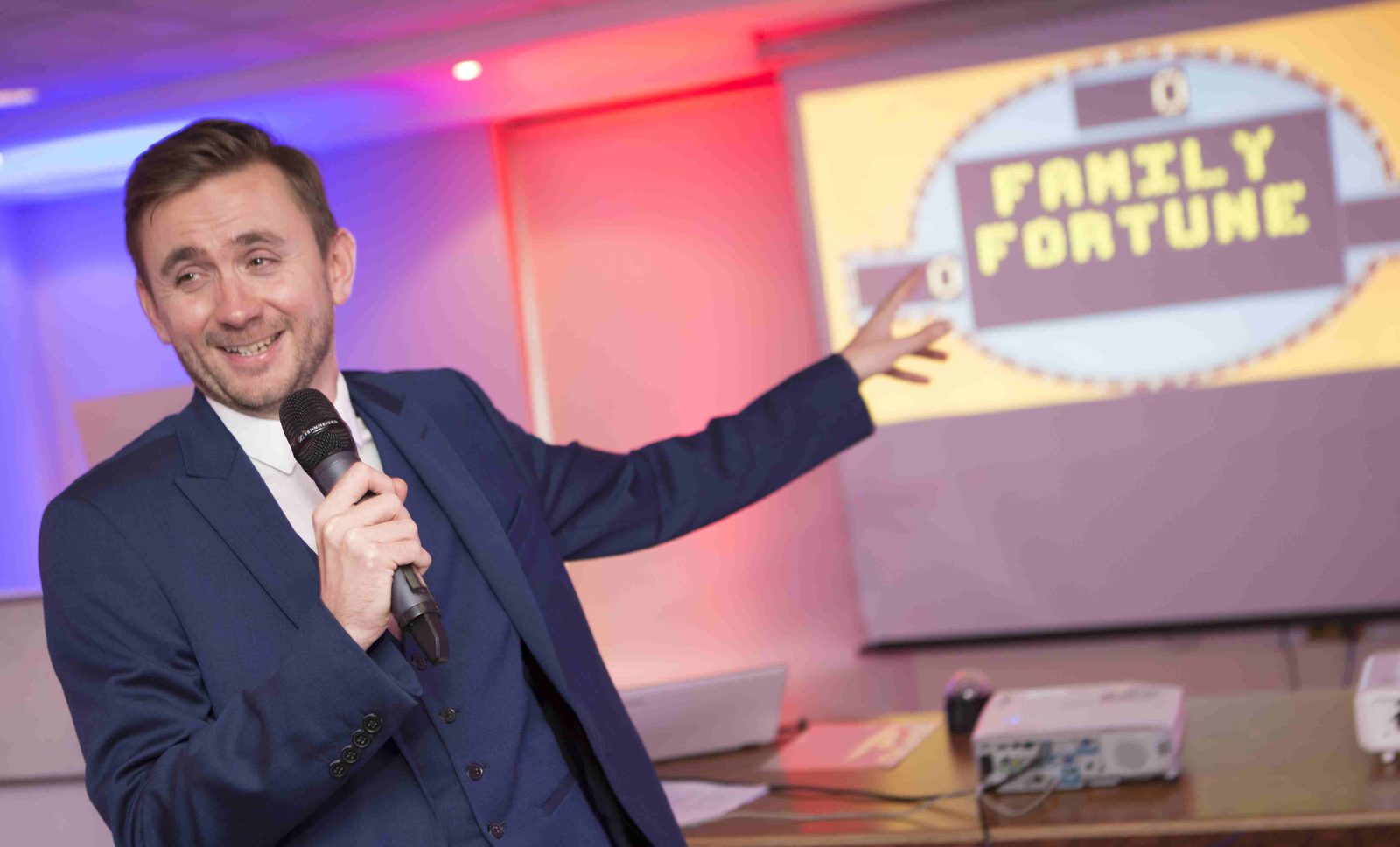
The round I lean on most is Family Fortunes, with “our survey says” questions written for that specific company and that specific room. I split everyone into two teams and rotate each round, so as many people as possible actually get to play rather than watch. It resets the energy every time, and it means the person who did not win in category three still has a reason to be fully in the room by category nine.
Here is a clip from one of my events where I explain why a Family Fortunes round beats a straight awards night.
The point is not the game for its own sake. It is what the game does to the room between presentations. Guests increasingly expect to take part rather than sit back, and as one event report put it, people want to interact and be part of the entertainment, not just watch someone perform at them.
How should you structure a corporate awards ceremony?
Build it in blocks, not one long run. A structure I come back to is three or four short award blocks, each holding four to six categories, with an interactive round or a deliberate energy break between them. That gives the night a shape: recognition, release, recognition, release, building to the headline award at the peak rather than trailing off after it.
A rough shape for a two-hour show looks like this.
| Segment | Roughly | What happens |
|---|---|---|
| Welcome and first block | 20 min | Host opener, categories 1 to 5 |
| Round one | 15 min | Split-room game, food service begins |
| Second block | 20 min | Categories 6 to 11 |
| Round two | 15 min | Second game, energy reset |
| Final block | 20 min | Categories 12 to 16, headline award last |
| Close | 10 min | Host wrap, room stays for the after-party |
Save your biggest category for the end, and make sure the block before it is the liveliest, so the room is at its warmest when the top trophy is announced. If you want a fuller planning walk-through, I have written up how to plan the ceremony end to end.
Getting the catering timing right
Serve food during a lull you have designed, never over a presentation. If plates arrive while a winner is on stage, you lose the room to cutlery and side conversation, and the recipient gets a distracted round of applause for the moment they will most remember.
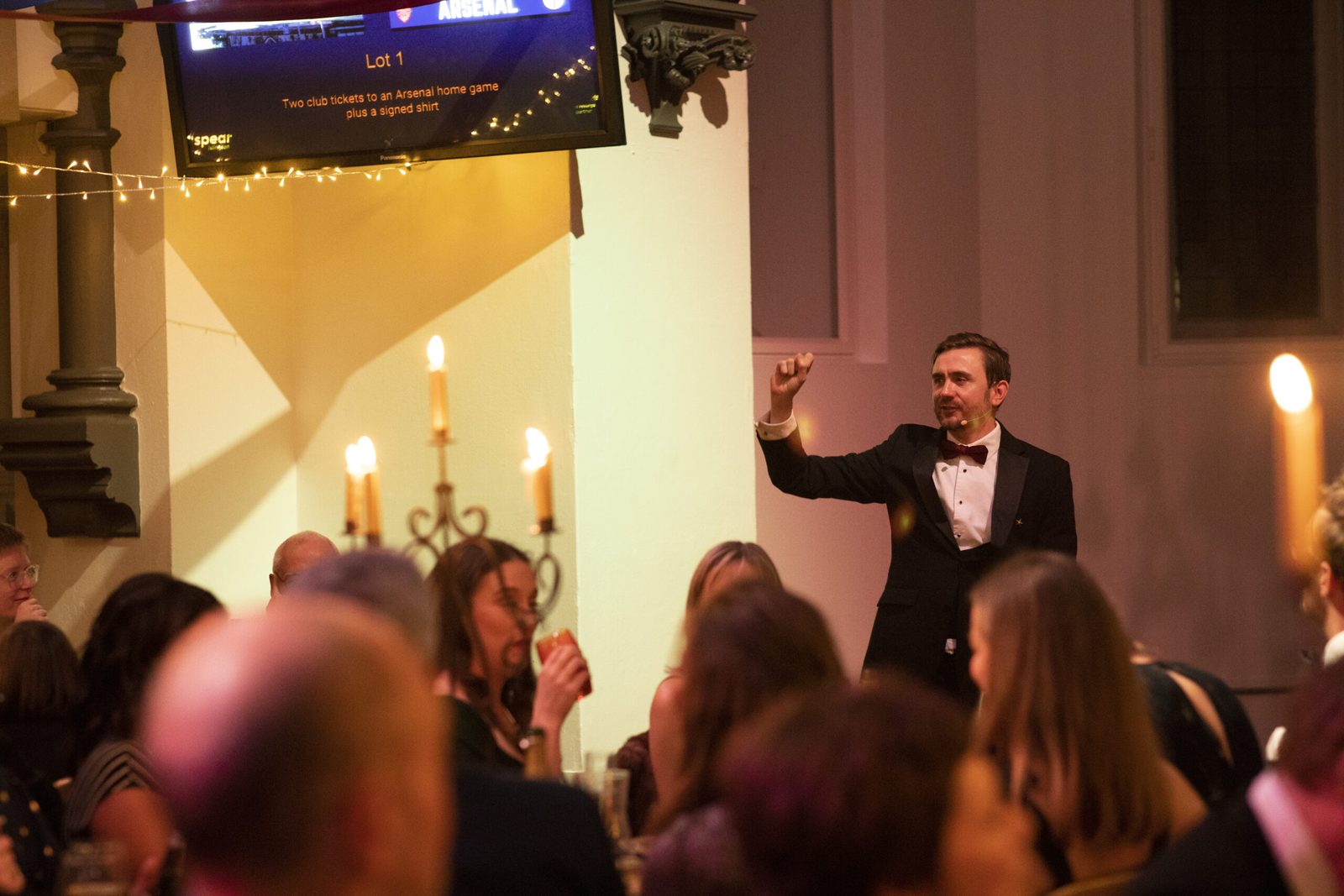
The neat trick with a hybrid running order is that the game-show rounds double as your service windows. While two teams are laughing through a Family Fortunes round, the kitchen can move, because a bit of noise and movement suits a game and ruins a speech. Line the courses up with the interactive blocks and the catering stops fighting the show.
What corporate awards ideas actually work?
The ones that pull the whole room in, not just the shortlist. Interactive rounds are the strongest lever I have, but they are not the only one, and the right mix depends on your audience. A few game-show rounds written for the specific crowd will do more than a generic act ever could, because the humour is about them.
- A short, sharp opener that names the company and the year, so the room knows the night is theirs.
- Split-room games that rotate, so most people play rather than watch a chosen few.
- A running gag or callback that threads through the whole evening and pays off near the close.
- Winner walk-ups timed and paced, with every name pronunciation checked in advance.
- A genuine peak saved for the final award, not a slow fade after it.
Skip the raffle-style filler that stalls the room, and skip anything that only involves people on the top table. The test for every idea is simple: does it give the 90% who are not winning a reason to stay in it.
Where does a host earn their place?
In the joins, and in the moments that go wrong. Anyone can read a category card. The value of a professional host is holding the energy in the gaps between segments, covering the sponsor reel that fails to play, and pulling a room that has run badly over back to the final award with the momentum intact. I have handled all three on live awards nights, and none of it showed from the floor.
A host also carries your message without it sounding like a memo, keeps the sponsors visible without turning the night into an advert, and reads the room second by second so the pacing bends to the crowd in front of them. That is the difference between a night that is coordinated and a night that is hosted. If you are weighing up the role, my page on booking an awards host sets out exactly what it covers.
Quick answers: corporate awards ceremony
How long should a corporate awards ceremony be? Aim for around two hours of formal content, broken into blocks with interactive breaks, so the night has peaks rather than one flat run.
How many awards is too many? If you have more than fifteen or sixteen categories, split them across the evening with entertainment between the blocks, or the back half of the list will lose the room.
When should food be served? During a designed lull or an interactive round, never over a live presentation, so winners get the room’s full attention.
Do we really need a professional host? For a company night in front of colleagues, yes: the host holds the energy between segments and covers the moments that go wrong, which is where an internal volunteer usually struggles.
The winners will always remember their moment on stage. Whether everyone else remembers a good night comes down to how you treat the time between the trophies. If you want to talk through your own awards evening and how a hybrid running order might work for your room, call me on 07596 851647 or get in touch.