
- Home
- Blog
- Event Host Blog
- Christmas party games for families: making them work from 5 to 80
Christmas party games for families: making them work from 5 to 80
 By Kevin Durham, event host and MC
29 October 2026 · updated 24 October 2026
7 min read

In short
- Christmas party games for families fail for one reason: the game quietly asks for something the youngest or the oldest person in the room cannot do.
- Sort games by what they demand (reading, speed, hearing, standing up, owning a phone) rather than by how good they look written down.
- Use STEP, the adaptation tool from inclusive sport: find the single biggest barrier, change that, leave everything else alone.
- Build the day in blocks with a break every 30 to 40 minutes. Open the quiet room before anyone asks for it.
- Never let a phone be the only way to play. Around 3.3 million people aged 65 and over do not use one, and neither do most ten-year-olds.
Christmas party games for families have to do something no other party game is asked to do: hold a five-year-old, a fifteen-year-old and an eighty-year-old on the same game at the same minute. When it fails, six people play, everyone else stands at the edge holding a drink, and the organiser spends the afternoon apologising for the running order.
In my experience the game is almost never the problem. The problem is the demand hidden inside it: you have to read fast, or hear a question over the music, or get out of your chair, or own a smartphone.

What makes Christmas party games for families actually work?
Christmas party games for families work when everybody in the room can take part in the same round at the same time, without the game testing a skill it never meant to test.
That bar is higher than it sounds. Almost 80% of people over the age of 70 have some hearing loss, and RNID puts the UK total, including tinnitus, at over 18 million people. A hall with music playing and a caller at the front is the exact environment that defeats a hearing aid. RNID’s communication tips are to move somewhere quieter and face the person speaking. You cannot move a party somewhere quieter, so the game has to do that work instead.
At the other end of the room, the five-year-old cannot read the screen and the ten-year-old almost certainly has no phone. Ofcom’s May 2026 report found mobile ownership jumps sharply from 56% of ten-year-olds to 83% of eleven-year-olds. Age UK’s March 2024 report counts 3.3 million people aged 65 and over who do not use a smartphone at all.
Both ends of your age range are off the app. Plan accordingly.
Which games survive a five-to-eighty age gap?
The games that survive are the ones whose only real demand is a decision. So before you choose anything, work out what it secretly asks a player for.
| Game type | What it really demands | Who it quietly loses | The fix |
|---|---|---|---|
| Fast buzzer quiz | Reading speed and recall | Under-eights, anyone with hearing loss | Read every question aloud twice, drop the buzzers |
| Written rounds and puzzle sheets | Reading, writing, close vision | Pre-readers, anyone without their glasses | Table teams with one scribe each |
| Phone or app games | A phone, a signal and small-screen vision | Most under-elevens, millions of over-65s | Play it at the tables, one phone per four people |
| Relays and musical chairs | Standing, balance, speed | Anyone seated, anyone unsteady | Score the style, not the speed |
| Chance games such as bingo or a coin call | Nothing but a decision | Nobody | Keep one in reserve for the flat moment |
That last row is the one most people skip, because it looks too simple to bother with. A bingo line or a coin call asks nothing of a player except that they are in the room, which is why it clears an age range nothing clever ever manages.

How do you adapt a game so every age can play?
You adapt a game by finding the one part of it creating the biggest barrier and changing only that part. Everything else stays as it is.
Inclusive sport has a tool for this and it transfers to a party intact. It is called STEP: space, task, equipment and people. Activity Alliance describes it as a way to change elements of an activity so that everyone can take part together, and the Youth Sport Trust’s adaptation tool is blunt about where the skill lies: identify the part of the game creating the biggest barrier, then work on that one.
At a family Christmas party it comes out like this:
- Space. Run the round at the tables rather than at the front, so taking part does not involve a walk.
- Task. Change what counts as winning. Judge the funniest answer, not the fastest, and the eight-year-old is suddenly a contender.
- Equipment. A show of hands instead of an answer sheet.
- People. Pair every small child with an adult and call them one team under one name.
One change is usually enough. Three and you have invented a new game nobody understands.
How do you run Christmas party games for families so nobody is excluded?
You run Christmas party games for families inclusively by fixing the room first and the games second. In this order:
- Turn the background music off during rounds. Not down. Off. It goes back on between games.
- Find out if the venue has a hearing loop and switch it on. RNID says large area loops serve venues such as community centres and halls, sending the microphone straight to a hearing aid without the room noise.
- Make everything readable. Sensory Trust’s print guidance sets a floor of 12pt Arial, ideally 14pt, with strong contrast and no blocks of capitals. Treat that as the minimum on paper and go far larger on screen.
- Open a quiet room before anyone needs it. The National Autistic Society advises a signposted quiet space away from the crowds with reduced noise and lighting, and ear defenders available to borrow.
- Give people more than one way to answer. Hands, cards, a shout, a scribe at the table. If the app is the only way in, you have already lost both ends of the room.
At a company family day or a community party this is not only good manners. Section 20 of the Equality Act 2010 sets out the duty to make reasonable adjustments, including providing auxiliary aids and giving information in an accessible format.
If someone at the party is living with dementia, Dementia UK’s festive guidance is worth following closely: reduce unnecessary noise such as crackers and loud music, set aside a quiet room with familiar things in it, keep activities short with a break every 30 to 40 minutes, and ask guests to take turns talking rather than crowding in at once.
A running order for an afternoon family party
That 30 to 40 minute figure is the most useful planning number I have found, and it suits a five-year-old just as well. Build the afternoon around it.
- 1pm, arrival. Music low, no game. Let people find their table.
- 1.30pm, the opener. One chance game the whole room plays from its seats. Nobody has to be good at anything in the first fifteen minutes.
- 2pm, break. Food, which Dementia UK suggests keeping at the person’s normal time.
- 2.30pm, the big team game. Teams at the front, rotating players each round.
- 3.10pm, break. Presents, or the visit from Father Christmas.
- 3.40pm, the finish. One round the entire room plays at once.
- 4.15pm, out. In daylight if you can, which Dementia UK also recommends.
For a bigger room than this, the guide to large group games covers how the same games scale past a hundred people.
Does an evening party need a different shape?
An evening family party needs the children’s games front-loaded and the competitive ones held back, because the two audiences share the room for about ninety minutes and no longer.
Run the chance game and the big team game early, inside that first 30 to 40 minute block, while the under-tens are still sharp and still there. Keep the longer, noisier round for after the younger ones have gone quiet. Drink changes the room too: by nine o’clock a game needing concentration gets laughed at, and a game needing a shout gets one.
The break does not change. Short bursts beat one long block of entertainment at any hour.
How I run the big ones on my own game software
At a family event the room holds every age at once, which is the problem game shows were built to solve. I run mine on my own software and write every game for the people actually in the room, so a staff family day and a community party get different shows.
Family Fortunes is the one that does the heaviest lifting with a mixed age range. I write the survey questions for that specific crowd, then split the room into two sides and rotate who comes up each round, so as many people as possible get a turn and nobody stands at the front long enough to get nervous. The answers come from the room, so a nine-year-old can beat an adult without anyone having to pretend.
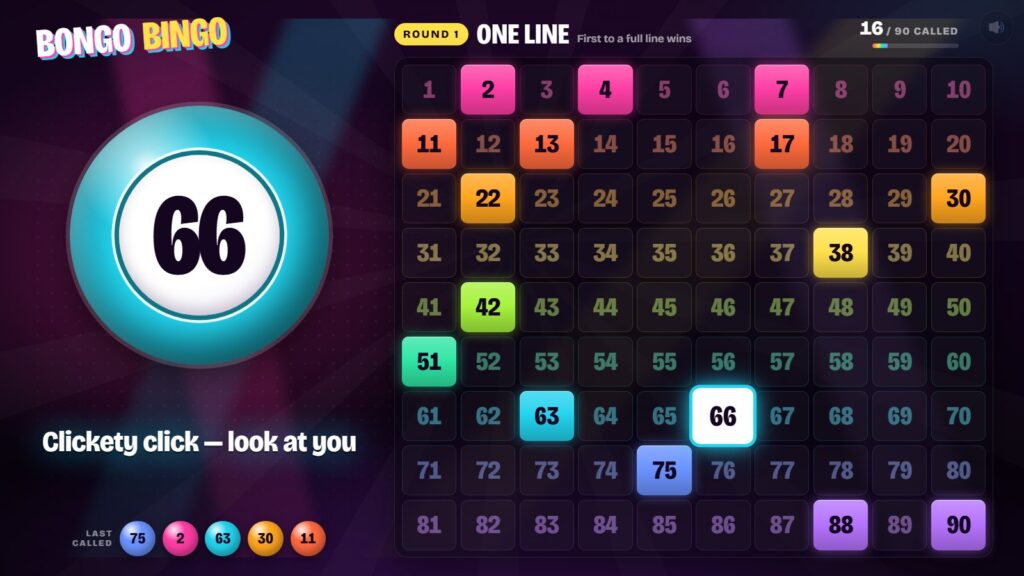
I have hosted family festivals with crowds past 80,000, and the rule in a function room is the same as in a field: no dead moments, and nobody should have to work out where they fit. There is more on the family event host page, and the Christmas party entertainment page shows the December version.
One host, the whole afternoon. Call me on 07596 851647 and tell me the age of the youngest guest coming, and the oldest.