In short
- A corporate quiz night works when it feels like a show, not a written exam: pace, personality and rounds that keep everyone in it.
- The fastest way to lose the room is a quiz that drags, has too many rounds, or leans on trivia nobody in the building cares about.
- Mix the round types so different people get their moment, and build the questions around the company where you can.
- You can run it yourself, but a host frees your team to take part and keeps the energy up from the first question to the last.
- At its best a corporate quiz night is really a game show: familiar formats, teams competing, and the whole room playing rather than scribbling.
A corporate quiz night is one of the easiest social events to put on and one of the easiest to get quietly wrong. The format is familiar and cheap, which is exactly why so many end up flat: a long list of questions read out to a room that started strong and slowly checked out.
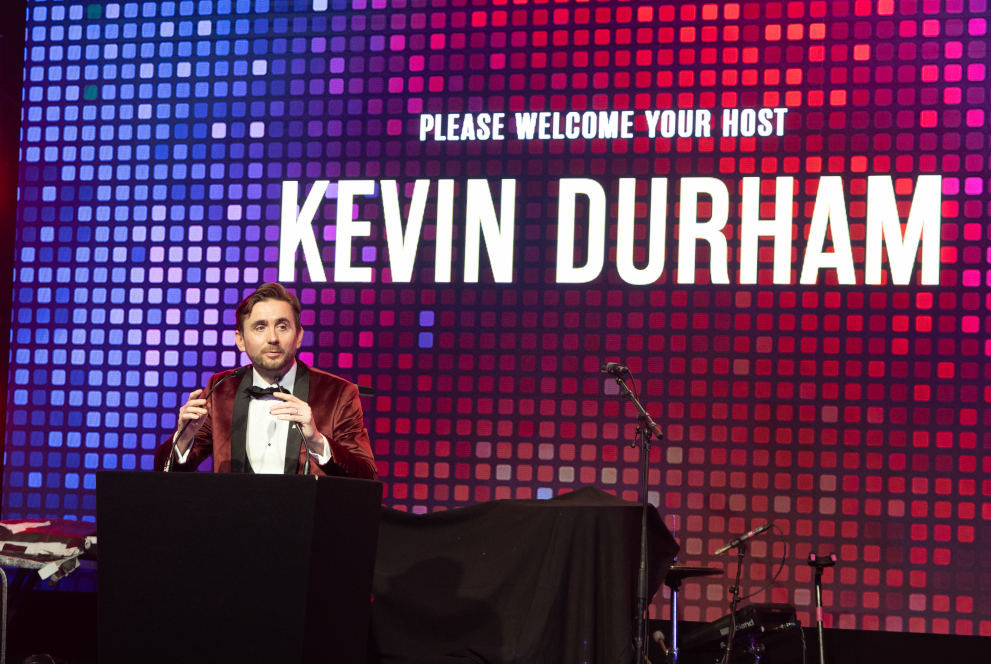
I run interactive entertainment for corporate events, and a quiz done as a proper show is a different animal from a quiz done as an admin task. This is a working host’s guide to a corporate quiz night: what makes one work, how to stop it dragging, the rounds worth including, and when it should really be a game show.

What makes a corporate quiz night work?
A corporate quiz night works when it is paced and hosted like entertainment, not administered like a test. The questions matter far less than the energy carrying them, and the best nights feel like a show that happens to keep score.
The teams are the engine. People come alive competing in small groups, so the room needs to be in teams from the start, ideally mixed across departments so it doubles as a way for people to talk to colleagues they never normally would. A quiz is a social event first and a test of knowledge a distant second.
Personality at the front does the rest. A host who reads the room, winds up the rivalries, and keeps things moving turns a set of questions into an evening. Without that, even a well-written quiz is just a form being filled in together.
How do you stop a corporate quiz night dragging?
You stop a corporate quiz night dragging by keeping it short, varying the rounds, and never letting the marking kill the momentum. Drag is the number one reason these evenings fade, and it is almost always structural.
The common mistakes are too many rounds and too much dead time between them. Six tight rounds beat ten that outstay their welcome, and the gaps where teams swap papers and wait for scores are where a room goes cold. Keeping the marking quick, or handling it live, protects the energy you have built.
Pace also means knowing when to push and when to land. In my experience the room tells you what it needs if you are watching: when to speed up, when to milk a rivalry, when to cut a round that is not landing. That live judgement is the difference between an evening that flies and one that limps to the final scores.
What rounds should a corporate quiz night include?
A corporate quiz night should include a mix of round types so different strengths get their moment and no single team runs away with it. Variety is what keeps everyone believing they are still in it.
A reliable spread:
- A general knowledge opener to settle everyone in and get the teams talking.
- A picture or music round for the people who are hopeless at facts but sharp on culture.
- A company round built around your business, your people, or the year you have had, which is always the one that gets the biggest reaction.
- A quickfire finale with points that can swing the result, so the whole room stays live to the last question.
The company round is the one worth the effort. Generic trivia is available anywhere, but questions about the actual people in the room are what make the night feel made for them rather than pulled off a shelf.
Hosting a corporate quiz night yourself
You can host a corporate quiz night yourself, and for a small, informal team night that is often the right call. If someone in-house has the confidence to hold a room and keep the pace up, a DIY quiz can work perfectly well.
The catch is that whoever hosts it is working, not enjoying it, and a quiz lives on the energy of the person at the front. If that falls to a manager who would rather be with their team, the whole thing can feel like a task being administered rather than a night out.
Bringing in a host solves two problems at once: your people all get to take part on equal footing, and the energy is someone else’s job to sustain from the first question to the last. If you want a sense of how that lands, the client reviews are filmed at real events, plenty of them game and quiz nights.
How I run a corporate quiz night as a game show
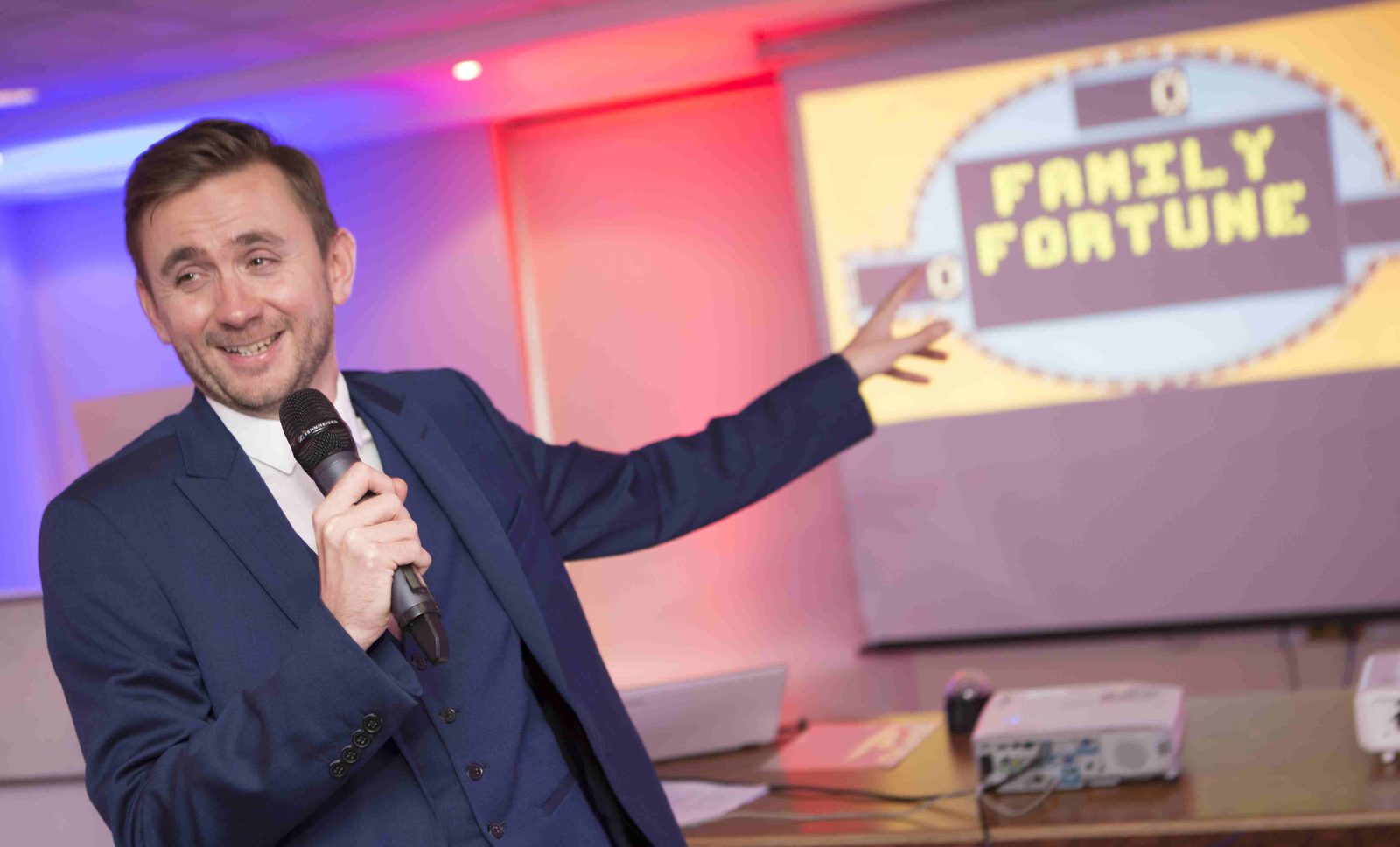
When I run a corporate quiz night, it is built as a game show rather than a pub quiz, using formats people already know so the room is playing within seconds. The familiarity does a lot of work: nobody has to learn rules, they just recognise the game and join in.
I write the content around the specific company, which is what turns standard questions into a room full of people reacting to their own in-jokes and shared history. Then I split the room into teams and rotate through rounds so most people are actively playing, not sitting and scribbling. The same game show formats flex from a reserved senior group to a loud team night, because the format holds and the pitch changes.
Because I host as well as run the games, the evening has one person carrying it end to end: the welcome, the rounds, the scores, the finish. That continuity is what stops a quiz feeling like a series of disconnected rounds and makes it feel like a night with a shape.
Quiz night, or a full game show?
The honest answer is that a great corporate quiz night is already halfway to a game show, and often the game show is what you actually wanted. If your real goal is a room full of people laughing and competing, the quiz is just one way in.
A quiz leans on knowledge; a game show leans on participation and play. Formats built around teams, rounds and a bit of friendly spectacle tend to include more of the room and rely less on anyone knowing the capital of Peru. For a lot of corporate socials, that is the better fit. There is more on the full range on the corporate entertainment page, and on the dedicated corporate game show hire page.
If it is a Christmas do you are planning, the same thinking applies, and I have set it out on the Christmas party entertainment guide. Either way, tell me about your night and your team, and I will help you land on the format that gets the most of the room off their seats.