

- Home
- Blog
- Event Host Blog
- Who can help a director with a company speech?
Who can help a director with a company speech?
 By Kevin Durham, event host and MC
12 November 2026 · updated 10 November 2026
6 min read

In short
- Who can help a director with a company speech? Four places: a colleague or speechwriter for the words, a coach or club for nerves, a host for the room, and legal or comms for anything not yet public.
- Pick by the worry. Not knowing what to say is a writing problem. Dreading the stage is a confidence problem.
- Three minutes at a comfortable pace is roughly 300 to 450 words, which is shorter than most directors fear.
- Overwhelming, lasting fear of speaking is worth raising with a GP, and in England you can self-refer to NHS talking therapies.
- I help directors with speeches too, especially nervous ones, and I explain how below.
A company speech is a short address by a director at a company event, such as an anniversary dinner, an awards night or a staff party. Who can help a director with a company speech depends on the worry, and it usually splits in two: some directors do not know what to say, and some know exactly what to say and cannot face saying it. I help people at both ends of that split, and this is how I would sort the options.
Who can help a director with a company speech?
A director can get help with a company speech from a colleague or comms lead for the words, a freelance speechwriter when the stakes are high, a coach or speaking club for nerves, a professional host for the room, and legal or compliance for anything not yet public. Choose by the worry, not by the job title.
| The worry | Who helps | What they do |
|---|---|---|
| “I don’t know what to say” | Colleague, comms lead or speechwriter | Draft the words in your voice |
| “I know it, but I dread saying it” | Coach, speaking club or a host | Rehearse with you and build confidence |
| “Will the room even listen?” | A professional host | Introduce you, set the tone, control the mic |
| “Can I say that in public?” | Legal, company secretary | Check unannounced figures and plans |
Can a colleague or the comms team write it?
Yes, and for a short anniversary or awards-night speech this is usually the right first call. A colleague who knows how the director talks can draft a few minutes in an afternoon, provided the director owns the final words.
Rob Biesenbach, an executive speechwriter and coach, writing in PRSA’s magazine in October 2024, says the speech must capture how the speaker actually talks. He suggests settling three things at the first meeting: who the audience is, what they want, and what they should know, feel and do. He also warns about the “Christmas Tree” effect, where every department hangs a plug for its own project on the speech.
My rule on that: if five departments have added a line, cut back to one message.
Speechwriters: when a professional is worth it
A professional speechwriter is worth it when the speech carries real consequence, such as a restructure, a results announcement or a milestone address to the whole company. For a three-minute thank-you at a party it is more than the job needs. That is my view, not a rule.
What helps either way is time. The same PRSA article notes that busy executives often leave the speech to the eleventh hour, and recommends a couple of “table reads” where the director reads the whole speech aloud, timed.
How do you stop dreading the stage?
To stop dreading the stage, rehearse the speech aloud, slow your breathing before you walk on, and practise in front of a friendly audience first. Ordinary nerves are normal and are not the same as a medical condition. What follows is general advice from published sources, not a method of mine.
- Read it aloud, timed. That is the PRSA table read: say the whole speech out loud and time it.
- Breathe. The NHS breathing exercise is in through the nose, out through the mouth, counting steadily from 1 to 5 if that helps.
- Practise somewhere safe. Toastmasters describes its meetings as a chance to practise planned and unplanned speaking and to give and receive feedback. It lists more than 13,800 clubs worldwide (as at November 2026).
- Know when it is more than nerves. The NHS says social anxiety is more than shyness: a long-term, overwhelming fear that treatments can help. You can see a GP or self-refer to NHS talking therapies in England.
Who can help a director with a company speech if stage fright is the problem?
An event host can talk a nervous director through speaking, run the room around them and take pressure off the lectern. I’m very flexible about this, and I’m happy to help anyone who needs a hand with a speech.
Apart from the writing, the part I enjoy most is helping people who dislike the stage or have stage fright. I talk them through how to be a public speaker and give them a few tips and tricks, so they feel confident when it is their turn. That is the whole offer: a conversation about you and your speech, with no package or price attached.
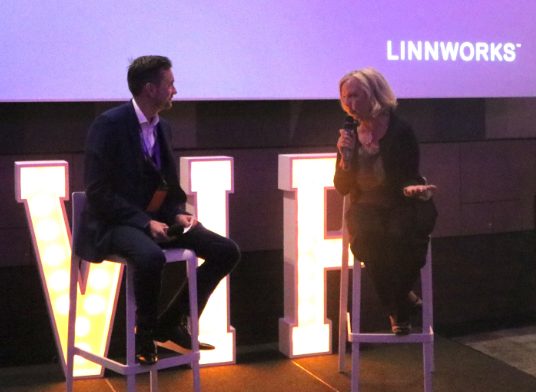
One format worth asking about is an on-stage interview, where the host asks the director a few questions instead of handing them a lectern. Some people find talking easier than reciting. Don’t make the director host the evening, though. Clients tell me it gets awkward when a senior colleague tries to present instead of enjoying the night as a guest, and my company anniversary guide covers who should speak.
If you are asking because you are the one hosting, my notes on being an MC include being nervous.
How long a director’s speech should be
A director’s speech at a company event should usually run about three minutes, which is 300 to 450 words at a comfortable pace. VirtualSpeech gives 100 to 150 words per minute as comfortable for presentations, so 3 minutes x 100 is 300 words and 3 minutes x 150 is 450.
The same site analysed 32,809 practice presentations in 2026. The median pace was 111 words per minute, and presentations scoring 8 out of 10 or better had a median of 138. Write toward 350 words and you leave room for a pause and a laugh.
Opening an evening is a different, shorter job, covered in my welcome speech guide.
Should the speech be checked before the night?
Yes, if it says anything not yet public. For a listed company, the FCA says unlawful disclosure is a civil offence under UK MAR, as at November 2026. Ask your legal team or company secretary before a speech mentions unannounced figures, deals or plans.
I host events, I don’t give legal advice, and this is a prompt to ask the right person.
When is it worth bringing in a host for the speech?
Bring in a host when the director should be a guest of honour, when stage fright is real, or when the speech is one of several handovers in the evening. Skip it for a short thank-you in your own canteen, where a colleague and one timed table read will do.
Matt Gilby wrote that I was “incredibly well prepared including double checking pronunciations of names, turning up early to complete a dress rehearsal” (Matt Gilby, Google review, on my reviews page). A rehearsal helps a nervous director as much as it helps the host.
When you get in touch, have these ready:
- The date, venue and number of guests
- The running order and where the speech sits in it
- How long the director has been given
- What worries them most: the words, the nerves or the room
- Any earlier speech, so I can hear their natural voice
My briefing guide explains why that conversation matters. If a director in your company has a speech coming, and would like a hand with it or the evening around it, tell me about it: email hello@eventhost.info or call 07596 851647. I’m an event host who is glad to talk it through.