
- Home
- Blog
- Event Host Blog
- Team building activities for introverts: nobody gets pulled on stage
Team building activities for introverts: nobody gets pulled on stage
 By Kevin Durham, event host and MC
21 November 2026 · updated 11 November 2026
6 min read
In short
- Team building activities for introverts work when taking part is a real choice, groups are small, people can answer on a phone or on paper, and nobody has to perform at the front.
- Introversion is a preference for less stimulation. It is not shyness and not a diagnosis, so design for choice and do not label anyone.
- Send the plan in advance and run the event in working hours. Acas advises asking staff what they want and offering a range.
- Phone games suit quiet people when joining in and sitting back are both easy.
- Hire a host for a room of about 30 or more. For one small team, a printed quiz and a clear plan will do.
Team building activities for introverts are activities designed so that quiet colleagues can take part without performing, being put on the spot or being worn out by constant interaction. I host phone-based game shows, so I have a side, and I will say where you do not need me.
What should team building activities for introverts get right?
They should make taking part a choice, keep groups small, give people time to think before they speak and never require a performance. Introversion is a preference for less stimulation, not a fear of people. Susan Cain, interviewed in 2012, separates it from shyness, which is a fear of negative judgement.
Adam Grant of Wharton wrote in Psychology Today in February 2014 that research on introverts shows they are more easily overstimulated by prolonged social interaction. In the same piece, one study found introversion explained only 16 per cent of public speaking anxiety. Stage nerves and introversion overlap, but they are not the same thing, so design for both.
Treat “introvert” as a tendency, not a type. Personality researcher Luke Smillie points out that in the Big Five model introversion is simply the low end of extraversion, and the popular idea bundles in other traits. Neurodivergence is a separate matter. Acas (page updated 16 December 2025) gives an example in which excluding an autistic worker from work social events is likely to be disability discrimination. Quiet colleagues are not automatically neurodivergent, so ask people what they need rather than guess.
Why does forced fun backfire?
Forced fun backfires because consent decides whether a game lifts people’s mood or lowers it. Ethan Mollick and Nancy Rothbard ran a field study of a sales game at a fast-growing company. Wharton reported in 2016 that employees who consented gained strongly in positive feelings, while those who did not consent felt worse about their jobs and showed a slight dip in performance.
Acas and YouGov asked 1,052 British employees in January 2025 about their least-liked work social activities. Team building came top at 31 per cent, and 20 per cent named regular after-hours events. Only 26 per cent liked all. Acas advises asking staff what they want, offering a range and holding team building in working hours.
So “optional” has to be real. A sign-up form with a worthwhile alternative is optional. A chair left empty in front of the boss is not.
Seven design rules for a team day quiet people can enjoy
Seven rules cover most of it. These are general design advice drawn from the research above and from how I plan a room, not a tested formula.
- Make opting in genuine, and give opting out a job. People who sit one out can keep score, judge or time a round. Never feature someone at the front without asking them first.
- Keep working groups small. Pairs and fours let everyone speak. In a circle of twenty, a few people do the talking.
- Let people write before they speak. Diehl and Stroebe’s 1987 experiments found that production blocking, where only one person can talk at a time, accounted for most of the productivity loss in real brainstorming groups. The BPS Research Digest (February 2009) describes brainwriting, where ideas are written in silence and then shared. The evidence is preliminary, and the digest notes that extraverts used to brainstorming may find the silence uncomfortable. Mix both.
- Answer on a phone or on paper, not out loud. A private answer committed at the same moment as everyone else’s removes the audience.
- Give notice. Say beforehand where, how long, what will happen and what nobody will be asked to do. Acas’s neurodiversity page does not address advance notice directly, so this one is my advice.
- Do not ask people to disclose personal things to people they barely know. Skip the “tell us a surprising fact about yourself” opener.
- Build in recovery. Leave a gap, an early finish or a quiet room. Grant’s overstimulation point is the reason.
Which team building activities for introverts work best?
The best fit is an activity where people work in small groups on a shared task and answer privately or in writing. The table gives five that suit and what to watch.
| Activity | Why it suits | Watch for |
|---|---|---|
| Table quiz, one answer per table | Confer in a small group, no solo performance | One loud voice running the table: rotate who writes |
| Phone voting game | Everyone answers privately at the same moment | Weak signal: test the room first |
| Puzzle or escape-style challenge in fours | Clear task, talking is about the problem | A clock that rattles some people |
| Brainwriting, then discussion | Thinking time before speaking | Needs a real problem to solve |
| Side-by-side task, such as a volunteering day | Talking is optional | A day-long commitment: offer shorter slots |
What to avoid: improvisation, karaoke, trust falls, speed networking, fun-fact introductions, and any “volunteers to the front” round. My team building games guide lists no-cost options for small groups, and games at work covers how to run them.
How can phone games let people join in without performing?
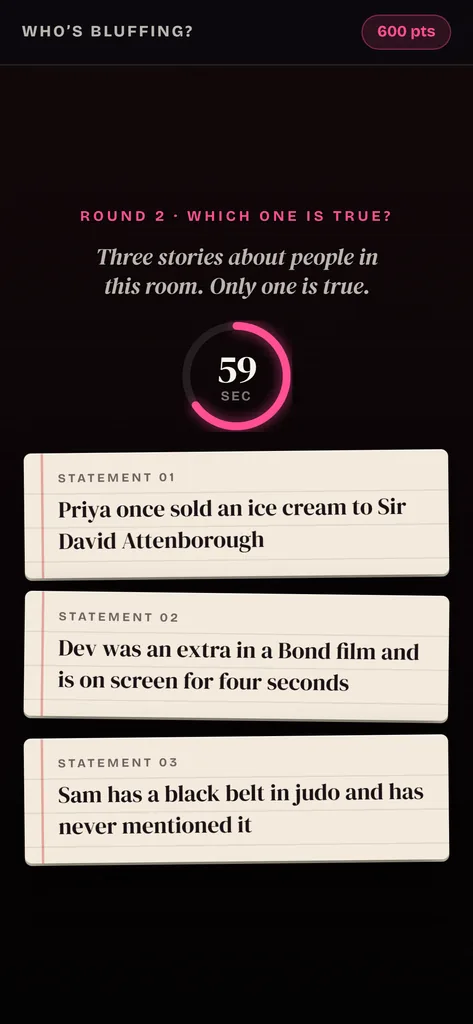
A phone game lets each guest answer privately on their own phone at the same moment, so nobody speaks, queues or walks to the front, and the room’s answers appear as totals on the big screen. The result is the performance, not the person.
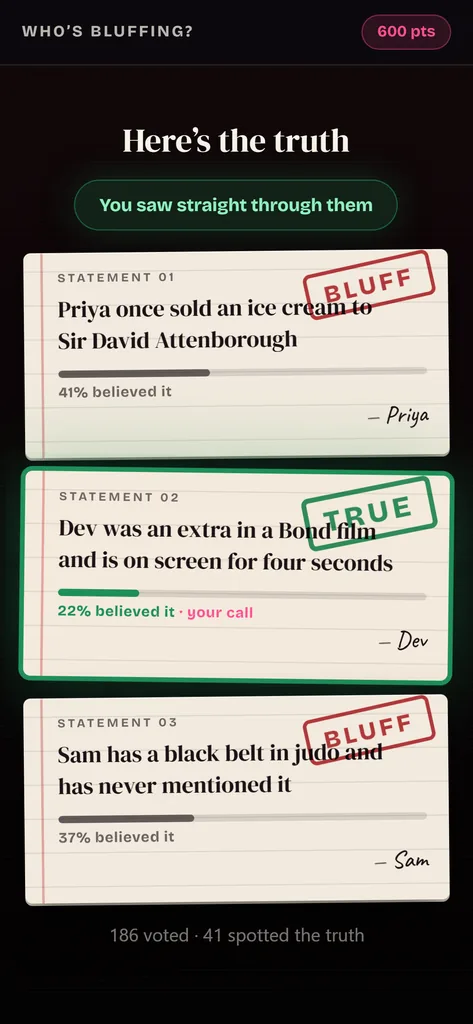
In Common Ground the room votes and the percentages are the punchline, while I deliver the result. My game page notes that at the tables the loudest voice does not always win, and the quiet analyst who says “trust me” can become the hero. Who’s Bluffing? collects its stories before the event through a simple form, so nobody is ambushed. Side Bets has a “Sit this one out” button.
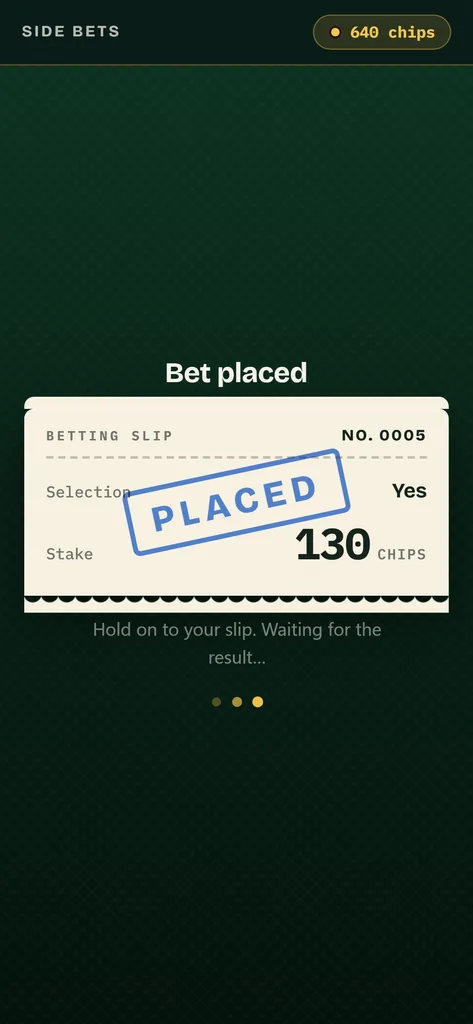
I customise the content for the people in the room, so I ask who is happy to be featured and who is not. Phone games do need signal, so test the room first, and keep a table version ready.
When is it worth hiring a host for introvert-friendly team building?
Hire a host when the room is about 30 people or more, the group is mixed and the event matters. My bare minimum for a host is about 30 people; below that it feels like a big round-table meeting.
A host changes three things. They choose the format for the room instead of one that suits only the confident. They keep hold of the microphone, which stops one person dominating and means nobody is handed it unexpectedly. And they take the refereeing off your team. Clients tell me that when a senior colleague hosts, it can get awkward, because that person tries to present rather than enjoy the event.
Do it yourselves when the group is under 30, or one team round one table. A printed quiz, pairs and a plan sent in advance is a sound option, and my small group activities guide has the ideas. Hosting makes sense for an away day, awards night or staff party where the aim is that nobody spends the evening bracing for their turn. My game show hire page sets out the formats, and work social ideas covers the wider options.
What to have ready when you get in touch
Have the date and venue, the number of guests, the slot length, the running order around it, what your team disliked last time and anyone who must not be put on the spot. Tell me what the phone signal is like in the room.
To talk it through, call 07596 851647 or email hello@eventhost.info. I am an event host who would rather hear about your room first.