
- Home
- Blog
- Event Host Blog
- Acceptance speech: what to say when you win an award (with examples)
Acceptance speech: what to say when you win an award (with examples)
 By Kevin Durham, event host and MC
25 October 2026 · updated 24 October 2026
7 min read

In short
- At a work or industry award ceremony, a good acceptance speech lasts 30 to 60 seconds, roughly 75 to 150 words.
- Use five beats: thank the organisers, say what it means, thank two or three people by name, give one specific detail, then stop.
- Thank the people the room knows. A long list of names nobody recognises loses the room.
- Prepare something even if you don’t expect to win, and keep it on a small card.
- The walk-up, the handshake and the photo are part of it. The host’s job is to carry you through them.
An acceptance speech is the few words you say once your name is read out and the trophy is in your hands. At a company or industry award ceremony it’s short, often unplanned, and can feel like the longest minute of your working year.
I host award ceremonies, so I watch these moments from a few feet away. Here’s what I’d tell any finalist before the night.
What is an acceptance speech?
An acceptance speech is the short talk you give when you’re presented with an award. The Cambridge Dictionary calls it a formal talk given when you’ve received something such as a prize, often at a special ceremony.
A public speaking guide from SAGE says it thanks the awarding person or organisation, acknowledges what the award means and formally accepts it.
How long should an acceptance speech be?
An acceptance speech at a multi-category award ceremony should run 30 to 60 seconds unless the organiser tells you otherwise. Even the film world keeps it tight: in February 2025, Oscar nominees were reminded they had forty-five seconds each.
Some schemes set their own limit. One chamber of commerce awards gives recipients two minutes because the programme is tightly scheduled. Others have no speeches at all.
A comfortable presentation pace is 100 to 150 words a minute, so a 45-second speech is about 75 to 110 words. Write it, read it aloud and time it.
A 30 to 60 second structure
Five beats, a sentence or two each. It works for an individual or a team award.
- Thank the organisers and judges. One line. Name the category sponsor if there is one.
- Say what it means. One honest sentence. “This one matters because…” beats “I’m speechless”.
- Thank two or three people by name. The ones who made the work happen.
- Give one specific detail. A number, a moment, a customer. It’s the line people will repeat at the bar.
- Close and go. Say thank you and step back.
The Speaker Lab suggests writing the speech out, then cutting it to bullet-point cues so you aren’t leaning on memorised lines. Five beats fit on a card in a jacket pocket.
Who should you thank in an award acceptance speech?
In an award acceptance speech, thank the organisers, the judges, any category sponsor and the two or three people who did the work with you. Everyone else gets a group thank-you.
A thank you speech for an award goes wrong when it becomes a list. The same guide warns that long lists of people the audience doesn’t know make listeners switch off.
| Who | How to thank them |
|---|---|
| Organisers and judges | One line at the start |
| Category sponsor | By name, once |
| Your team | As a group, with one or two names |
| A client or customer | Only if they’re happy to be named |
| Family | Briefly, if it fits the room |
| Fellow finalists | A short, sincere nod |
What are some short acceptance speech examples?
A short acceptance speech for work is four or five sentences: a thank-you, one personal line, one or two names and a specific result. These are originals. Swap in your own names and facts.
Individual award (about 45 seconds)
“Thank you to the judges and to everyone who put these awards together. I nearly didn’t enter, so this is a lovely surprise. I couldn’t have done it without Priya and Tom, who covered for me every time a customer call ran long. Last March our complaint queue was three weeks deep. Today it’s three days. That’s a team result with my name on it. Thank you.”
Team award (about 30 seconds)
“On behalf of the whole support team, thank you to the judges and to our sponsor tonight. Twelve of us did this and only four of us fit on the stage, so if you work in support, stand up for a second. This award is yours. Thank you.”
Accepting for a colleague who isn’t there (about 20 seconds)
“Sam can’t be here tonight and is sorry to miss it. Sam asked me to thank the judges and the team, and to say this belongs to everyone who stayed late during the office move. I’ll make sure it gets to the right desk. Thank you.”
The ten-second version, for when the running order is tight: > “Thank you to the judges, and to my team, who did the hard part. We’ll be celebrating this one properly.”
How do you accept an award on stage?
You accept an award on stage by walking up promptly, shaking the presenter’s hand, taking the trophy, pausing for the photo and then speaking if a speech is part of the format. Ask the organiser how theirs works.
Formats differ. At one UK awards dinner, winning representatives proceed.pdf) to the podium for presentation and photographs. At another ceremony the photo is taken during the handshake, and only some recipients are invited to say a few words.
- For a team award, agree at the table who goes up, before the category starts.
- Expect to take the trophy with your left hand. Presenters are advised to hold the award in their left hand and shake with the right.
- Look at the photographer and hold the pose a second longer than feels natural.
- Ask which side to leave by.

What the host is doing while you’re up there
From my side of the lectern, your 30 seconds started weeks ago. The night is won in the briefing, not on the stage.
Before an award ceremony I go through every nominee, check the pronunciation of every name and run through the script with the organising team. If people often get your name wrong, tell the organiser. It reaches me in the briefing.
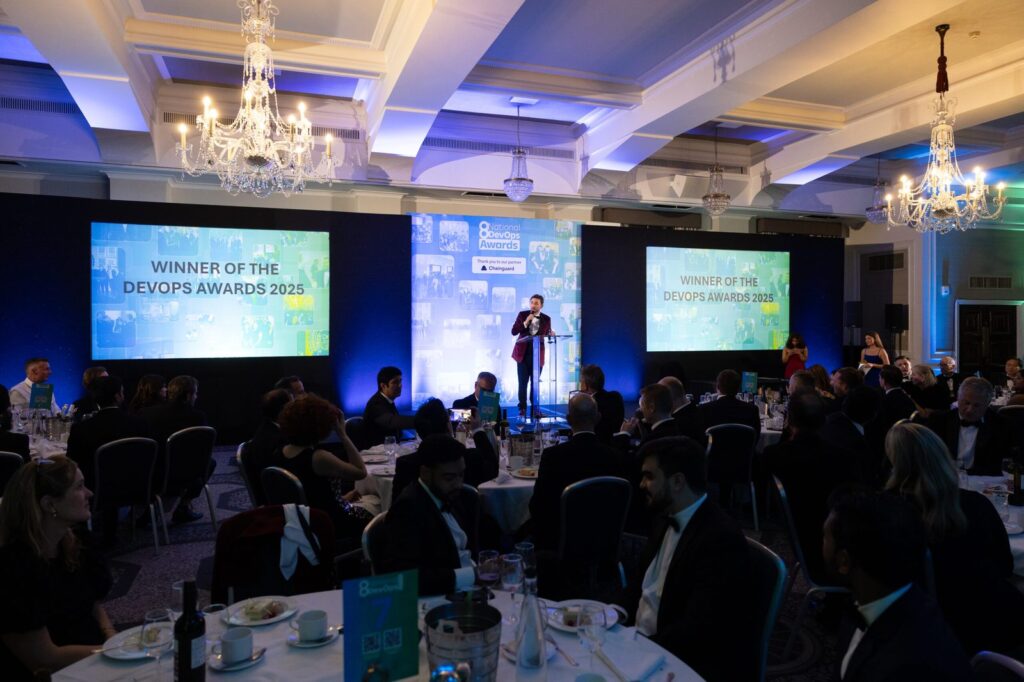
On the night, I announce the winner and keep the room warm while you walk up, so you’re never climbing the stairs in silence. Then the presenter, the photographer and the microphone are yours. When you say thank you, I bring the room back for the next category.

And if something goes wrong while you’re up there, it isn’t your problem. I’ve had a sponsor video fail to play and covered it live. Holding it together is my job. Yours is to enjoy the moment.
What should you not do in an acceptance speech?
Don’t read a long list of names, don’t make jokes at anyone’s expense, and don’t say you haven’t prepared anything.
- Don’t say “I didn’t think I’d win”. The SAGE guide advises preparing some remarks once you’re nominated, even if you don’t expect to win.
- Skip the in-jokes. The Speaker Lab warns against harsh jokes about the organiser, collaborators or the audience.
- Don’t rush. Speak slowly, and let the applause land before you carry on.
- Don’t go long. If the host starts drifting back towards the lectern, finish your sentence.
How do you calm your nerves before an acceptance speech?
To calm your nerves before an acceptance speech, call the feeling excitement rather than fighting it, and slow your breathing while the category before yours is on.
In a Harvard Business School study, people who said something as simple as “I am excited” out loud felt more excited and performed better than those who tried to calm down. Public speaking was one of the tasks tested.
The NHS suggests breathing in through your nose and out through your mouth, counting to five each way if that helps. Nobody at your table will notice.
After the speech: photos and posts
Business Wales advises winners to post on the night, tag the organisers and sponsors, then send a press release with a good photo. Ask the organiser when the official photos will be shared. And if you’re writing an entry for next year, here’s how to write an award nomination that gets shortlisted.
Running the night: one host, the whole evening
If you’re organising, short speeches only work if someone is holding the whole night together. I work as an award host across the UK and Europe, from the nominee briefing to the final envelope. When a long shortlist risks dragging, I can mix the presentations with game-show rounds, as on one entertaining awards night where everyone stayed to the end.
More awards guides
- Awards ceremony music: walk-up stings, background tracks and licensing.
Your winners will remember getting on stage. Everyone else remembers whether the room stayed alive. Tell me about your award ceremony: call 07596 851647.