
- Home
- Blog
- Event Host Blog
- Awards ceremony seating plan: what the host needs from it
Awards ceremony seating plan: what the host needs from it
 By Kevin Durham, event host and MC
2 November 2026 · updated 27 October 2026
8 min read
TL;DR
- An awards ceremony seating plan is an operational document, not decoration. It decides how long every winner takes to reach the stage.
- Seat every shortlisted nominee on a clear route to the steps, because any of them could win.
- Sponsors were promised something in writing. Read the exact wording before you place their table, then lock it.
- Accessibility belongs in the plan at the invitation stage: step-free route to the stage, wheelchair spaces, sight of the speaker.
- Your host needs one page, oriented as the room looks from the stage.
Most advice treats seating as styling. A typical planning page says VIPs need the best seats and recipients need easy stage access, then stops.
From where I stand, the plan is the document that decides whether the night runs. Every award is a short piece of choreography: name called, person stands, person walks, handshake, photograph, speech. The seating sets the length of that walk and the number of chairs the winner squeezes past. Get it wrong twelve times in one evening and you have lost ten minutes.
Your winners will remember getting on stage. Everyone else remembers whether the room stayed alive.
What should an awards ceremony seating plan actually do?
It should make every likely stage journey short and obvious, and tell the people running the night where everyone is. Most plans only do the first. The diagram that goes to the venue is for table placement; the version I need is an index of which table each nominee, presenter and sponsor sits on.
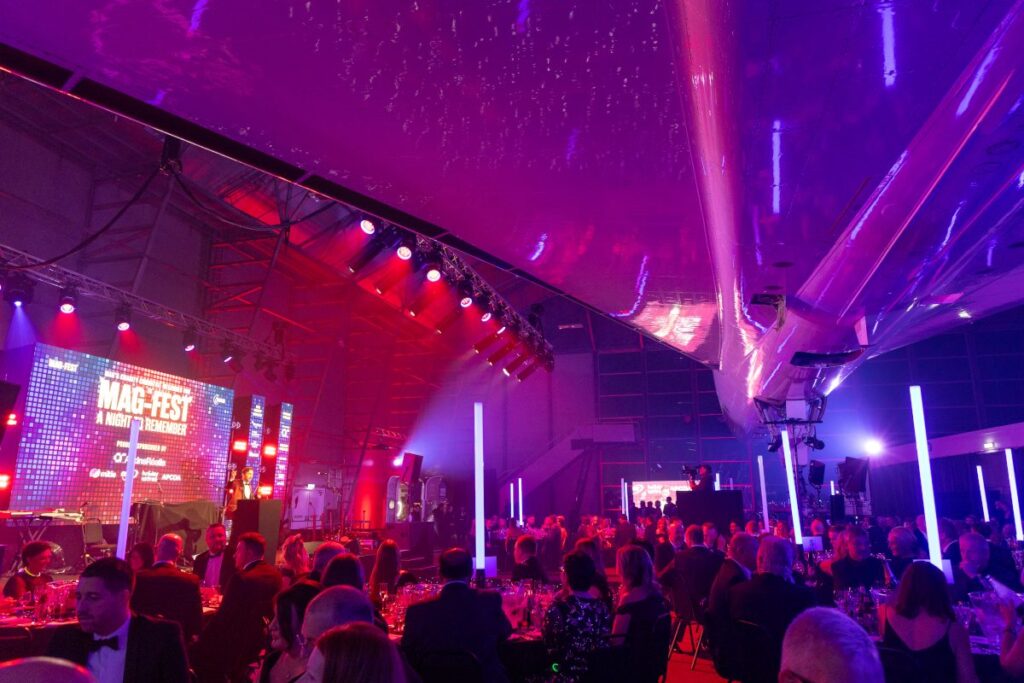
It also shapes the room. A 60-inch round seats eight comfortably and ten tightly, and awards dinners sell by the table: the MJ Awards says a table seats ten. Ten means a winner climbing out past nine chairs.
Where do the shortlisted nominees sit?
Near the front, on a clear route to the steps, with categories spread so no table is up and down all evening. Any of them could win, which is why the standard advice is to cluster nominees near front with a clear route to the stage.
Three things decide the placing. The walk, under about fifteen seconds from chair to steps. The camera, which needs a clean line. And the reaction shot, which only works if the rest of that category is in frame and lit.
Aisle seats matter more than table position: seat one of table nine reaches the stage before seat six of table three. I ask for seat numbers, not just tables.
How do you keep the winner’s table reachable without giving the result away?
Treat every shortlisted table the same, so there is nothing to read. The moment one gets a better position, a reserved aisle seat or a camera parked beside it, a room of observant people works it out before the envelope opens.
The tell is rarely the seating itself. It is the late change: a table moved forward on the day, a photographer drifting to one corner during the category video. Settle the plan on the Monday and there is nothing to spot.
Nobody at the venue needs the winner list to build the plan, and the same discipline runs through all of awards ceremony planning.

Sponsor tables: what were they actually promised?
Read the contract wording before you place them. “Prime position” and “front table” are not the same promise, and a sponsor will measure it on the night. Front tables usually go to sponsors and executives, so lock them once they are signed off.
Two details save arguments. Build in a buffer: if a top-tier table is sold as ten, plan twelve and hold two chairs. And check where a sponsor sits relative to the award they present, because one on the far side of the room adds a dead pause to the category they paid for.
Tell me which tables are sponsors and what the agreement says. I thank people by name from the stage.
Where do the host and the award presenters sit?
Mostly the host does not sit. I work from the side of the stage, because a host marooned mid-room cannot reach a microphone when a sponsor video fails. A chair near the steps and somewhere to put a printed running order is enough.
Presenters are the bigger risk. They need an aisle seat, a route that avoids the catering line, and a named person collecting them two categories early. A presenter who has to be found costs thirty seconds in front of everyone, and the fix for that is seating. The handover itself is covered in presenting an award.

When does a top table do more harm than good?
A top table hurts when it puts senior people where they cannot see, or when it blocks the route to the stage. A long raised table looks formal, but half of it ends up with its back to the screen, and if it sits between the floor and the steps, every winner walks through somebody’s dinner.
It earns its place at a civic event, or anything with formal precedence. At most corporate awards nights it does less than people expect, and spreading the leadership team puts a senior person on each side of the room to applaud. If you keep one, keep it small and keep it off the stage route.
Accessibility is a seating decision, not an afterthought
Ask the access question on the invitation, not at the door. The duty on service providers under Schedule 2 of the Equality Act 2010 is owed to “disabled persons generally”, which means planning ahead rather than reacting once somebody asks.
What that means on a table plan, against the standards venues in England are designed to in Approved Document M Volume 2 (2015 edition, with 2020 and 2024 amendments):
- A step-free route to the stage. The guidance expects a stage to be reachable by ramp or lifting platform. Walk it yourself before you sign off the plan. A winner who cannot get up to collect is the worst moment an awards night produces.
- Wheelchair spaces, placed properly. An occupied wheelchair needs 900mm by 1400mm clear, with spaces in pairs and standard seating alongside, so a guest sits with their party rather than in a zone at the back.
- Sight of whoever is speaking. RNID’s communication tips put it plainly: face me when you talk, because many people lip-read to some degree. Approved Document M expects front seats to be available for that, and for guests reading a sign interpreter. Keep host and screen visible, with the house lights up enough to read a face.
- Hearing loop coverage. A loop transmits directly to hearing aids and implants, and it rarely covers a whole ballroom. Ask where it reaches, then seat people inside that zone.
- Assistance dogs. Approved Document M asks for seats where a dog can rest in front of or under the chair. Mark that space.
- Dietary cards that reach the right chair. Allergen requirements should be recorded and passed in writing to the person preparing the food, per Food Standards Agency best practice from February 2025. That only works if the guest is in the seat the card says they are.
This is guidance rather than legal advice. Take proper advice if you are unsure of your duties.
What does the host need from the awards ceremony seating plan?
One page, printed, oriented as the room looks from the stage. Table seven on my left is table seven on the page, because at 9pm in a dark room I am not rotating a diagram in my head. Alongside it, a single sheet:
- Every category in running order, with nominee tables and seat numbers.
- Phonetic spellings for any name I read aloud. I check pronunciation with the organising team beforehand, every time.
- Who presents each award, which table they are on, and who collects them.
- Which tables are sponsors, and the exact words of their agreement.
- Access notes: who needs the step-free route, who is lip-reading, where the loop reaches.
- One name and one mobile number for changes.
That sheet lives beside the run of show. The run of show says when. The seating plan says where from.
Late changes and no-shows
A finalist list that moves on the day is one of the things I have had to absorb live, so the plan has to survive it. Close the gaps at the front first: a half-empty front-row table on camera looks worse than a full second-row one.
Do not let guests shuffle their own name cards. City AM’s awards guidance warns that organisers cannot guarantee the correct meal if cards move, which is the polite version of a nut allergy arriving at the wrong seat.
Do not solve a shortage by adding chairs to a gangway either. Anywhere more than 300 people can gather is risk-assessed against Home Office fire safety guidance, and the duty manager will move those chairs anyway.
Send me the change, not a new plan. Two lines saying table eleven swaps with table four beat a fresh PDF an hour before doors.
Five seating mistakes that cost you ten minutes of dead air
- Nominees scattered at the back. Six long walks at twenty seconds each is most of a category gone.
- Presenters unmarked on the plan. Nobody knows where they are, so nobody fetches them.
- Table numbers readable only from the door. The host works from the other end.
- A top table across the route to the steps. Every winner detours around it.
- No access check on the stage route. It stops being a seating problem and becomes the thing people remember.
Five minutes with a pen removes all five. The night is won in the briefing, not on the stage, and a good part of that briefing lives in the seating plan. Reading the room plan first is the job of an award ceremony host. Tell your winners to keep the acceptance speech short while you are at it.