
- Home
- Blog
- Event Host Blog
- Guess the celebrity quiz: five formats, scoring and how to pitch it
Guess the celebrity quiz: five formats, scoring and how to pitch it
 By Kevin Durham, event host and MC
31 October 2026 · updated 24 October 2026
8 min read

In short
- A guess the celebrity quiz hides a famous face five ways: a childhood photo, a zoomed feature, a silhouette, a voice clip, or the name scrambled.
- Spread the names across four decades of fame. In a mixed-age room it is the young faces that lose people, not the old ones.
- Score the name and the reason they are famous separately, so a table that knows the face still scores.
- Only show pictures you can verify and are licensed to use.
- Leave out anything that works by making someone look ridiculous. The round plays better when it is kind.
A guess the celebrity quiz is the round where the quiet table suddenly has an opinion. Somebody squints, somebody else says a name with total confidence, and everyone looks at the screen again.
The internet is full of these as click-through games you play alone on your phone. Almost nothing explains how to run one in a function room for 200 people, where the back row has to see it and the answer has to be right. My quiz round ideas guide gives celebrity faces a line. This is the full build.
Years of television interviews, Will Ferrell, Tom Hardy, Reese Witherspoon and Robin Williams among them, taught me one thing worth borrowing here. A famous face in a room is nothing like a famous face in a photograph, and the photograph is the one everybody thinks they know.

What is a guess the celebrity quiz?
A guess the celebrity quiz shows an obscured picture, or plays a short clip, and asks teams to name the person. It is a recognition test rather than a knowledge test, which is why it suits a room where nobody wants to feel quizzed.
Everything interesting happens in how you obscure it. Crop, blur, flatten to black, strip the sound back to a voice, or take the face away and leave the letters of the name. Each choice changes who in the room is good at it, and recognition rounds go flat faster than knowledge rounds, because there is nothing to work out, only something to see.
Which five formats actually work?
The five that survive a live room are childhood photos, a single zoomed feature, silhouettes, voice clips and the scrambled name. Each tests a different thing, which is the point of using more than one.
| Format | What it tests | Pitch it at |
|---|---|---|
| Childhood photo | Bone structure, plus era clues from the clothes | Mid, with a job hint |
| One zoomed feature | How well you really know a face | Hard, allow two guesses |
| Silhouette | Hair, posture, physical signature | Easy, a good opener |
| Voice clip | A separate memory altogether | Mid, and the favourite |
| Scrambled name | Letters, not faces | Tie-breaker only |
The scrambled name rewards the crossword brain rather than the visual memory, so I use it to break a tie rather than as a round of its own.
Childhood photos come with a research problem rather than a difficulty problem. You cannot confirm from a search result that a baby picture is the person named underneath it, so use only childhood pictures the person or their own organisation has published. One wrong answer loses the room’s trust for the evening.
Why is a zoomed feature so hard?
A zoomed feature is hard because people hold a rough impression of a face rather than a picture of it. Shown an inch of eyebrow, most of us have nothing to check it against.
There is a real spread of ability here. The Face and Voice Recognition Lab at the University of Greenwich, led by Professor Josh P Davis, tested over 5,000 police officers in one project and identified more than 100 as super-recognisers. One of those sits at a table in a big room more often than you would think, and they will carry their team.
Two fixes. Crop wide enough to include an eyebrow or a hairline, because an eye alone is nearly abstract. And allow two answers per picture, right if either is correct. It turns silence into argument, which is what you want.
How do you pitch a guess the celebrity quiz across ages?
Pitch a guess the celebrity quiz across ages by spreading the names over four decades of fame, weighted towards people visible for thirty years or more. The instinct is to worry about the older faces. The evidence points the other way.
Researchers at the University of Exeter compared adults aged 19 to 30 with adults aged 69 to 80 and found that the older group recognised older and younger faces about equally well, while the younger group struggled with older faces. Reported in December 2025 in Perception, the work put the effect down to practice rather than to any attitude about age.
So a tier of very current faces splits a mixed room harder than a tier of veterans. Four names that show the spread, each with the fact I would read on the reveal:
- Sir David Attenborough, presenting since Zoo Quest in 1954, and the only person to have won BAFTAs in black-and-white, colour, high-definition, 3D and 4K.
- Dame Judi Dench, a career spanning seven decades, with an Academy Award, a Tony and seven Oliviers.
- Sir Mo Farah, the most successful British track athlete in Olympic Games history.
- Stormzy, who headlined the Pyramid Stage on the Friday at Glastonbury in 2019.
Read the fact out even when the room got it in two seconds. A name on its own is not a reveal.

The voice round, and why it is usually the favourite
Voices are the format I would keep if I could only keep one. A face is a visual puzzle. A voice arrives as a person, and the reaction in the room is warmer.
It works better than people expect. In a study by Shilowich and Biederman, participants correctly matched 76.7 per cent of celebrity voices to the right celebrity. The same work estimated that just over three per cent of people are born with phonagnosia, a difficulty recognising familiar voices.
Use speech, not singing, which is a different recognition task. Keep clips to five or eight seconds, played through the venue’s own system and tested from the back wall. And always put a written clue on screen alongside the audio: RNID puts the number of people in the UK who are deaf, have hearing loss or tinnitus at over 18 million, around one in three.
How should you score a guess the celebrity quiz?
Score a guess the celebrity quiz in two halves: one point for the name, one for what the person is famous for.
Plenty of guests recognise a face completely and cannot retrieve the name. Flat scoring gives them nothing, and a table that scores nothing in the first round has mentally left. Two marks per picture keeps them in it.
The rest of my marking, briefly. A correct first name alone takes half a mark. Two answers allowed on the zoomed-feature pictures. No negative marking. Ties broken on the scrambled name, which no table can look up quickly.
What to leave out of a celebrity round
Leave out anything whose joke is that someone looks ridiculous: no pictures chosen to mock a face, a body or ageing, no surgery comparisons, nobody famous mainly for a crime, and nobody who has died recently.
Also out, and this matters more every year: any AI-generated or faked image of a real person. If the picture was invented, it is not a recognition round, it is a trick, and your audience will spot it.
My test is whether I would be comfortable if the person in the picture walked in.
Can you use celebrity photos in a quiz?
Private quiz rounds using photographs of famous people are common practice. Here is the honest shape of it rather than a reassurance. Copyright in a photograph usually belongs to whoever took it: GOV.UK states the creator is normally the first owner, and a commissioner is not, unless agreed in writing. The Intellectual Property Office lists the fair dealing exceptions that allow limited use without permission, and none is a blanket exception for quizzes.
As for the person pictured, HMRC’s own manual says UK law has no image right or personality right as such, and that passing off is the only route by which a pure image right is protected here. I am not a lawyer and none of this is legal advice. A round played once in a function room is a different proposition from a celebrity quiz you publish, sell or put in an advert, and the second is worth taking advice on.
One more point, from the NHS rather than the lawyers. Prosopagnosia, or face blindness, has no treatment, and people who have it cope by relying on voices and body language. A face-only quiz quietly shuts those guests out, which is another reason the voice round earns its place.
How I run a guess the celebrity quiz on the big screen
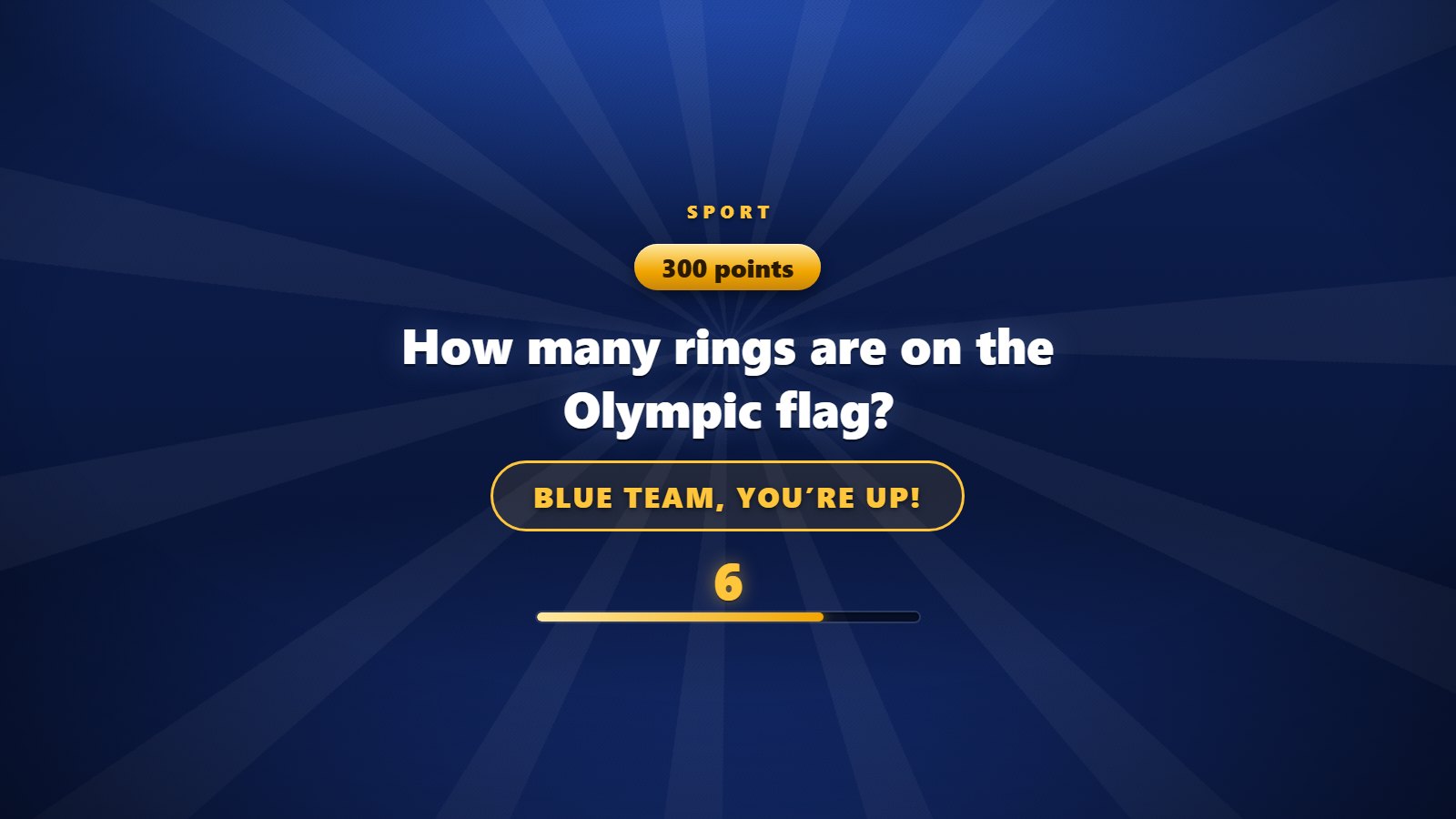
At an event I run the round on software I wrote myself, so the crop, the countdown and the reveal land as one moment for the whole room. The picture goes up large, the clock runs, and the full photograph wipes in next to the crop with the fact under the name.
On a quiz board everyone reacts together, which is the whole reason you booked entertainment rather than a worksheet. If the room is playing on phones instead, each face becomes four options on the colour tiles of Quiz Live, with points for the right answer and the quickest finger.

Send me your eras, your audience and your old staff photos, and I will build the round around them and host the evening as your quiz master. Call 07596 851647 to talk it through.